
- Home
- Live Blog
- Breaking News
- Top Headlines
- Cities
- NE News
- Sentinel Media
- Sports
- Education
- Jobs
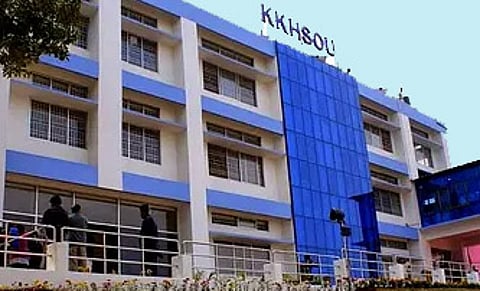
Guwahati: Krishna Kanta Handiqui State Open University (KKHSOU) has received recognition as an Awarding and Assessment Body (AB Dual) from the National Council of Vocational Education and Training (NCVET), marking a significant step in strengthening skill education in the region.
According to an official statement, NCVET, the apex regulatory body responsible for maintaining standards and ensuring quality in vocational education under the Ministry of Skill Development and Entrepreneurship, Government of India, granted the recognition to the university.
"With this development, KKHSOU has become the first public university in the North-East to receive NCVET accreditation for skill education," the statement added.
Following the recognition, the university plans to launch a skill course on Solar Plant Installation and Maintenance Technician. The programme is aimed at training youth in the rapidly expanding renewable energy sector by equipping them with practical skills required for the installation and maintenance of solar energy plants.
The initiative is expected to support renewable energy expansion while contributing to the growth of the green energy sector in the region.
The university also plans to introduce more NCVET-recognised skill programmes in sectors such as healthcare, hospitality, agriculture and tourism in the coming years to meet emerging workforce needs and enhance skill development opportunities for young people.
The agreement was formally signed by KKHSOU Vice-Chancellor R. P. Das and NCVET Director Subhas Deshmukh at a ceremony held at Kaushal Bhawan, Chanakyapuri, New Delhi.
The event was attended by Niranjan Kumar Sudhansu, Additional Secretary in the Ministry of Skill Development and Entrepreneurship; Ashok K. Gabba, Executive Member of NCVET; V. K. Bhati, Director of NCVET; Joydeep Baruah, Director of the School of Social Sciences at KKHSOU; and Parag Dutta, Director of the Centre for Internal Quality Assurance at the university, among other dignitaries.
The recognition is expected to strengthen the skill development ecosystem in the North-East and benefit learners from diverse socio-economic backgrounds, particularly those from disadvantaged sections, by providing access to quality skill education with nationally recognised certifications.
