
- Home
- Live Blog
- Breaking News
- Top Headlines
- Cities
- NE News
- Sentinel Media
- Sports
- Education
- Jobs
The recurring scenes of urban flooding have once again raised serious questions over the effectiveness of the city’s drainage infrastructure and flood mitigation measures. Water entered several residential areas, while commuters struggled to navigate submerged roads, resulting in traffic congestion across multiple stretches.
STAFF REPORTER
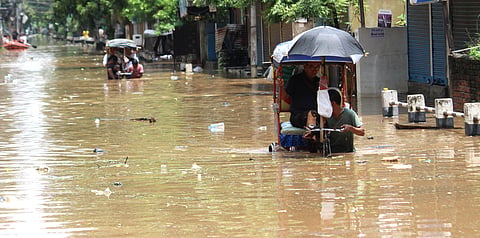
GUWAHATI: Another night of rain, another morning of disruption. Overnight showers once again exposed Guwahati’s chronic urban flooding crisis, with several localities—including Anil Nagar, Nabin Nagar, Rajgarh, Wireless, Hatigaon, Kahilipara and Panjabari—submerged under knee-deep water, bringing normal life to a standstill.
Despite repeated assurances and years of desilting drives under the “Mission Flood Free Guwahati” initiative, residents woke up to flooded roads, stranded vehicles, inundated homes and clogged drains. In Anil Nagar, the situation became so severe that the State Disaster Response Force (SDRF) had to deploy boats to evacuate residents and assist commuters through waterlogged streets.
The recurring scenes of urban flooding have once again raised serious questions over the effectiveness of the city’s drainage infrastructure and flood mitigation measures. Water entered several residential areas, while commuters struggled to navigate submerged roads, resulting in traffic congestion across multiple stretches.
Residents expressed frustration, saying the city appears to be trapped in a cycle where every spell of rain results in the same ordeal.
“This has become our reality. Every time it rains, our homes and roads go under water. We don’t need promises anymore—we need a permanent solution,” said an Anil Nagar resident, whose house was surrounded by floodwater on Tuesday morning.
A resident of Nabin Nagar said, “We spend sleepless nights whenever heavy rain is forecast. Water enters our locality within hours, and the administration wakes up only after the situation worsens.”
Echoing similar concerns, a resident of Wireless, Hatigaon, remarked, “Crores of rupees are reportedly spent every year on desilting and flood-control measures, but one night’s rain is enough to expose the ground reality. We are tired of temporary fixes.”
The fresh spell of waterlogging has reignited public anger over the city’s recurring artificial floods, with many questioning why Guwahati continues to remain vulnerable despite years of infrastructure projects and repeated claims of improved drainage management.
As the monsoon continues, residents fear that unless systemic shortcomings are addressed, the city will continue to witness the same cycle of flooding after every bout of heavy rainfall.
Also Read: NHAI, Not Assam or Meghalaya, Behind Jorabat Flooding: How Faulty Design Choked Drainage
