
- Home
- Live Blog
- Breaking News
- Top Headlines
- Cities
- NE News
- Sentinel Media
- Sports
- Education
- Jobs
On the fateful night of May 28, a blood-curdling road accident took place on the National Highway near Jalukbari, where 7 students of the Assam Engineering College lost their valuable lives and 3 others were critically injured. Now they are in different stages of treatment. The prima facie evidence suggests it is a case of drunken and rushed driving. Guwahati city witnessed a similar drunk driving road accident on October 1, 2021, when one intoxicated Rajkonya Baruah critically injured nine PWD workers and Joseph Marak succumbed to injuries. The actual cause of the above accident will be known only after the submission of the final inquiry report.
Different surveys report that the habit of drinking alcohol is on the rise throughout India among college students, particularly in hostels. Hostel life is a transition point in a student’s life. In hostels, students enjoy full freedom in the absence of parents and are more likely to be influenced by the prevailing social atmosphere of the particular college campus and their fellow boarders. Here, the principal and hostel superintendent are to play a major constructive role and exercise stricter control over the students. The campus must be free from easy access to alcohol. As the students are away from home, guardianship is vested with the college authorities, who should remain in close coordination with the parents about their well-being.
According to the National Institute on Alcohol Abuse and Alcoholism (NIAAA), about 4 out of 5 college students drink alcohol, but a more important point is that about half of college students are binge drinkers. Many reasons can be assigned as the root causes of addiction, but some major causes are listed as “just for fun (61%), stress (19%), and “to be happy (10%). The most influential factors are peer-level influence (80%), social influence (10%), and nobody (to taste) (10%). As peer influence is a predominant cause of spreading addiction, there is an urgent need to create an alcohol-free college campus. It is to be noted that the abuse of alcohol can pave the way for the abuse of harder drugs. Globally, alcohol is the most abused drug, ranking first as the factor responsible for premature deaths between the ages of 15 and 49. In a different study, it was indicated that 37.82% sat in a vehicle driven by someone under the influence of alcohol, and 14.36% felt it was safe to drive after consumption of alcohol, knowing that they were not drunk. Another 29.70% had driven a vehicle under the influence of alcohol.
The ill effects of alcohol consumption among students are numerous. Underage drinking is responsible for self-harm. It encourages sexual promiscuity. A high level of alcohol consumption can lead to poor performance at school and college. It will lead to alcohol use disorders. Some favourable bacteria in the stomach responsible for digestion get killed by alcohol. It has been proven that binge drinking retards academic performance.
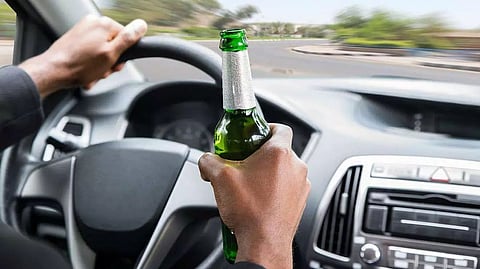
Drinking and driving is a criminal offence punishable by law. Road users who are impaired by alcohol carry a high risk of being involved in a road crash. It is statistically proven that alcohol is a key factor that contributes to 27% of all road injuries. Each year, 1.2 million people die in road accidents worldwide. This figure is much higher than deaths caused by natural calamities.
Drinking behaviour varies with different levels of BAC (blood alcohol concentration). Average speed, speed standard variation, lane positioning, etc., significantly change under the influence of alcohol. Even with a small amount of alcohol consumption, drivers are at twice the risk of getting involved in a road accident. Driving skills require attention, mental alertness, and the ability to make quick decisions in dynamic road environments. Mental alertness is a key factor in averting an accident. Consumption of alcohol slows down reflexes while driving and negates sane judgements, which could avoid any potential mishaps on the road. The inebriated state of the driver makes him lose proper vision, renders him sluggish, and increases his reaction time on the roads.
All the countries in the world have their own safe limits for BAC. As per Section 185 of the Indian Motor Vehicle Act, the threshold limit is 30 mg per 100 ml of blood. However, any excess that is beyond the permissible level is punishable under the law. Different quantum of punishments are envisaged for different levels of BAC. The higher the level of BAC, the more severe the punishment is. Sometimes it can also lead to the cancellation of a licence and imprisonment. In the proposed amendments to the Indian Vehicle Act, it was proposed to reduce the limit to 20 mg in 100 ml of blood. A pint of beer (330 ml), 200 ml of wine, and 40 ml of whisky, brandy, or vodka, if individually consumed, may all cross the limit of 20 mg of alcohol per 100 ml of blood.
According to the GoI, the number of drunk driving accidents reported was 12,256 in 2019. In drunken driving accidents, the severity of injury is much higher compared to other factors. In Delhi alone, 70% of road accident deaths are due to drunk driving. According to a different study, it is reported that even with 0.03% alcohol in the blood (BAC), the risk factor of a road crash is seven times higher. 42 percent of drunk-driving injuries end in fatalities.
The police, being the custodian of traffic rules, can play a significant role in curbing drunk-driving cases through breathalyser tests. The check points may be at venerable points in streets and highways by fixing road blockages to slow down the vehicles for the breath analyzer test. In Guwahati, such exercise is seldom noticed except on New Year’s Eve. It needs to be an ongoing process throughout the year, especially at night. The roadside dhabas (eateries) serving alcohol secretly need to be totally dismantled.
It is very interesting to note that the social cost of drunk driving is tremendous; in the USA, it is calculated to be $132 million per year. Social costs offset the income from excise duty (revenue). In India, the state of Talengana has taken a special step to stop the benefits of social security schemes for drunk drivers, which will work as a deterrent. Insurance coverage will not be applicable to drunk-driving cases. Social costs include private expenses for treatments, hospitalisation charges, repairing damage, loss of income from family, court expenses, etc. External costs are third-party liabilities. Drunk driving is a self-harming behaviour that causes other plying vehicles on roads, innocent pedestrians, cyclists, non-drinkers, and others to fall prey to such a menace.