
- Home
- Live Blog
- Breaking News
- Top Headlines
- Cities
- NE News
- Sentinel Media
- Sports
- Education
- Jobs
The Criminal Procedure (Identification), Bill, 2022 has stirred
up a hornet's nest over the proposed collection of biometric data of an
accused, convict, or suspect. Privacy advocates have raised the red flag over
the proposed legislation alleging that it may give rise to the human rights
violation. The bill introduced in the Lok Sabha seeks to repeal the
colonial-era legislation – "The Identification of Prisoners Act, 1920,"
currently in force. The statement of objects and reasons of the bill explains
that the current Act was enacted to authorize the taking of measurements and
photographs of convicts and other persons. The term "measurements" used in the
Act is limited to allow for the taking of finger impressions and footprint
impressions of a limited category of convicted and non-convicted persons and
photographs on the order of a Magistrate. It is the ambit of the category of
persons from whom biometric data would be collected, stored, and used for
solving criminal cases under the proposed legislation which is being viewed as
problematic by its opponents. The proposed legislation seeks to authorize
police and prison officials to collect biometric data from a person who has
been convicted, undergoing trial, an accused, suspect, detained in case of an
alleged violation of law or anyone whom the law-enforcing and investigating
agencies suspect, may indulge in violation of law in future. Justifying the
expansion of the ambit of "measurements" to be collected from these categories
of persons, the bill states that new ''measurement'' techniques being used in
advanced countries are giving credible and reliable results and are recognised
the world over. The current Act does not provide for taking these body
measurements as many of the techniques and technologies had not been developed
then. It is, therefore, essential to make provisions for modern techniques to
capture and record appropriate body measurements in place of existing limited
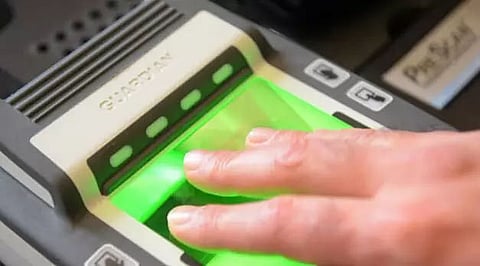
measurements, says the bill. New measurements defined under the proposed law include
finger impressions, palm-print and foot-print impressions, photographs, iris
and retina scan, physical, biological samples and their analysis. It seeks to
empower the National Crime Records Bureau to collect, store, and preserve these
biometric data and to share, disseminate, destroy and dispose of records. It
will empower a magistrate to direct any person to give measurements and empower
police or prison officer to take measurements of any person who resists or
refuses to give measurements. Resistance to or refusal to allow the taking of
measurements under the proposed law shall be deemed to be an offence under
section 186 of the Indian Penal Code which will criminalize any act of refusal
to provide such biometric data which has raised hackles among the opponents of
the bill. The Central Government, as a proponent of the bill, justifies the
expansion of the scope and ambit of "measurements" and the category of person
whose "measurements" can be taken on the premise that it will help the
investigating agencies to gather sufficient legally admissible evidence and
establish the crime of the accused person. The proposed law also seeks to
provide impunity to those authorized by it and states that "no suit or any
other proceeding shall lie against any person for anything done or intended to
be done in good faith under this Act or any rule made thereunder." Opponents of
the bill including members of the Opposition Bench in the Lok Sabha have
alleged that the bill is violative of Article 20 (3) of the Constitution which
states that no person accused of an offence shall be compelled to be a witness
against himself. The Supreme Court, however, held the view that Article 20(3)
does not say that an accused person shall not be compelled to be a witness. It
says that such a person shall not be compelled to be a witness against himself.
The question, therefore, arises, the SC says, is: Is an accused person
furnishing evidence against himself, when he gives his specimen handwriting, or
impressions of his fingers, palm or foot? The apex court says the answer to
this question in its opinion, must be negative. It elaborated the law point
explaining that the evidence of specimen handwriting or the impressions of the
accused person's fingers, palm or foot, will incriminate him, only if on
comparison of these with certain other handwritings or certain other
impressions, identity between the two sets is established. By themselves, these
impressions or the handwritings do not incriminate the accused person or even
tend to do so and when an accused person is compelled to give such specimen it
may be said that he has been compelled to be a witness; it cannot however be
said that he has been compelled to be a witness against himself, the SC said.
The proposed legislation has revived the debate over the contentious issue of
biometric data collection for crime investigation.
