
- Home
- Live Blog
- Breaking News
- Top Headlines
- Cities
- NE News
- Sentinel Media
- Sports
- Education
- Jobs
Bishaldeep Kakati
(The writer can be reached at deep.kakati99@gmail.com)
Media since time immemorial has always been an integral part of any developing or developed country. The role of media is highly appreciated for its relentless efforts to gather news and information from each and every nook and corner and also for sharing the same with the burgess. And that is the reason, directly or indirectly, that it has become a habit for most of the people to either browse through the dailies that are delivered at their doorsteps, or by simply switching on the news channels which are available in their television sets. Media thus has indeed helped people to not only gather information, knowledge but also to develop opinions on topics concerning a particular country or the world as a whole.
It’s a conspicuous fact that the individuals related to media have time and again been selfless enough to display or telecast all those things that are of crucial importance for a nation’s progress. Not to forget the fact that some journalists even move a step ahead to report all the happenings from a place even under dire circumstances. Thus in a way, the work culture of the journalists or the persons related to media is directly dedicated for the benefit of the common people. And when people related to a particular profession work for almost 24 hours a day for all the 365 days in a year without a substantial break, then on a serious note, these people deserve all the love and respect. However, the other side of this profession also has some not so good elements associated with it, which directly bring media or the journalists to face the wrath as well as the trolls of the common people. In fact, the current scenario prevailing has once again brought a very important question into consideration: Is media seriously following the ethics?
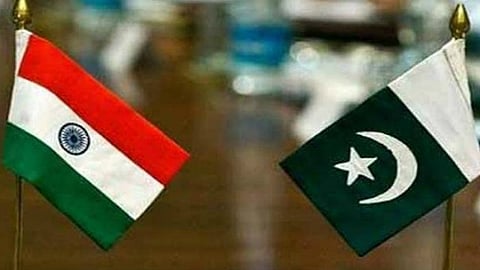
In the present context, media especially of the two countries, left and right of the LOC (Line of Control) i.e. India and Pakistan have raised a lot of hue and cry mainly because of the controversial roles and actions that they have displayed and performed respectively. The starting point of this entire episode was initiated right after the Pulwama attack, where more than 40 jawans of the Indian Army were tactically killed by the terrorist group named Jaish-e-Mohammad, and the same act was condemned by almost all the countries of the world. Thereafter, the war between India and Pakistan was not only limited to physical level, but it went all the way ahead to such an extent, that even the media houses of both the countries started engaging in verbal fracas. And because of this tendency to defame one nation by the other or vice versa, most of the people somewhere down the line were frustrated and the news channels failed miserably to meet the people’s expectations.
However the story didn’t end there either. The fight between the media houses increased considerably once the Indian Air Force in its efforts to take revenge of the Pulwama attack destroyed the camps of the aforesaid terrorist group in Balakot. The series of events also included retaliation by Pakistan, when they tried to destroy some of the camps of the Indian Air Force by F16 fighter jets. And although Indian Air Force successfully negotiated retaliation by Pakistan without much of destruction, but in that process Pakistan apprehended India’s Wing Commander Abhinandan Varthaman as he crossed the LOC chasing back the opponent’s fighter jets.
In fact, the constant attacks by both the nations, the prevailing political statecraft etc has all prompted the people of both the countries to come up with certain ridiculous statements. A TV anchor from Pakistan claimed that the war between India and Pakistan was pronounced by Prophet Mohammad way back. On the other hand, a particular person from India asked for annihilation of Pakistan from the world map. Added to this, the entire drama couldn’t even escape the introduction of politics in it, as a top leader of BJP called upon people to vote for Narendra Modi, as the person who in real terms could take revenge of the Pulwama attack. And thus all these statements of attacks and counter attacks only continued to frustrate the people.
Now the thing is that in this entire period of one month, the role of media of both the nations was questionable to a great extent. The media houses of both the nations rather than trying to bring in peace between the countries were more oriented towards publishing all those items that could possibly increase the tensions between the countries and degrade their relations. In fact, some media houses even went a step ahead to compare the military forces of both the countries, the number of atom bombs both the countries possess, in case a nuclear war takes place. But in doing so, the respective media houses directly forgot the aftermath of a nuclear war. So, the media houses which are assumed to be logical and rational, in this case, appeared as if they were sensitizing the issue without realizing the after effect of it.
Moreover the Indian media also disappointed its denizens when they investigated and interrogated to find out Abinandan Varthaman’s native household and even released the information of it, which probably would have given more chances to the Pakistan army to harass the Wing Commander and his family members mentally and psychologically. Along with that, many web portals also circulated some inappropriate videos of Abhinandan, even after the Indian Military’s request to not to do so. On the other hand, the Pakistan media released the video of the injured Wing Commander which was against the Geneva Convention, thus further increasing the chances of a grave battle between the nations. Not only this, but also the inappropriate use of social media by some of the denizens has made the concerned burgess upset and distressed. Thus the pivotal question that comes up from this scenario is: Why some of the media houses behave in such an immature way in such crucial junctures?
Indian media has always played crucial roles in many important events concerning the nation, and likewise might be the case in respect of Pakistan media as well. But the truth is that even the tensions between both the nations have also increased, more or less because of the hype created by the media houses as well. Hence in this scenario, a strategic move must be taken by the media houses in order to bridge the gap, and reduce the prevailing atrocities.