
- Home
- Live Blog
- Breaking News
- Top Headlines
- Cities
- NE News
- Sentinel Media
- Sports
- Education
- Jobs
Siddharth Roy
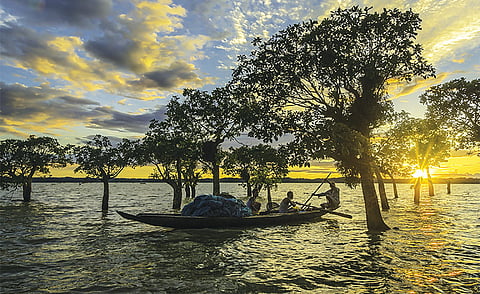
India’s environmental debates often revolve around its great rivers, forests, and mountain ecosystems. Yet, some of the country’s most valuable ecological assets lie outside the national spotlight. Son Beel, tucked away in Assam’s Karimganj district in the Barak Valley, is one such landscape. As the largest wetland in northeastern India and one of the country’s most significant freshwater wetlands, Son Beel is far more than a picturesque expanse of water. It serves as an ecological regulator, a livelihood provider, a biodiversity hotspot, and an integral part of the region’s cultural identity. Despite this, it continues to receive only episodic policy attention while facing mounting ecological pressures. If India is serious about achieving sustainable development, the conservation of wetlands like Son Beel must become a national priority rather than remain merely a regional concern.
Wetlands are often described as the kidneys of the earth because they naturally filter pollutants, recharge groundwater, regulate floods, and sustain biodiversity. Their economic value extends far beyond fishing and agriculture—they help reduce disaster risks, improve water security, and serve as natural carbon sinks. The Ramsar Convention has repeatedly emphasized that healthy wetlands are indispensable for climate resilience. As climate change intensifies extreme rainfall, floods, and prolonged dry spells, wetlands will become increasingly vital infrastructure—created not by engineers, but by nature itself.
Son Beel exemplifies this ecological significance. Spanning thousands of hectares during the monsoon and shrinking seasonally in winter, it supports a dynamic hydrological cycle that sustains fisheries, agriculture, and surrounding settlements. The wetland nurtures a remarkable diversity of fish species, aquatic plants, and migratory birds, while serving as a natural buffer against floods in the Barak Valley. For thousands of local residents—particularly fishing communities—Son Beel is not merely an ecosystem, but the foundation of household incomes and food security.
Yet, this ecological wealth is steadily eroding.
Unchecked siltation has reduced the wetland’s water-holding capacity. Encroachments for agriculture and settlements have altered its natural boundaries. The excessive use of chemical fertilisers in adjoining fields has degraded water quality, while indiscriminate fishing practices threaten aquatic biodiversity. Plastic waste and other forms of pollution are increasingly entering the wetland, reflecting a trend seen across many of India’s inland water bodies. Climate change is compounding these pressures through erratic rainfall and changing hydrological regimes, making the ecosystem ever more fragile.
The danger is not merely environmental. The degradation of Son Beel would have cascading economic consequences. Declining fish stocks would threaten thousands of livelihoods. Reduced water retention would increase flood vulnerability during heavy rains and limit water availability during dry periods. Biodiversity loss would diminish the ecological services that the wetland provides free of charge. Ultimately, ecological neglect today could lead to higher public expenditure on disaster management, rural distress, and environmental restoration in the future.
India’s experience offers a cautionary lesson. Several urban and rural wetlands—from the East Kolkata Wetlands to Loktak Lake and numerous lakes in Bengaluru—have endured decades of encroachment and pollution before restoration efforts began. Rehabilitation has consistently proven more expensive and less effective than timely conservation. Son Beel should not become another example where policy action comes only after ecological decline becomes irreversible.
The encouraging aspect is that India already has much of the institutional framework needed for action. The Wetlands (Conservation and Management) Rules, 2017 empower states to notify and manage ecologically significant wetlands. National missions on biodiversity conservation, climate adaptation, and water resource management also recognize the strategic importance of wetlands. The real challenge lies not in legislative inadequacy, but in implementation and institutional coordination. For Son Beel, conservation must start with scientific management. A comprehensive ecological assessment should establish baseline data on biodiversity, water quality, sedimentation patterns, and hydrological changes. This evidence should inform a long-term management plan rather than relying on ad hoc interventions. Regular desiltation in scientifically identified areas, restoration of natural drainage channels, and protection of feeder streams would help revive the wetland’s ecological functions without disturbing its natural character.
Equally important is community participation. The people living around Son Beel are not just beneficiaries of conservation—they are its most important stakeholders. Fishing communities possess generations of ecological knowledge about seasonal water flows, fish breeding cycles, and sustainable harvesting practices. Their involvement in decision-making, monitoring, and enforcement would make conservation efforts more effective and socially legitimate. Successful wetland management worldwide has shown that local communities are often the best custodians of natural ecosystems when treated as partners rather than subjects of regulation.
Economic incentives must support ecological objectives. Sustainable fisheries, regulated eco-tourism, organic farming in surrounding areas, and value chains for wetland-based products can generate livelihoods while easing pressure on the ecosystem. Thoughtfully planned tourism—focused on birdwatching, boating, and nature education—could transform Son Beel into a model for conservation-linked rural development, provided that ecological carrying capacities are respected.
The Assam government should also consider pursuing stronger national and international recognition for Son Beel’s ecological significance. Enhanced scientific documentation and effective conservation could support the case for wider recognition under internationally accepted wetland conservation frameworks. Such recognition would not only boost prestige, but also attract technical expertise, conservation partnerships, and greater policy attention.
Technology can complement these efforts. Satellite-based monitoring, drone surveys, and GIS mapping should be used to detect encroachments, monitor changes in wetland extent, and assess seasonal variations in water levels. Real-time environmental monitoring would enable authorities to take action before degradation becomes irreversible.
Ultimately, conserving Son Beel is not just about preserving a water body in one corner of Assam. It is about recognizing that ecological security is inseparable from economic security. Wetlands mitigate floods, support agriculture, sustain fisheries, conserve biodiversity, and strengthen resilience against climate change. In an era when governments increasingly emphasize natural capital, Son Beel exemplifies the kind of asset that deserves investment rather than neglect.
India has often acted only after environmental degradation has become impossible to ignore. Son Beel presents an opportunity to reverse that pattern. Protecting it today will cost far less than restoring it tomorrow. More importantly, it will show that development and conservation do not have to be competing priorities—they can, and must, advance together. The future of Son Beel will ultimately reflect the choices policymakers make today: whether to treat wetlands as expendable landscapes or as indispensable foundations of a resilient and sustainable India.
(The author is a civil engineer, consultant (invitee) to Rashtriya Raksha University under the Ministry of Home Affairs and a columnist. The Views are personal. He can be reached at siddharth001.roy@gmail.com)
