
- Home
- Live Blog
- Breaking News
- Top Headlines
- Cities
- NE News
- Sentinel Media
- Sports
- Education
- Jobs
Harsha Mohan Sarma
(harshasarma183@gmail.com)
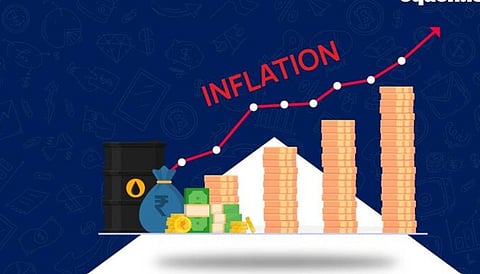
In the economic history of human civilisation, inflation is by no means a new phenomenon. How ever, its nature, impact and magnitude have evolved with changing times. Today, inflation is no longer confined to rising prices in the marketplace; it has begun to exert a profound influence on people’s living standards, purchasing power, savings, social security and future aspirations. The question, therefore, is not merely why prices are rising, but rather who benefits from inflation and who is compelled to bear its burden.
In economic terms, inflation refers to a sustained increase in the general price level of goods and services. In other words, it is a situation in which the same amount of money buys fewer goods and services than before. This represents a decline in the purchasing power of money. However, the consequences of this process are not evenly distributed across society. While inflation may create opportunities for financial gains for certain sections of society, it pushes a large section of the population into deeper economic hardship.
The worst victims of inflation are people with fixed and limited incomes. Daily-wage earners, small traders, lower- and middle-income salaried employees, retired individuals and pensioners are particularly vulnerable. Their earnings do not necessarily increase in proportion to rising prices. Meanwhile, the costs of essential commodities such as rice, pulses, cooking oil, vegetables, cooking gas, medicines, school fees, transportation and electricity continue to rise. As a result, maintaining a balance in the monthly household budget becomes increasingly difficult. Consider the plight of a daily-wage labourer. After working hard throughout the day, the money earned must provide for the family’s food, children’s education, healthcare and shelter. When the prices of essential commodities rise, his income may remain unchanged while his expenses increase. Consequently, he is forced either to reduce the quantity or quality of food consumed by his family or to cut down on expenditure on education and healthcare. Thus, inflation is not merely an economic problem; it also becomes a source of social inequality and human distress.
However, it would be incorrect to assume that everyone suffers losses during inflation. Certain sections of society may actually benefit from it. For instance, individuals who own substantial assets such as land, houses, gold, commercial property and other tangible resources may witness an increase in the market value of their holdings. Similarly, those who have borrowed money to purchase assets may find that the real burden of their debt declines during inflation, particularly when their incomes rise while the interest rates on their loans remain fixed.
The impact of inflation on traders and producers is equally varied. Some businesses may exploit rising production costs as a justification for increasing prices beyond what is necessary, thereby expanding their profit margins. This is particularly possible in markets where competition is limited or certain companies enjoy a dominant position. Producers who have purchased and stored raw materials at lower prices may also earn higher profits by selling their products when market prices rise. Nevertheless, not all traders and industrialists benefit from inflation. Excessive increases in production costs can push many small enterprises and businesses towards financial losses.
The agricultural sector deserves special attention in this context. Farmers may earn higher incomes when they receive better prices for their produce. However, rising costs of fertilisers, seeds, pesticides, diesel, electricity, agricultural machinery and transportation often erode much of this benefit. Moreover, farmers frequently fail to receive remunerative prices for their produce. While middlemen and wholesale traders may accumulate substantial profits, both producers and consumers are often left at a disadvantage. Without meaningful reforms in the agricultural marketing system, improving the economic condition of farmers will remain a difficult task.
Another significant dimension of inflation is its relationship with economic inequality. Wealthy individuals generally have multiple sources of income, including business enterprises, shares, property, rental income and investments. They can adjust their investment portfolios to cope with inflation. Ordinary people, on the other hand, often depend on only one or two sources of income. Consequently, inflation threatens to widen the gap between the rich and the poor. Those who possess substantial assets may benefit from the appreciation in their value, while those who depend primarily on their labour and limited earnings experience a steady decline in purchasing power.
The relationship between inflation and government revenue is also complex. Rising prices and increases in nominal incomes may lead to higher government revenue through income and indirect taxes. However, such gains are not automatic; they depend on production, consumption patterns and the prevailing tax structure. At the same time, governments may have to increase expenditure on subsidies, social security and welfare programmes. Therefore, it would be misleading to conclude that inflation invariably benefits the government.
The responsibility for controlling inflation cannot be left entirely to market forces. The Central and State Governments, the Reserve Bank of India, producers, traders and consumers all have roles to play. The Reserve Bank uses monetary policy instruments, including interest rates, to control inflation. Governments must improve supply chains, ensure adequate foodgrain reserves, prevent artificial shortages and hoarding, reduce transportation costs and strengthen market surveillance of essential commodities.
For a predominantly agrarian state like Assam, improving agricultural production and marketing infrastructure is particularly important. Increasing local agricultural production, establishing cold-storage facilities, providing better transportation for farmers, promoting the direct marketing of agricultural produce and curbing the excessive influence of middlemen can help ease inflationary pressures. The Public Distribution System must also be strengthened to protect poor and low-income households. Another important concern is the absence of adequate financial protection for workers in the unorganised sector. Although government employees and pensioners receive Dearness Allowance or Dearness Relief to compensate, at least partly, for rising living costs, daily-wage labourers, small traders and workers in the informal economy often have no comparable protection. Revising minimum wages periodically, expanding social security coverage and ensuring that healthcare and education remain affordable must be among the government’s priorities.
The true impact of inflation cannot be assessed merely through statistical figures. Even when official data indicate a decline in the inflation rate, ordinary people may still have to pay more for essential commodities than they did earlier. This is because a decline in the rate of inflation does not mean that prices have fallen; it simply means that the pace at which prices are increasing has slowed down. Understanding this distinction is essential. To assess the actual economic condition of the people, it is necessary to examine not only the average inflation rate but also the individual costs of food, housing, education, healthcare and transportation.
Inflation may be an inherent feature of economic activity, but placing a disproportionate burden on the weaker sections of society can never be considered natural or acceptable. The success of a welfare state should not be measured merely by the growth of Gross Domestic Product, the rise of stock market indices or the expansion of large industries. It must also be judged by how secure, dignified and comfortable the lives of ordinary citizens have become. The central question surrounding inflation is whether the benefits of the country’s economic growth are being shared equitably among all sections of society. If the wealth of a privileged few continues to increase while the lives of the majority become progressively more difficult, such growth cannot be regarded as genuine development. The ultimate purpose of an economy is not merely to generate wealth but to improve human lives. The true success of a democratic and humane state lies not in increasing the number of those who profit from inflation, but in reducing the number of people who are forced to bear its economic and social costs.
