
- Home
- Live Blog
- Breaking News
- Top Headlines
- Cities
- NE News
- Sentinel Media
- Sports
- Education
- Jobs
BEIJING: Following an upsurge in violence between ethnic Serbs and NATO peacekeeping forces in Kosovo, China expressed its support for Serbia's attempts to "safeguard its sovereignty and territorial integrity" on Tuesday.
Since the 1999 air war to put an end to Serbia's savage crackdown on ethnic Albanian rebels in Kosovo, China's governing Communist Party has long been a critic of the NATO alliance, in part because Beijing's embassy in Belgrade was bombed.
Three Chinese journalists were killed in the blast, which Beijing has long used to stir up anti-Western sentiment. The United States apologised for the strike and attributed it to poor intelligence. In the aftermath, US diplomatic posts in Beijing and other Chinese cities came under attack, starting relations on a sour course that have been increasingly strained in recent years.
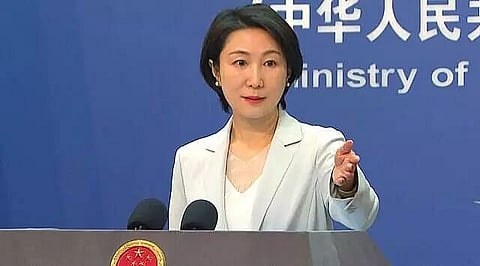
A representative for the Chinese Foreign Ministry, Mao Ning, blamed the violence on a disregard for Serbian political rights on Tuesday. China, along with Russia and Serbia, do not recognise Kosovo's 2008 declaration of independence.
Mao said that Serbs should be given power over municipalities where they form majorities, despite the fact that Serbs recently boycotted local elections and sought to prevent ethnic Albanian mayors from reaching office.
Serbs' attempt to seize control of one of the municipalities in northern Kosovo where Albanian mayors had taken office the previous week provoked a riot. On Monday, KFOR—the NATO-led force in Kosovo that is maintaining peace—saw at least 30 of its members hurt.
“We urge NATO to earnestly respect the sovereignty and territorial integrity of the relevant countries and truly do what is conducive to regional peace,” Mao said.
In an effort to demonstrate that he has backing for his policies, Serbian President Aleksandar Vucic was anticipated to meet with the Russian and Chinese embassies.
Despite Serbia's final withdrawal from the region as a result of NATO's military intervention in 1999, the conflict continues to be a source of tension throughout eastern Europe.
Last year, an advanced Chinese anti-aircraft system was secretly delivered to Serbia, an ally of Russia, amid Western worries that the region's precarious calm may be threatened by a military buildup in the Balkans during the conflict in Ukraine.
ALSO WATCH:
