
- Home
- Live Blog
- Breaking News
- Top Headlines
- Cities
- NE News
- Sentinel Media
- Sports
- Education
- Jobs
Siddharth Roy
(siddharth001.roy@gmail.com)
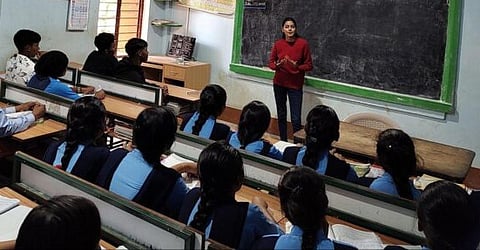
Assam’s reported 42% drop in secondary school dropout rates over the past decade is a rare and encouraging piece of news in India’s education landscape. As highlighted by Chief Minister Himanta Biswa Sarma, this achievement reflects years of steady effort, policy focus and social change. While challenges remain, the trend points to a meaningful shift, one that places education closer to the centre of Assam’s development story.
For decades, school dropouts, especially at the secondary level, have been a persistent concern in Assam. Poverty, early marriage, child labour, migration, poor school infrastructure and long travel distances have forced many students, particularly girls and children from rural and tea garden areas, out of classrooms. Secondary education has often been the most fragile link, as students face higher academic pressure and greater economic expectations at home. Against this backdrop, a 42% reduction over ten years signals not a sudden miracle but the cumulative impact of sustained interventions.
One of the most important contributors to this decline has been improved access to schools. Over the years, Assam has expanded its network of secondary and higher secondary institutions, reducing the need for students to travel long distances. Better road connectivity and transport facilities have also made it easier for students in remote areas to attend school regularly. When education becomes physically accessible, staying in school becomes a more realistic choice for families.
Financial support has played an equally critical role. Schemes that provide free textbooks, uniforms, bicycles and scholarships have helped reduce the economic burden on parents. For families living on the edge of poverty, even small expenses can push children out of school. By addressing these costs directly, the state has sent a clear message that education is a public responsibility, not a private luxury. Conditional cash transfer schemes and incentives for girls’ education have been particularly effective in delaying dropouts and early marriages.
Another factor behind the improved numbers is the growing focus on girls’ education. Over the past decade, Assam has witnessed a gradual change in social attitudes towards educating girls beyond the primary level. Government initiatives, combined with awareness campaigns and community engagement, have helped families see education as an investment rather than a risk. As more girls complete secondary education, the social ripple effects, better health outcomes, delayed marriage and increased workforce participation become visible.
School infrastructure and learning environments have also improved. While not uniform across the state, many schools have benefited from better classrooms, toilets, drinking water facilities and electricity. For adolescent students, especially girls, basic facilities can make the difference between staying in school and dropping out. Teacher recruitment and training, though still a work in progress, have added some stability to the system and improved student engagement. The role of technology, particularly in recent years, cannot be ignored. Digital initiatives, online learning platforms and smart classrooms accelerated during the pandemic and helped keep students connected to education during disruptions. While the digital divide remains a concern, exposure to technology has made learning more flexible and, in some cases, more engaging for secondary students who are at risk of losing interest. Importantly, the decline in dropout rates also reflects better tracking and governance. Improved data collection, student monitoring and coordination between schools and local authorities have helped identify at-risk students early. When dropouts are seen not as statistics but as individual cases requiring intervention, the system becomes more responsive. Community involvement, including the role of local bodies and teachers, has been key in bringing students back to school.
However, celebrating progress should not mean overlooking remaining gaps. A reduced dropout rate does not automatically translate into better learning outcomes. Many students who stay in school still struggle with foundational skills, language barriers and exam pressure. Secondary education must prepare students not only to pass exams but also to transition smoothly into higher education, vocational training or employment. Without this, retention risks becoming symbolic rather than transformative. There are also regional and social disparities that need attention. Dropout rates remain higher in certain districts, among tea garden communities, and among children from economically and socially marginalised backgrounds. Addressing these pockets of vulnerability requires targeted interventions rather than one-size-fits-all policies. Education reform must remain sensitive to local realities. From a broader perspective, Assam’s progress carries lessons for other states. Reducing dropouts is not achieved through a single scheme or announcement, but through consistent investment in access, affordability, quality and social awareness. Education systems improve when governments treat schooling as part of a long-term social contract rather than a short-term political goal.
For Assam, the benefits of this progress extend far beyond classrooms. A generation that stays longer in school is better equipped to participate in the economy, adapt to technological change and engage in democratic processes. Secondary education, in particular, is a critical bridge between childhood and adulthood. Strengthening this bridge strengthens society itself. Chief Minister Sarma’s statement draws attention to a positive trend, but its true value lies in what comes next. Sustaining and deepening this progress will require continued funding, honest assessment and openness to reform. Education is never a finished project; it is a continuous commitment. A 42% drop in secondary school dropouts is not just a statistic; it represents thousands of young lives redirected towards possibility. If Assam can build on this momentum with a sharper focus on quality and equity, it can turn a quiet success into a lasting transformation.
