
- Home
- Live Blog
- Breaking News
- Top Headlines
- Cities
- NE News
- Sentinel Media
- Sports
- Education
- Jobs
Siddharth Roy
(siddharth001.roy@gmail.com)
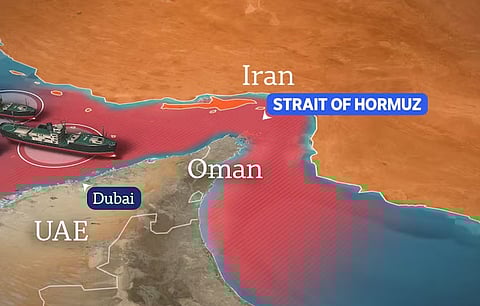
The announcement of a two-week ceasefire between the United States and Iran marks a fragile pause in a conflict that had rapidly escalated into one of the most consequential geopolitical crises of recent times. Brokered through last-minute diplomacy, involving Pakistan, the truce hinges on critical conditions, including the reopening of the Strait of Hormuz, one of the world’s most vital energy corridors.
While the ceasefire offers temporary relief, both in strategic and economic terms, it is at best a tentative step towards de-escalation rather than a durable peace. Its implications are far-reaching, affecting not only regional stability in West Asia but also global energy markets, international diplomacy, and the broader architecture of conflict resolution.
At the heart of the crisis lies the Strait of Hormuz, through which a significant portion of global oil supplies passes. Iran’s willingness to reopen the strait as part of the ceasefire has already had an immediate calming effect on markets, with oil prices falling sharply and global equities responding positively. However, this relief remains contingent on the sustainability of the truce. The ceasefire’s conditional nature underscores its fragility, particularly given ongoing hostilities in parts of the region and the involvement of multiple actors, including Israel.
The strategic significance of the ceasefire extends beyond energy markets. It represents a moment of recalibration for both Washington and Tehran. For the United States, the decision to suspend military action suggests a recognition of the limits of escalation, particularly in a region already fraught with overlapping conflicts. For Iran, agreeing to a temporary pause reflects both economic pressures and the costs of sustained confrontation.
Yet, the ceasefire also highlights the persistent mistrust between the two sides. Tehran has repeatedly indicated that a temporary cessation of hostilities is insufficient, highlighting the need for a comprehensive end to the conflict and the lifting of sanctions. This divergence in expectations points to the fundamental challenge of translating a short-term truce into a long-term settlement.
The humanitarian dimension of the conflict cannot be overlooked. With thousands of casualties reported and significant displacement caused by weeks of hostilities, the ceasefire provides a critical window for relief efforts. However, the limited duration of the truce raises concerns about the continuity of such efforts. Without a sustained cessation of violence, humanitarian gains may prove short-lived.
Diplomatically, the ceasefire underscores the role of third-party mediation in conflict resolution. At the same time, it raises questions about the long-term framework for negotiations. A structured and inclusive diplomatic process, possibly involving multilateral institutions, will be essential to build on the current momentum.
The ceasefire also has significant implications for global governance. It reflects the challenges of managing conflicts in an increasingly multipolar world, where traditional mechanisms of deterrence and diplomacy are being tested. The interplay of regional powers, non-state actors, and global economic interests complicates the path to resolution.
For countries like India, the developments carry both risks and opportunities. As a major importer of energy, India stands to benefit from any stabilised oil prices. At the same time, the volatility of the region underscores the importance of diversifying energy sources and strengthening strategic reserves. The situation also highlights the need for proactive diplomacy, given India’s deep economic and diaspora ties with West Asia.
Looking ahead, the future course of action must be guided by realism and restraint. The immediate priority should be to extend the ceasefire beyond its initial duration. This will require both sides to demonstrate flexibility and a willingness to engage in substantive negotiations. Confidence-building measures, such as prisoner exchanges, humanitarian access, and phased de-escalation, can help create the conditions for more comprehensive talks.
Equally important is addressing the underlying issues that have fuelled the conflict. These include concerns over Iran’s nuclear programme, regional security dynamics, and the impact of economic sanctions. Any durable solution will need to balance these competing interests while ensuring mutual security guarantees.
The international community has a critical role to play in this process. Major powers must avoid actions that could exacerbate tensions while supporting diplomatic initiatives aimed at a negotiated settlement. Multilateral forums, including the United Nations, can provide a platform for dialogue and help institutionalise peace efforts.
Ultimately, the two-week ceasefire is a reminder of both the possibilities and limitations of diplomacy. It demonstrates that even at the brink of escalation, dialogue can prevail. At the same time, it underscores the fragility of such gains in the absence of sustained political will.
The path ahead is uncertain. The ceasefire may well serve as a stepping stone towards a broader peace process, or it may prove to be a brief interlude before renewed hostilities. The outcome will depend on the choices made in the coming weeks.
In an era of global uncertainty, the stakes could not be higher. The challenge for policymakers is to seize this moment, not merely to pause the conflict but to lay the groundwork for a more stable and secure regional order.
