
- Home
- Live Blog
- Breaking News
- Top Headlines
- Cities
- NE News
- Sentinel Media
- Sports
- Education
- Jobs
Harsha Mohan Sarma
(harshasarma183@gmail.com)
The global economy is at a critical juncture. The expansion of globalisation, changing patterns of international trade, technological revolutions, unprecedented advances in artificial intelligence, climate change, conflicts and growing geopolitical rivalries among major powers are reshaping the economic and political landscape of the world. Amid this rapidly changing global order, the economic significance of the Asia-Pacific region is steadily increasing. The APEC Summit, aimed at strengthening economic cooperation, trade relations and avenues for development among the economies of the Asia-Pacific, has emerged as one of the most significant international economic forums of our time.
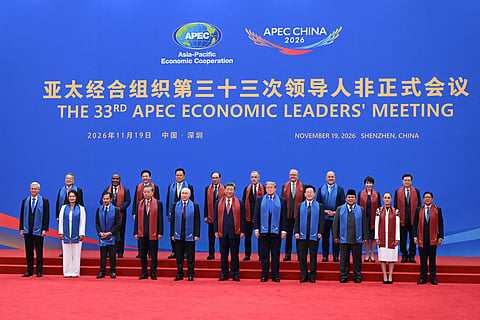
The hosting of the 2026 APEC Summit in Shenzhen, China, carries considerable significance. In the context of China’s growing role in the global economy, the rising influence of the Asia-Pacific region and the evolving dynamics of international trade, the summit cannot be viewed merely as an economic gathering. It is closely linked to the future of the global economic order, regional cooperation and the emergence of new geopolitical equations.
APEC, or Asia-Pacific Economic Cooperation, was established in 1989. It currently comprises 21 member economies and seeks to promote trade, investment, technological advancement, international cooperation and economic development among them. Its members include the United States, China, Japan, Russia, Australia, South Korea, Canada, Mexico, Indonesia, Singapore, Vietnam and several other economies. Together, these economies account for a substantial share of global economic output and international trade. Consequently, APEC’s deliberations, initiatives and collaborative efforts have the potential to significantly influence the global economy. APEC’s principal objectives are to reduce trade barriers, facilitate investment, strengthen economic cooperation, encourage technological innovation and promote more inclusive development among its member economies. However, unlike the European Union, APEC is not a supranational organisation empowered to enforce binding laws. Its functioning is largely based on voluntary cooperation, dialogue, consensus-building and mutual trust.
The theme of the 2026 summit was “Building an Asia-Pacific Community to Prosper Together”. China identified three major priorities for the summit—openness, innovation and cooperation—with the aim of fostering economic growth, strengthening regional connectivity and advancing technological development across the Asia-Pacific region. The summit deliberated on a wide range of issues, including free trade, investment, the digital economy, artificial intelligence, energy security, food security, connectivity, transportation, the development of small and medium-sized enterprises, and environmental sustainability. The leaders emphasised the need to sustain regional trade flows, strengthen supply chains and enhance cooperation to address emerging global economic challenges.
One of the significant outcomes of the summit was the adoption of the Shenzhen Outlook. The document outlines a renewed framework for cooperation in the Asia-Pacific region, focusing on trade and the economy, connectivity, innovation and development. It highlights the vision of a free trade area, physical and digital connectivity, human resource development, technological innovation and sustainable development.
In recent years, trade disputes, rising tariffs, wars, sanctions and geopolitical tensions have disrupted international supply chains. Many countries have been compelled to reconsider economic security in relation to food, energy, industrial raw materials and essential commodities. Against this backdrop, the APEC Summit underscored the importance of strengthening supply chain resilience. The objective is to ensure that disruptions in a particular country, region or production centre do not completely destabilise economic activities elsewhere. Diversification, alternative sourcing and greater international cooperation are increasingly essential to achieving this objective. The concept of the Free Trade Area of the Asia-Pacific (FTAAP) is also significant in the context of APEC’s trade agenda. It seeks to create a more integrated trading environment among the economies of the Asia-Pacific region. Although the realisation of this vision would require the harmonisation of trade policies, tariff regimes, regulatory frameworks and national economic interests, the initiative nevertheless holds considerable potential to reshape regional and global trade.
Artificial intelligence, information technology, automation, digital commerce and innovation are increasingly becoming powerful drivers of the global economy. Their application across manufacturing, education, healthcare, agriculture, transportation, financial services and governance is transforming both economic activity and everyday life. The APEC Summit emphasised the importance of harnessing the potential of the digital economy and artificial intelligence to enhance productivity, create new enterprises and improve people’s quality of life. Greater cooperation in digital trade, cross-border data exchange, online services, technological skills and the digital transformation of small businesses is particularly significant in this regard. However, technological advancement has also brought challenges, including data privacy, cybersecurity, digital fraud, employment insecurity and unequal access to technology. Therefore, technological progress must be pursued responsibly, with due regard for human welfare, individual rights and social equity.
Although India is not a member of APEC, it cannot remain insulated from the economic and strategic transformations taking place across the Asia-Pacific region. India’s geographical position, large population, expanding economy, digital capabilities, manufacturing potential and growing engagement in international trade make it an important stakeholder in the region.
There is considerable scope for India to strengthen trade relations, investment, technological cooperation and maritime connectivity with APEC economies. India’s Act East Policy, its engagement with Southeast Asian countries and its efforts to integrate into international production networks are closely aligned with the broader objectives of regional economic cooperation.
The Asia-Pacific market offers immense opportunities for India’s manufacturing sector, agriculture, information technology, pharmaceuticals, education, tourism and small enterprises. However, capitalising on these opportunities requires improved product quality, compliance with international standards, stronger transportation and port infrastructure, skilled human resources and a favourable investment climate. India’s possible membership in APEC has also been discussed at various times. However, admission requires adherence to the organisation’s procedures and the consensus of its members. In the present circumstances, strengthening regional engagement, trade partnerships and strategic cooperation remains a pragmatic approach for India.
The APEC Summit is not merely a platform for economic deliberations; it also reflects the political and strategic interests of major powers. The ongoing rivalry between the United States and China over trade, technology, maritime security and geopolitical influence has profoundly shaped the future of the Asia-Pacific region. In such circumstances, forums like APEC provide valuable opportunities for dialogue and cooperation. Sustaining economic engagement, connectivity and mutual interdependence despite geopolitical rivalry is essential for global peace and stability. However, declarations of cooperation alone cannot resolve every underlying conflict. Trust, transparency, fairness and mutual respect among nations remain the fundamental prerequisites for meaningful cooperation.
The 2026 APEC Summit represents an important endeavour to foster regional cooperation amid the changing realities of the global economy. The summit has opened up new possibilities in free trade, the digital economy, artificial intelligence, energy security, supply chain resilience, innovation and sustainable development. However, the success of these initiatives will ultimately depend on their effective implementation, the commitment of member economies and the extent of genuine cooperation. The future of the global economy will not be determined solely by competition among major powers; it will also depend on how far the benefits of development reach smaller economies, developing countries, farmers, workers, entrepreneurs and ordinary citizens. If technological and commercial advancement is integrated with human welfare, social justice and equitable development, forums such as APEC can play a more meaningful role in shaping a better global future.
The prosperity of the Asia-Pacific region is intrinsically linked to global prosperity. Therefore, cooperation over competition, dialogue over confrontation and collective welfare over narrow national interests must become the guiding principles of the contemporary world. The underlying message of the Shenzhen APEC Summit is equally compelling: prosperity cannot be achieved in isolation; it is through cooperation that its future can be made more secure, sustainable and inclusive.
