
- Home
- Live Blog
- Breaking News
- Top Headlines
- Cities
- NE News
- Sentinel Media
- Sports
- Education
- Jobs
Dr Shreeranjan
(shreeranjan85@gmail.com)
Asom Divas offers an opportunity to reflect on Assam’s remarkable journey, from once being spoken of in distant, nostalgic tones to now emerging at the forefront of India’s growth story. Today, cultural resurgence, industrial expansion, and social progress converge to shape a confident and future-ready Assam.
At the centre of this transformation lies India’s larger vision of self-reliance. Since 2014, under Prime Minister Narendra Modi’s sustained focus on the Northeast, Assam has witnessed renewed momentum in connectivity, investment, and opportunity creation. What once seemed peripheral to the mainstream development discourse has become integral to the nation’s growth engine.
During the inauguration of a bioethanol plant in September, the Prime Minister observed, “A new era of development has begun in Assam, and Assam is poised to become a major centre for trade and tourism.” This confidence is reflected in the major investments flowing into the state. At the Advantage Assam 2.0 Summit in February this year, nearly Rs 5 lakh crore worth of project commitments were secured, a clear indication that both national and global investors view Assam as a stable, opportunity-rich destination for industry and employment. It translates into large number of employment opportunities. In alignment with the “Rising Northeast” vision, the state is readying itself for rapid expansion across energy, logistics, tourism, manufacturing, electronics, and modern skill development.
Among emerging industries in Assam, the electronics, technology, and energy sectors stand out prominently. The establishment of a semiconductor assembly and testing facility marks a pivotal milestone. Once operational, the unit is expected to produce tens of millions of chips daily, serving both domestic and global markets. This project will generate significant direct and indirect employment, bring advanced manufacturing capabilities to Assam, and integrate the state into essential global supply chains.
A major development in the energy sector came recently when Indradhanush Gas Grid Limited (IGGL) began supplying natural gas to Numaligarh Refinery Limited (NRL) through the Guwahati–Numaligarh Pipeline. This marks the beginning of commercial operations for the Northeast Gas Grid, enabling the first flow of natural gas through IGGL’s network, a key step in realising the vision of “One Nation, One Gas Grid.” Experts note that, as the state prepares for further economic acceleration, there is a need to streamline processes related to land, environment, eco-sensitive zones, and overall ease of doing business. Such measures would support faster growth while safeguarding Assam’s ecological balance.
The Prime Minister has consistently reiterated Assam’s contribution to India’s energy security. Pointing out that the state’s petroleum products serve as a backbone of development, he highlighted that as India — currently the world’s fastest-growing major economy — continues to expand, energy demand will rise substantially. For decades, dependence on imported crude oil and gas has led to large outflows of national resources and job creation abroad. Reducing this dependency requires tapping domestic reserves, and Assam remains central to this effort.
Assam anchors the Northeast’s 13% share of India’s crude oil and 16% of natural gas production is produced in Northeast, large part is contited from Assam however close to 90% hydrocarbon resource is unexplored, even though the region holds nearly only 10% is explored18% of the country’s hydrocarbon resources. Much of this lies within the Upper Assam Shelf and the Assam-Arakan Fold Belt, spanning 136,000 sq. km with an estimated 55 billion barrels of oil equivalent potential. Yet, only around 10% of this basin has been fully explored. Responsible and expedited exploration could significantly enhance production, boost the regional economy, and contribute to reducing national import dependence. Assam’s importance lies in its central role in India’s import substitution ambitions. The country imports nearly 90% of its crude oil requirements, even though only about 10% of the total hydrocarbon potential has been explored. The Northeast accounts for 13% of India’s crude oil and 16% of its natural gas production, with a major share contributed by Assam. Yet, close to 90% of the region’s hydrocarbon resources remain unexplored, despite holding a significant portion of India’s reserves. Much of this potential lies in the Upper Assam Shelf and the Assam-Arakan Fold Belt, spanning 136,000 sq. km with an estimated 55 billion barrels of oil equivalent. Accelerated and responsible exploration in these basins could substantially raise production, strengthen the regional economy, and reduce India’s dependence on imported crude.
Expanding E&P activities in the Northeast is not just an energy imperative; it is a powerful catalyst for economic and strategic advancement. The petroleum sector already contributes substantially to the nation’s GDP, supports millions of direct and indirect jobs, and anchors critical ancillary industries such as petrochemicals, refining, logistics, and manufacturing. Enhanced exploration and production across the region would further generate lakhs of employment opportunities in the Northeastern states, creating new livelihoods and stimulating local enterprise. A stronger domestic petroleum ecosystem would also help conserve valuable foreign exchange, reduce exposure to global geopolitical volatility, and drive rural development through improved infrastructure and sustained economic activity.
Union DoNER Minister recently described Assam as “the heartbeat of a rising Northeast, where the mighty Brahmaputra flows as a symbol of continuity, courage, and creativity.” Positioned as the gateway to India’s eastern renaissance, Assam is emerging as the innovation and connectivity hub of a Viksit Purvottar.
Yet Assam’s transformation is not only industrial or economic. Equally significant is the renewed emphasis on cultural identity and civilisational heritage. A landmark moment this year was the UNESCO inscription of the Charaideo Maidams, the first cultural site from the Northeast to receive such global recognition. This honour is both a tribute to the Ahom civilisation and a revival of pride in Assam’s historical legacy.
The state has also deepened its commitment to preserving living traditions, from the iconic tea gardens that have shaped Assam’s global identity for more than a century, to its rich handloom heritage, passed down through generations. These are not merely economic contributors but vital expressions of community life, artistry, and connection to land.
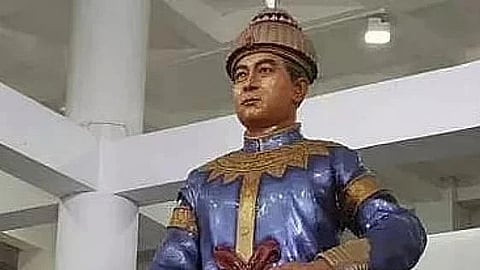
Under Chief Minister’s Dr. Himanta Biswa Sarma’s leadership, several steps have strengthened Assamese cultural identity: reinstating Assamese as the official language for government communication, facilitating the return of the sacred Vrindavani Vastra, establishing Sukapha University, constructing the monumental Lachit Borphukan statue in Jorhat, and founding a university in honour of Kanaklata Barua. Each of these initiatives reinforces a core principle: development must enrich, not erode, cultural identity.
At the heart of Assam’s growth story is its people-centric governance. The Orunodoi Scheme remains one of India’s most impactful welfare initiatives, delivering direct financial support to lakhs of women-led households. With Orunodoi 3.0, both coverage and benefits have expanded, helping families meet essential needs with dignity. This is governance steeped in compassion, effectiveness, and ground-level impact.
Today, Assam offers a rare balance of heritage and modernity, welfare and enterprise, identity and opportunity. From tea garden workers accessing cleaner energy solutions, to weavers entering new markets, from students gaining digital empowerment to engineers preparing for semiconductor manufacturing, the narrative has decisively changed. Assam is no longer on the nation’s periphery; it stands at the centre of India’s inclusive and sustainable rise.
As Asom Divas is celebrated, it becomes clear that Assam is moving forward with resilience, pride, and purpose; and, most importantly, growing together with its people.
(The writer is a retired IAS officer and former Chairman , Board of Revenue & Additional Chief Secretary, Government of Meghalaya.)
