
- Home
- Live Blog
- Breaking News
- Top Headlines
- Cities
- NE News
- Sentinel Media
- Sports
- Education
- Jobs
Amitava Mukherjee
(amitavamukherjee253@gmail.com)
How many of us really remember the names of Kwame Nkruma of Ghana, Gamal Abdel Nasser of Egypt, Jomo Kenyatta of Kenya, Julius Nyerere of Tanzania, and Haile Selassie of Ethiopia? Well, they were all pioneers of the movement of decolonization in Africa, which started in the middle of the 1950s and continued until the middle of the 1970s. Quite a few of them, like Nasser, Nkruma, and Nyerere, were socialists, with the last mentioned one—Julius Nyerere, a former President of Tanzania—still regarded as a shining light from the ‘Dark Continent’. Not only were they champions of decolonization, but they also tried to give Africa a certain character and bargaining power in the vortex of world politics by creating the Organisation of African Unity (OAU).
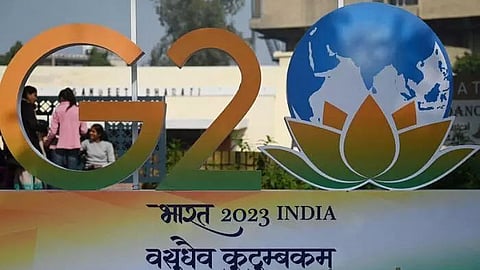
Today, as the scheduled date for the G-20 summit is approaching—the exact dates being September 9–10—the important question is whether the summit will have the presence of the African Union (AU), the successor organisation of the OAU, as a permanent member. India will be the President of the summit meeting, and Indian Prime Minister Narendra Modi has written to the G-20 member countries for granting such a status to the AU.
If the member countries agree, then it will be a great leap forward towards integrating a long-isolated but presently fast-developing group of humanity into a single bloc.
The OAU is one of the earliest examples of multilateral cooperation among a bloc of countries. It had other messages as well, particularly the spread of a socialist pattern of economy and society among large numbers of African countries. But the preponderance of one-party state systems in some of these countries sapped its foundations and vitality. As a result, the OAU could not cope with the strains unleashed by violence, such as the genocide in Rwanda, inter-country tensions emanating from the Nigeria-Cameroon dispute over the Bakassi peninsula since the 1970s, the Somalia-Ethiopia dispute over the Ugandan desert regions, the Algeria-Morocco territorial conflict, etc. Although Nkrumah and Julius Nyerere could provide humane administration in spite of having one-party state systems, the same could not be said about some others. Robert Mugabe in Zimbabwe and Haile Selassie in Ethiopia provided oppressive faces.
But the OAU lit the first light of awakening. Fundamental changes are now taking place in Africa’s socio-political patterns, and the African Union, as the successor organisation of the OAU, can demand its legitimate place in the various multilateral organisations that have come up since the end of the Cold War. By not accommodating the AU in a proper manner in different policy making bodies, injustices are being done to a large block of humanity which can contribute significantly towards ameliorating the phenomena bedevilling human existence on earth.
Let us consider the ground reality. Nowadays, the G-20 is a very important platform where hosts from developed and developing countries exchange opinions and chalk out strategies for facing future challenges. But it leaves out 96 percent of the African population. South Africa is the only representative that lags behind Nigeria and Egypt so far as their respective economies are concerned. Is any race prejudice acting behind the willful marginalisation of African nations? It is difficult to answer. But there is a certain strain of opinion among the G-20 group of countries that extending permanent membership status to the AU will make the platform unwieldy. But this argument looks facile. The European Union (EU), with 27 constituent countries, has permanent status. That creates no problem for the G-20, as the EU is represented by official representatives. Similar arrangement can be made with regard to African representation.
Till now, there has been no dearth of good wishes for African countries. The US, Germany, Japan, Canada, Russia, Brazil, China, Indonesia, etc., have expressed their voices in support of AU entry into the G-20. But practically, things have not moved. African countries do not enjoy opportunities to express themselves in the right places. In the IMF, a minuscule number of executive Directors can represent 46 African countries, while some other African nations are represented by Middle Eastern Directors. In the United Nations, African states are also not given due importance, despite the fact that they comprise nearly 28 percent of the overall membership. Such is the situation on international platforms.
But does Africa deserve this? Certainly not. The continent now has the eighth-largest economy in the world. Countries like Angola and Mozambique are showing spectacular economic progress. Not that the greater world has not taken note of it. During its term as Presidency of the G-20 in 2016, China took initiatives to support industrialization in Africa, while Germany, during her term, decided to promote private investment in Africa. On its part, the continent has also envisioned its Agenda 2063. Buoyed by a rising population, estimated to reach 2.5 billion by 2050, African countries are now aiming to become the world’s manufacturing hub, replacing China in the process. By all accounts, its labour supply chain will seem more lucrative to private capital than that of China.
The African Continental Free Trade Area, the world’s largest free trade area by membership, is a product of this kind of awakening among the African nations. This is very significant as African agriculture, still the primary occupation of a vast number of people on this continent, is susceptible to the vagaries of nature. The coming G-20 summit should focus on this aspect. There are some other areas, like climate change, debt restructuring, urbanisation, migration, etc., where situations in Africa will have far-reaching consequences on the world’s social, political, and economic canvas. However, the present situation will become clearer when it is taken into account that, in spite of its high potential, Africa today accounts for even less than 4 percent of global trade and foreign direct investment.
Leaders of the G-20 group of countries must realise that Africa is no longer a Dark Continent. Instead, it is the Continent of Future Hope. Its forests provide large carbon sinks. It can generate 40 percent of the world’s solar power and 10 percent of its wind energy. However, at present, its contributions in both of these areas are negligible.
The fault lies not with the African nations but with various international rules and regulations.
