
- Home
- Live Blog
- Breaking News
- Top Headlines
- Cities
- NE News
- Sentinel Media
- Sports
- Education
- Jobs
Satyabrat Borah
(satyabratborah12@gmail.com)
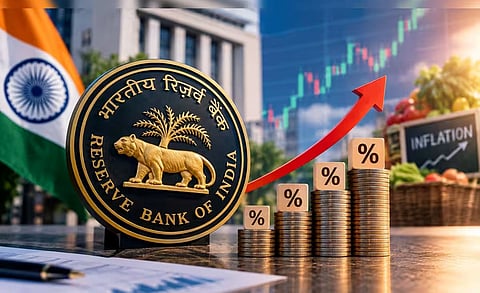
For a long time, people have been watching and waiting to see what the Reserve Bank of India would do about rising prices. The Monetary Policy Committee finally decided to take action and raise interest rates by 25 basis points. This move seemed necessary because everyday goods and services are becoming more expensive for ordinary citizens. The central bank now expects retail inflation to reach 4.9 per cent in the second quarter. This figure is higher than the previous forecast of 4.7 per cent made in August. Things are expected to get even tougher in the third quarter, when inflation might climb to 6 per cent. After that peak, it should drop slightly to 5.7 per cent in the fourth quarter.
One of the main reasons for this financial pressure is the cost of energy. Global oil prices have climbed back above $100 a barrel after a brief respite. Oil companies in the country have tried to shield the public by holding back price increases. They are likely doing this in response to government instructions. Still, these companies cannot absorb such massive financial costs forever. Higher crude oil prices are already causing serious problems. If fuel prices rise at local pumps, the cost of almost everything else will start climbing rapidly, too.
At the same time, poor rainfall during the monsoon season is hurting agriculture. A deficient monsoon reduces crop yields and pushes food prices higher. This problem is likely to persist for the rest of the year. When food and fuel costs are the main drivers of the rising cost of living, raising interest rates is not a magical fix. Higher borrowing costs have only a small and indirect effect on supply-side problems. Because of this reality, the message sent by the central bank becomes just as important as the rate hike itself. The committee used this policy review to allay public concerns about runaway prices. Managing expectations is a vital step because when people expect prices to keep rising, they start acting in ways that make those fears come true.
A small interest rate hike is a gentle push rather than a heavy hammer. Changing the official policy stance from neutral to calibrated tightening is the real signal here. People are no longer asking whether the central bank will raise rates again at the next meeting in December. The real question now is how large that next increase will be. The new stance tells the public that the monetary authority is ready to use every tool at its disposal to keep prices stable. The leaders at the bank also believe that the national economy is strong enough to handle this tightening phase. They have actually raised the economic growth forecast for the year to 7.1 per cent, up from the earlier prediction of 6.7 per cent.
Even with this positive growth outlook, many financial experts are warning of a possible slowdown in the later months of the year. Balancing rapid economic growth with efforts to tame the rising cost of living will test the skills of the country's financial leaders. Higher interest rates might also help slow the outflow of money from foreign investors. That shift could give the national currency some much-needed breathing room against foreign currencies. The central bank has done everything within its power to address the problem so far.
Now, the responsibility shifts to the government to finish the job. The administration has several powerful tools to manage food prices directly. Officials can use strategic food grain reserves to balance local markets. They can also adjust import and export rules to ensure that domestic supplies remain adequate. Taking strict action against hoarding and selling grain through open market operations are other effective methods. These administrative tools need to be used much more aggressively to bring relief to ordinary households. By working together, financial regulators and government leaders can create a stable environment in which families can afford their basic daily needs.
