
- Home
- Live Blog
- Breaking News
- Top Headlines
- Cities
- NE News
- Sentinel Media
- Sports
- Education
- Jobs
Jaideep Saikia
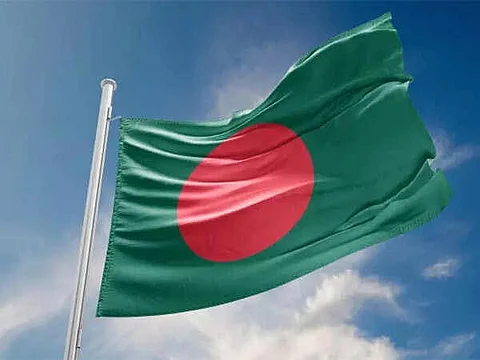
A couple of years before the overthrow of Sheikh Hasina, there was considerable flexing of muscle by a group of radical Islamists in Bangladesh. The Salafists threatened a secular section among Bangladeshi womenfolk for sporting the “Teep” (bindi) like their Hindu counterparts. But quite a few Muslim women from the “Land of Bangabandhu” rebelled, with one of them, Sadhana Ahmed, a celebrated playwright, warning the intimidating radicals by asserting on her Facebook, “Beshi Hoichoi Korbi Toh Sorjo Take Teep Banay Porbo” (Don’t shout too much; otherwise, I will wear the sun itself as a Teep)!
It was Bengali socio-cultural assertion at its menacing best. Indeed, it was the real reason why Bangladesh came into being in the first place, severing itself from a brutal Pakistan that was committing genocide on its citizenry.
I visited Dhaka in 2016 along with Lt. Gen. J. R. Mukherji, Amb. Pinak Ranjan Chakravarty, Maj. Gen. Arun Roye, Prof. Jayanta Kumar Ray, and a few others to hold talks with Bangladeshi counterparts. To be sure, I could not understand the difference between a Bengali from Kolkata, whom I had left behind, and the one I met in Dhaka. Not only was my photograph and interview front-paged in The Daily Star (26 March 2016) titled “Thank you, Bangladesh” for my gratitude to Sheikh Hasina for acting against the Indian insurgents billeted in the erstwhile East Pakistan, but the mores I encountered in the Dhaka Club lobby or in the street corner of Dhanmondi were more than familiar.
Prof. Gowher Rizvi, the international affairs adviser to the then Bangladesh Prime Minister, Sheikh Hasina, came to visit me in the Club without any fanfare and graciously accepted the Phulam Gamusa that I presented him. He told me about the atmosphere in Bangladesh that day. He informed me how dangerous the Bangladesh Jamaat-e-Islami (JeI) would be if they were ever to come to power. His almost paternal-like affection for me was so appealing that I really felt that here was a secular Bangladeshi top gun whose pro-India sentiments bore no sign of us and them!
However, it is uncertain whether present-day Bangladesh is the same as it was in the past.
The tectonic shifts in the geopolitical landscape of South Asia have shattered the long-held assumption that the heart of global Islamist radicalism is permanently anchored in the Levant or the Af-Pak tribal belts. The results of the February 2026 general election in Bangladesh, where the JeI secured an unprecedented 68 seats (and 77 seats through its wider 11-Party Alliance), are not merely an internal electoral anomaly. They are a definitive structural catalyst.
By capturing nearly a quarter of the legislature and establishing themselves as the undisputed, official parliamentary opposition, the JeI has institutionalised an Islamist vanguard in the world’s eighth-most populous country. Combined with deep socioeconomic vulnerabilities, a massive demographic youth bulge, and highly porous borders, this democratic normalisation makes Bangladesh a prime candidate to emerge as the definitive global epicentre of the Salafi-Islamist movement by the beginning of 2028.
For fifteen years, secular crackdowns kept the JeI legally banned, financially choked, and electorally frozen. However, the aftermath of the 2024 student-led uprising dismantled the old secular state machinery, allowing the JeI to reemerge not as a fringe extremist cell but as a legitimate mass mobilisation juggernaut.
Its leap from a historic high of just 18 seats in 1991 to 68 seats in 2026 represents an explosive 27% swing in popular vote share. The newfound legislative immunity provides three critical strategic advantages for the Salafi expansion:
n The Legislative Shield: The JeI now possesses a powerful platform to block counter-extremism legislation, rewrite public education curricula, and influence state judiciary appointments.
n Diplomatic normalisation: Western missions and regional capitals, including New Delhi, are forced to treat a party once defined by its Islamist cadre structure as a standard diplomatic stakeholder.
n Institutional Penetration: The party has effectively leveraged its political return to capture systemic nodes across private banking networks, large-scale charities, and elite educational boards. It will be of import to note that the JeI’s student wing swept central union elections across five major universities in Bangladesh, including Dhaka University (which is also known as the second Jatiyo Sangsod), Jahangirnagar University, Chittagong University, Rajshahi University and Jagannath University.
The global Salafi movement has historically struggled to sustain a presence in democratic structures due to ideological friction with modern governance. Bangladesh, however, has solved this problem through a process termed “democratic rebranding”. Under the leadership of Shafiqur Rahman, the JeI deliberately framed its post-2024 return around anti-corruption, civil rights, and social justice. This strategic shift directly capitalises on widespread youth unemployment and severe economic stagnation.
While the ruling Bangladesh Nationalist Party (BNP) manages the bureaucratic friction of governing a struggling economy, the JeI sits comfortably in opposition, capturing the ideological imagination of the younger generation. Its student wing, the Islami Chhatra Shibir (ICS), which, as aforesaid, won recent university council elections, is presently creating an intellectual conveyor belt that channels highly educated, middle-class youth away from secular nationalism and directly into a sophisticated, Salafi-leaning political framework.
In my analytical frameworks on South Asian asymmetric warfare, I have consistently asserted that the primary error of global security architectures is treating radicalisation as an intellectual virus to be cured reactively (deradicalisation) rather than defensively blocking its societal entry (counter-radicalization). But for one reason or the other, the state, even in India, has not comprehended the seminal difference. This anomaly has to be immediately corrected, even if it is initially by way of popular and correct usage of the phrase ‘counter-radicalisation’. There is no such animal called ‘deradicalisation’. I wrote the foreword and curated a handbook on counterradicalization for the Assam Police’s Special Branch almost a decade ago, in July 2016.
The foundational theoretician of South Asian Islamism, Abul A’la Maududi, envisioned a governance model he described as a “theo-democracy”—a system where the democratic ballot box is used to permanently install divine sovereignty and Islamic law. By 2028, Bangladesh is on track to become the global testing ground for this precise model.
As Middle Eastern states continue to pivot toward secular economic modernisation and state-guided nationalism, the global Salafi movement has been left without a major state anchor. Bangladesh’s potent mix of institutional legitimacy, strategic geography, and a massive, economically disaffected population provides the perfect environment for this vacuum to be filled.
The JeI’s 68 seats serve as a launching pad, not the final destination of this political movement. If current political trajectories hold, by 2028, the primary drivers of global Salafi theory and practice will no longer originate from the deserts of the Middle East but from the dense, highly organised, and democratically legitimised political landscape of Bangladesh. My former boss in the National Security Council Secretariat, Government of India, Satish Chandra, recently told me that the ruling BNP and the JeI are like Lewis Carroll’s identical twins “Tweedledum” and “Tweedledee,” which will only accelerate Bangladesh’s emergence as the epicentre of global Salafism by 2028, if not sooner.
(Jaideep Saikia is a renowned South Asian Conflict Theorist and Bestselling Author. He is also a Member of the Counterterrorism Advisory Board of Homeland Security Today, USA, Distinguished Fellow of the prestigious Delhi-based Council of Strategic and Defense Research & Chief Professor of Practice (Honorary) of The Global University, Itanagar. His email is jdpsaikia@gmail.com)
