
- Home
- Live Blog
- Breaking News
- Top Headlines
- Cities
- NE News
- Sentinel Media
- Sports
- Education
- Jobs
Himangshu Ranjan Bhuyan
(himangshur1989@gmail.com)
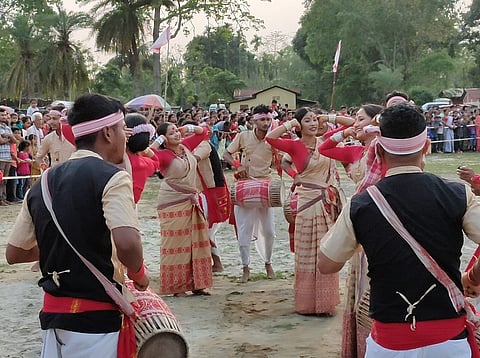
The Barpukhuripar Mukoli Bihu in Jamugurihat, a prominent cultural celebration, stands as a symbol of Assam’s deep-rooted traditions and evolving identity. This vibrant festival, which has gradually transformed from a local rural event to a well-recognized cultural extravaganza, exemplifies the dynamic interplay between history, community, and cultural pride. Jamugurihat’s Bihu is not just a festival—it is a living embodiment of Assam’s folk culture, where the rhythms of drums and the vibrancy of dance convey more than just celebration—they encapsulate the essence of Assamese identity and its journey through time.
The origin of Barpukhuripar Mukoli Bihu can be traced back to the 1960s, a time when the community of Jamugurihat, located in Sonitpur district, saw the need to take the traditional Bihu celebrations from the confines of homes and fields to a more inclusive, public space. At its core, this transformation marked the birth of the Mukoli Bihu, an open and free-spirited version of the festival that invited participation from all members of the community, regardless of their social, ethnic, or cultural background. It was a move away from the formal, more organized Bihu performances that had traditionally been held on stage and confined to specific groups. The open Bihu brought forth a more inclusive spirit, creating a unique space for artistic expression.
Jamugurihat’s Bihu, known for its spirit of unity and collective participation, began with humble rural roots. The first instances of Bihu in this region were informal gatherings where local men and women, often in their youth, would come together to celebrate the arrival of the new season, marking the Assamese New Year with songs, dances, and rituals. As time went by, this humble tradition started to gain momentum and began to take on new forms. It was in 1961 that the first open Bihu—Mukoli Bihu—was organized at Barpukhuripar, under the guidance of a few visionary community members. This event broke away from conventional practices, paving the way for what would become a significant cultural event for the entire region.
The 1960s marked a crucial phase for the Barpukhuripar Mukoli Bihu. Initially met with opposition from conservative sections of society, the idea of an open Bihu was perceived as a challenge to traditional values. However, the young organizers were undeterred. They believed that Bihu, as a festival of the masses, should reflect the openness and dynamism of Assamese culture. The determination to celebrate the festival on a public stage, where all could partake without restriction, was a clear message of inclusivity. By 1968, the event had grown so popular that it was officially revived, overcoming all the societal challenges posed by the opposition. A new chapter had begun for the Mukoli Bihu, and it was here to stay.
The turning point for the Mukoli Bihu came in 1971, when it was formally renamed Barpukhuripar Mukoli Bihu. By this time, the festival had gained significant recognition, not only within Assam but beyond its borders. The enthusiastic participation of diverse ethnic communities, including Assamese, Mishing, Nepali, and others, made this celebration truly a confluence of various cultural expressions. The traditional Assamese Bihu dance, with its rhythmic beats and graceful movements, now incorporated elements from other regional dances, further enriching the festival’s appeal.
Over the years, Barpukhuripar Mukoli Bihu became more than just a local event; it evolved into a cultural phenomenon. Its unique charm lay in the fact that it was not just about celebrating the arrival of Bihu with traditional dance and music but about embracing and showcasing the region’s cultural diversity. At its core, Mukoli Bihu is a celebration of the collective spirit—people of all ages, backgrounds, and communities come together to celebrate the agricultural cycle, the richness of Assamese culture, and the joy of unity in diversity.
As the years passed, Barpukhuripar Mukoli Bihu started to gain national attention. In 1974, the legendary Dr. Bhupen Hazarika, an icon of Assamese music, visited the festival. Overwhelmed by the energy and vibrancy of the event, he praised it for its inclusiveness and the way it brought together different communities under one cultural umbrella. Dr. Hazarika’s endorsement was a turning point for the Mukoli Bihu. His visit further solidified the event’s status as one of Assam’s most culturally significant festivals. The event soon found its way to media outlets, with coverage by Doordarshan, Akashvani, and regional newspapers. In 1979, a special program on the Mukoli Bihu was broadcast, garnering a larger audience both inside and outside of Assam. This visibility played a key role in the event’s growth, bringing it into the national spotlight.
By 1980, Barpukhuripar Mukoli Bihu had grown into an international cultural landmark, drawing visitors from various parts of India and abroad. Its inclusive spirit, coupled with the unique charm of the Bihu dances, drummed its way into the hearts of the people. It was during this time that Barpukhuripar Mukoli Bihu gained international recognition, securing the seventh position among the world’s folk cultures. This was a huge accomplishment, not only for Jamugurihat but for Assam, as it showcased the region’s cultural prowess on a global stage.
In addition to its growing popularity, the Mukoli Bihu continued to innovate and improve. In 1979, a souvenir titled ‘Suhuri’ was published, further enhancing the cultural legacy of the event. The souvenir featured photographs, articles, and stories about the festival, documenting its journey and significance. This publication became an important part of the festival, serving as both a cultural artifact and a testament to the importance of the event in Assam’s cultural history.
One of the most striking features of Barpukhuripar Mukoli Bihu is its size and scale. Every year, hundreds of Bihu troupes gather at the Barpukhuripar field, creating a spectacle that is both breathtaking and awe-inspiring. These troupes, representing different villages and communities, perform their dances simultaneously, creating a vibrant and colorful scene that is unlike any other. The sight of hundreds of dancers, with their traditional attire and rhythmic movements, enveloped by the sounds of drums, cymbals, and horns, is a testament to the rich cultural heritage of Assam. This collective celebration—where every participant contributes to the collective joy—reminds everyone that Bihu is not just a festival but a reflection of the region’s spirit and resilience.
Barpukhuripar Mukoli Bihu is not only a celebration of Bihu but a celebration of life itself. It is a festival that honours the seasons, the harvest, and the community. It is a festival that binds together people from different walks of life, transcending the boundaries of caste, creed, and ethnicity. Over the decades, the Mukoli Bihu has become a place where new generations come to experience the vibrancy of their culture, learn about the region’s folk traditions, and celebrate the unity of their people. It has become a space where the youth, in particular, engage with their cultural heritage, not just as spectators but as active participants, dancing to the rhythm of their roots.
As we look toward the future, Barpukhuripar Mukoli Bihu stands as a beacon of Assamese cultural pride. It has traversed a remarkable journey, from humble rural beginnings to becoming a symbol of Assam’s rich cultural tapestry. The event has not only preserved the traditions of the past but also embraced the diversity and dynamism of modern Assam. Barpukhuripar Mukoli Bihu is more than just a festival; it is a living, breathing testament to the power of culture, community, and unity in a rapidly changing world. With its continued growth and success, it will no doubt remain a shining example of Assam’s cultural vibrancy for generations to come.
