
- Home
- Live Blog
- Breaking News
- Top Headlines
- Cities
- NE News
- Sentinel Media
- Sports
- Education
- Jobs
Himangshu Ranjan Bhuyan
(himangshur1989@gmail.com)
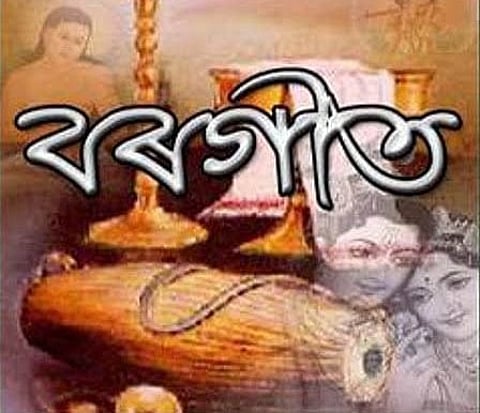
Few musical traditions have remained as spiritually vibrant and culturally influential as Borgeet. Created during one of the most transformative periods in the history of Assam, these devotional compositions have travelled across more than five centuries without losing their original purpose or artistic dignity. They continue to be sung in xatras, namghars, religious gatherings, and cultural institutions with the same reverence that surrounded them when they first emerged under the guidance of Mahapurush Srimanta Sankaradeva and his foremost disciple, Sri Sri Madhavdeva. Their endurance is remarkable because they have resisted the pressures of changing tastes, commercial entertainment, and shifting musical fashions. While many artistic traditions gradually adapt themselves to popular demand, Borgeet has retained its essential character through disciplined preservation and deep collective respect. That continuity has allowed successive generations to inherit not merely a body of songs but an entire philosophy that connects literature, music, spirituality, and cultural identity. Borgeet, therefore, represents far more than a devotional repertoire. It embodies a living civilizational memory that has shaped Assamese society since the sixteenth century. Every performance carries within it echoes of an intellectual movement that sought to transform religious life through simplicity, ethical conduct, and heartfelt devotion. This historical continuity explains why Borgeet still commands admiration not only from devotees but also from scholars of literature, musicology, philosophy, and cultural history. Across centuries, it has remained a bridge linking the past with the present, reminding society that enduring traditions survive not through nostalgia but through constant practice and unwavering faith.
The emergence of Borgeet cannot be separated from the wider religious and social movement initiated by Sankaradeva. During an age marked by social divisions and ritual complexity, he introduced Neo-Vaishnavism as a faith rooted in devotion, equality, compassion, and collective worship. Music naturally became one of the most effective vehicles for communicating these ideals. Yet the songs he composed were fundamentally different from ordinary lyrical compositions. Their purpose was neither entertainment nor emotional indulgence. Instead, they were intended to awaken spiritual awareness and inspire moral reflection. The first known Borgeet, “Mon Meri Ram Charanahi Lagu,” composed during Sankaradeva’s pilgrimage to Badrikashram, reflects this orientation from its very beginning. The song expresses detachment from worldly attractions and complete surrender before the Divine. It established the philosophical direction that later Borgeets would continue to follow. Historical records indicate that Sankaradeva originally composed a much larger collection of songs, most of which disappeared after the destruction of an invaluable manuscript in a devastating fire. Only a small number survived through oral transmission. Rather than attempting to recreate what had been lost, Sankaradeva entrusted the continuation of the tradition to Madhavdeva, whose extraordinary literary and spiritual abilities enabled the corpus of Borgeet to reach maturity. Together, Guru and disciple created a devotional tradition that balanced theological depth with artistic discipline. Their compositions eventually became inseparable from the ritual life of Assamese Vaishnavism and established a standard that later generations chose not to alter. This decision to preserve the original corpus gave Borgeet an exceptional degree of authenticity rarely found in other musical traditions, where expansion and revision often become inevitable over time.
One of the defining strengths of Borgeet lies in its remarkable synthesis of language, poetry, philosophy, and music. The Gurus deliberately selected Brajavali rather than everyday Assamese as the medium of composition. This literary language, created by blending Assamese with elements of Maithili and other eastern Indo-Aryan traditions, offered both familiarity and sacred distance. It allowed listeners to experience a devotional atmosphere distinct from ordinary conversation while remaining accessible enough to convey profound spiritual ideas. The poetry of Borgeet is notable for its economy of expression. Without relying upon elaborate ornamentation, the compositions communicate themes such as surrender, humility, impermanence, divine grace, and unwavering devotion. Unlike many Vaishnava traditions elsewhere in India that emphasized the romantic relationship between Radha and Krishna, the Assamese tradition concentrated primarily upon reverence for the Supreme Being. Sensuous imagery rarely occupies the centre of these compositions. Instead, the songs celebrate the majesty of God, the limitations of worldly existence, and the spiritual fulfilment that comes through sincere devotion. This theological orientation distinguishes Borgeet within the wider Bhakti movement. Philosophical ideas drawn from Vedantic thought appear throughout the corpus, yet they are expressed with clarity rather than abstraction. Listeners need not possess scholarly training to appreciate their message. That balance between intellectual depth and emotional accessibility explains why Borgeet continues to resonate across educational, social, and generational boundaries. Its language may belong to another era, but its moral and spiritual concerns remain deeply relevant to contemporary society.
Equally significant is the sophisticated musical architecture that has enabled Borgeet to occupy a distinguished position within the classical traditions of the Indian subcontinent. Every composition is inseparably connected with a specific raga, and the disciplined observance of melodic structure has remained one of its defining characteristics. Although several ragas bear names familiar within Hindustani classical music, their treatment in Borgeet reflects an independent musical identity shaped by the cultural environment of Assam. Generations of musicians have carefully transmitted this distinctive style through oral instruction, preserving nuances that cannot easily be captured in written notation alone. Rhythm also plays a central role. The interaction of Khol, cymbals, and voice produces an atmosphere of solemn devotion rather than dramatic display. Musical expression remains subordinate to spiritual purpose.
Ornamentation is employed only where it enhances contemplation instead of attracting attention to technical brilliance. Another distinctive feature is the association of particular ragas with different periods of the day. Morning, afternoon, evening, and night each possess their own prescribed musical mood, reflecting an intimate relationship between devotional practice and the rhythms of nature. Such discipline reveals that Borgeet developed not merely as a collection of sacred songs but as a complete musical system governed by aesthetic and spiritual principles. This achievement has attracted sustained scholarly attention. Musicologists including Birendranath Dutta observed that Borgeet successfully combines the broader heritage of Indian raga music with a uniquely Assamese mode of expression. Cultural figures such as Jyotiprasad Agarwala and Bishnu Prasad Rabha likewise recognized within it an indigenous classical tradition deserving independent recognition. Their assessments remain important because they remind modern audiences that Borgeet should not be viewed simply as regional devotional music. It represents a sophisticated artistic achievement capable of standing alongside other classical traditions of India while preserving its own unmistakable identity.
The enduring vitality of Borgeet owes much to the institutional framework established by the xatras and namghars of Assam. These institutions transformed the songs from literary compositions into living practices embedded within everyday religious life. Every major congregational prayer begins with Borgeet, and generations of Gayan-Bayan performers have dedicated themselves to preserving its authentic style. Such continuity has protected the tradition against fragmentation and excessive innovation. Unlike many musical genres that expanded through constant addition of new compositions, Borgeet remained confined to the canonical works of Sankaradeva and Madhavdeva. This limitation was not the result of artistic stagnation but of profound reverence. Later composers certainly produced devotional songs in similar styles, yet the community consciously distinguished those works from the original Borgeet corpus. The decision reflected a belief that the spiritual authority of the Gurus could not be replicated. Consequently, the tradition retained remarkable textual and musical stability over centuries. Even today, aspiring performers undergo rigorous training before they are entrusted with public performance. Such discipline has enabled Borgeet to survive changing political systems, colonial rule, technological revolutions, and rapid social transformation. Nevertheless, new challenges have emerged. Urbanization, shrinking opportunities for traditional apprenticeship, declining familiarity with Brajavali among younger generations, and the growing dominance of commercial entertainment all threaten the continuity of specialised cultural practices. Digital technology, however, has also created valuable opportunities. Archival recordings, online educational platforms, academic research, and institutional documentation are making Borgeet accessible to audiences far beyond Assam. Universities, cultural academies, and research organisations have begun documenting manuscripts, recording performances, and analysing the musical grammar of the tradition with renewed seriousness. Such initiatives demonstrate that preservation today requires both fidelity to inherited practices and intelligent adaptation to modern methods of cultural transmission. The future of Borgeet will depend not upon nostalgic admiration alone but upon sustained investment in education, research, performance, and community participation.
Centuries after its creation, Borgeet continues to illuminate Assamese cultural life with extraordinary grace. It reminds society that great artistic traditions emerge when spiritual conviction, intellectual vision, and creative excellence converge. The songs have outlived kingdoms, political upheavals, and dramatic shifts in public taste because they speak to concerns that remain universal: the search for meaning, the impermanence of worldly existence, the value of humility, and the longing for inner peace. Their influence extends beyond religious devotion into literature, theatre, music, philosophy, and collective identity. For Assam, Borgeet stands as one of the clearest expressions of a civilization that valued learning without arrogance, faith without intolerance, and artistic refinement without extravagance. Every generation inherits the responsibility of ensuring that this legacy remains vibrant rather than merely commemorated. Preserving Borgeet does not mean confining it to museums or ceremonial occasions. It means encouraging serious scholarship, strengthening traditional institutions, supporting young practitioners, and introducing its historical and musical significance to wider audiences without compromising its authenticity. Such efforts will ensure that the melodies first sung by Sankaradeva and Madhavdeva continue to inspire future generations with the same spiritual force that has sustained them for more than five hundred years. Borgeet has endured through the centuries because it represents more than music. It embodies a vision of life in which devotion, discipline, culture, and humanity exist in perfect harmony, making it one of the most enduring and distinguished achievements of Assamese civilization.
