
- Home
- Live Blog
- Breaking News
- Top Headlines
- Cities
- NE News
- Sentinel Media
- Sports
- Education
- Jobs
All-weather connectivity in the northeast region is not merely an infrastructure upgrade to ease travel; it is a strategic necessity for the
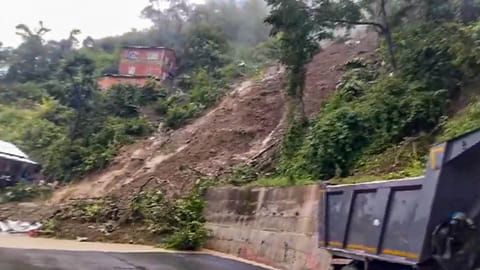
ecologically fragile region located in a geopolitically important frontier of India. However, the occurrence of massive landslides causing simultaneous traffic disruptions along important highways in Assam, Meghalaya, and Manipur highlights the harsh reality that the region's strategic corridors remain vulnerable to landslides and traffic disruption. The persistence of such risks points to a critical gap despite massive funding by the central government for upgrading highways for all-weather and seamless connectivity. Ironically, the region's high vulnerability to landslide risks is well known to highway construction agencies, well researched, and incorporated in the National Landslide Risk Management Strategy. The repeated problems show that the expert advice on how to reduce landslide risks has not been fully and effectively included in the design and execution of highway projects. While India is advocating for the swift completion of two strategically important cross-border connectivity projects in Myanmar-the Kaladan Multimodal Transport and Transit project and the India-Myanmar-Thailand trilateral highway project, which are crucial for the northeast-the region must not falter in implementing basic landslide risk mitigation measures or in preventing recurring highway collapses along the corridors that will connect to these key international routes. The recurrence of simultaneous highway collapses in several states, if not checked, will shape negative perceptions about the region's disaster resilience among potential global investors and erode their confidence about the stability and long-term sustainability of their business ventures in the region. It also undermines the Northeastern states' efforts to establish the region as the primary investment hub for South and Southeast Asia by highlighting the improved highway connectivity and infrastructure growth achieved over the past decade. Under the Rs 1,000-crore National Disaster Risk Management Project for 15 states, the northeast states will receive Rs 378 crore from the central government to help prepare for disasters and work on other projects to reduce landslides, which will include monitoring, awareness programmes, and training. Given the size and seriousness of landslide issues in the region, the funding for the scheme needs to be increased to make sure that the quality of its implementation is not affected by a lack of resources. While there are scopes for the states in the region to seek approval for independent projects with higher allocations based on post-disaster needs assessments, the region needs to prioritise landslide-prevention measures over post-disaster restoration and relief for a decisive shift from reactive responses to proactive risk reduction. Such a shift can be possible only when states in the region are provided more financial assistance under centrally sponsored schemes and projects aimed at landslide risk prevention. Apart from the states, highway construction agencies building capacities to integrate measures for preventing landslides, especially along the strategic corridors, are essential to seeing a turnaround from chronic landslide disruptions in the region. Significant advances made in design improvement for landslide risk mitigation, observed in pilot projects that combine early warning systems and site-specific engineering, are encouraging developments. But there is no room for complacency as recurring slope failure leading to the triggering of massive landslides leaves a trail of devastation involving huge expenditure for restoring connectivity, providing relief, and compensating for damage to properties and loss of lives. Disruption in connectivity cut off supply lines, which has a direct bearing on availability of essential commodities, including food grains, and loss of earnings. Highway blockages due to landslides isolate major tourism destinations until the restoration of a reliable transport link, which, in turn, triggers massive financial losses to stakeholders in the tourism and hospitality businesses. Such business risks often create psychological barriers for entrepreneurs, making them hesitant to invest larger amounts in tourism ventures due to the anxiety of defaulting on high-interest loans. The advancement in technology and design adoption for landslide risk prevention in highway projects in the region cannot be incremental and must be scaled up quickly to match the scale and magnitude of recurring landslide events. It is time the government gives a decisive push for on-ground application of the knowledge derived for landslide risk mitigation and prevention through enhanced budgetary support, capacity building and widespread public awareness. As connectivity disruptions along strategic highways have a direct bearing on the economy of the state, the state governments, by prioritising community awareness building on landslide monitoring, can significantly contribute towards efforts by the central government for landslide-risk mitigation. Increased funding support from the central and state governments to scientific institutions and universities for collaborative studies can significantly enhance the knowledge base. The cycles of landslides in the region must be broken through collective efforts by the government, scientific institutions, highway agencies, and communities if the region is to free itself from the chronic pattern of recurring landslides.
