
- Home
- Live Blog
- Breaking News
- Top Headlines
- Cities
- NE News
- Sentinel Media
- Sports
- Education
- Jobs
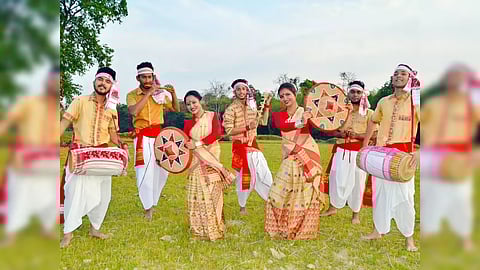
Rongali Bihu, the vibrant Assamese New Year and spring festival, faces modern challenges as ur- banisation and digital distractions alter its traditional essence. While community spirit remains strong, the shift toward staged performances and commercialisation sometimes overshadows its intrinsic connection to nature and rural lifestyle. Adapting to these changes is essential to preserving the festival’s deep-rooted cultural identity. Traditionally, Rongali Bihu spans seven days, focusing on agrarian rituals like worshipping cows and singing hussari and bihunaam. However, in urban centres, Bihu has transformed into stage-based talent shows and commercial events. The focus has shifted from the spontaneous, community-bonding, and ritualistic aspects of Bihu to staged, choreographed performances, leading to a loss of the deep cultural and personal connection to the festival’s origins. The intimate community gatherings in open fields are being replaced by gated Bihu committees, reducing the spontaneous communal participation that once characterised the festival. Bihu has come under such tremendous influence of commercialisation that the emphasis on celebrity singers and corporate sponsorship has reduced the spiritual and communal aspect. At the same time, there has been such a degree of technological distractions that the younger generations, often drawn to digital entertainment, engage less in traditional practices like playing the dhol or pepa or taking part in hussari. Moreover, the demands of modern busy lifestyles restrict the time people can devote to the week-long festivities, altering the manner in which they celebrate. Given this situation, what could be the way forward? Despite these challenges, Rongali Bihu remains the most important festival, deeply rooted in Assamese identity. To maintain its authenticity, there is a need to encourage youth participation in traditional performances, encouraging them to learn the traditional songs and dances rather than just watching staged performances. Reintegrating the traditional rituals alongside contemporary celebrations can help balance tradition and change. In conclusion, one can say that while the changing times have posed challenges to Rongali Bihu, it has also provided a new platform for it to reach a wider audience. The future of Bihu lies in embracing its traditional roots while adapting to the modern lifestyle. The festival continues to symbolize the indomitable spirit of the Assamese people, uniting them through the cultural richness of dance, music, and food. The sentiment that Rongali Bihu has lost its original fervour is a subject of debate in Assam, often highlighting a shift from traditional, community-based celebrations to commercialised spectacles, particularly in urban areas.
