
- Home
- Live Blog
- Breaking News
- Top Headlines
- Cities
- NE News
- Sentinel Media
- Sports
- Education
- Jobs
Uddhab Sarmah
(ucsarmah@gmail.com)
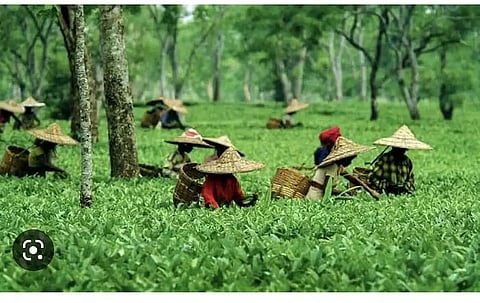
For nearly two centuries, Assam tea has been more than a beverage. It has been a symbol of heritage, a pillar of rural livelihoods, and one of India’s most celebrated agricultural products. The lush tea gardens stretching across the Brahmaputra Valley have shaped the economy, culture, and identity of Assam. Today, however, this age-old industry faces one of the greatest challenges in its history—climate change.
What was once considered an environmental concern has now become a direct economic and sustainability crisis. The effects of changing weather patterns are no longer theoretical projections. They are visible realities experienced by tea planters, workers, scientists, and industry stakeholders across Assam.
Visible Changes in Weather Patterns: Tea is an extremely climate-sensitive crop. It thrives under specific conditions of temperature, rainfall, humidity, and sunshine. Even small variations can significantly affect both yield and quality.
Over the past decade, Assam has witnessed increasingly erratic weather conditions:
Prolonged dry spells during critical growth periods.
(i) Sudden and intense rainfall events, leading to waterlogging.
(ii) Rising summer temperatures frequently exceeding historical averages.
(iii) Extended heat waves.
(iv) Increased frequency of floods and riverbank erosion.
(v) Unseasonal rainfall during harvesting periods.
(vi) Greater occurrence of storms and high-velocity winds.
The traditional predictability of seasons upon which tea cultivation depended is gradually disappearing.
Impact on tea production:
Tea bushes require a delicate balance of moisture and temperature. During drought conditions, growth slows considerably, resulting in reduced flushes and lower green leaf production.
On the other hand, excessive rainfall often causes the following:
(i) Nutrient leaching from soils.
(ii) Root stress and reduced plant vigour.
(iii) Increased soil erosion.
(iv) Operational disruptions in plucking and transportation.
Many tea estates have reported fluctuating crop yields from year to year, making production planning increasingly difficult. Small tea growers, who often lack irrigation facilities and financial reserves, are particularly vulnerable.
The cumulative effect is a decline in productivity and rising production costs.
Quality under Threat: Perhaps even more concerning is the impact on tea quality.
Assam tea is globally renowned for its briskness, strength, brightness, and unique malty character. These characteristics are closely linked to environmental conditions.
High temperatures and moisture stress can:
Alter biochemical processes within tea leaves.
Reduce desirable flavour compounds.
Increase fibre content in shoots.
Affect liquor quality and aroma.
Premium second flush teas, traditionally valued in international markets, are becoming increasingly difficult to produce consistently due to changing climatic conditions.
The challenge is not only producing tea but also producing the exceptional quality that commands premium prices.
Emerging Pest and Disease Pressures
(i) Climate change is also altering pest and disease dynamics.
(ii) Warmer temperatures and changing humidity levels create favourable conditions for (a) the tea mosquito bug, (b) red spider mite, (c) helopeltis infestations, and (d) various fungal diseases.
As pest pressures increase, growers often face higher crop protection costs and greater management challenges. The situation is particularly significant at a time when global consumers are demanding reduced pesticide residues and environmentally sustainable production practices.
The Human Dimension: The tea industry supports millions of people directly and indirectly across Assam and Northeast India.
Climate-related disruptions affect employment opportunities. (ii) Worker welfare (iii) household incomes (community development) and (iv) regional economic stability.
Many tea workers and smallholders are already experiencing the consequences of climate variability through reduced earnings and increased uncertainty. Climate change is therefore not merely an environmental issue; it is also a social and economic issue.
Building Climate Resilience:
Despite these challenges, there remains significant scope for adaptation and resilience-building.
The future of Assam tea will depend on embracing climate-smart strategies such as the following:
Soil Health Management: Healthy soils act as natural carbon sinks and water reservoirs.
Practices such as organic matter enrichment – mulching, biochar application, cover cropping, and compost utilization can significantly improve soil moisture retention and plant resilience.
Agroforestry and shade management, such as increasing shade tree diversity, can reduce heat stress, improve biodiversity, enhance carbon sequestration and create favourable microclimates for tea cultivation, and traditional shade systems may once again become a vital climate adaptation tool.
Efficient water management like investment in rainwater harvesting, farm ponds, drip and sprinkler systems, and watershed management will become essential to cope with prolonged dry periods.
Climate-Smart Tea Varieties: Research institutions must accelerate the development of tea cultivars that are drought tolerant, heat resistant, pest-resilient, and high-quality. Future tea breeding programmes should place climate resilience at the centre of innovation.
Digital Agriculture
Weather forecasting, remote sensing, AI-driven advisory services, and precision agriculture technologies can help growers make better decisions regarding irrigation, fertiliser application, and pest management.
Carbon Sequestration: A New Opportunity:
Tea plantations have significant potential to contribute to climate mitigation through soil organic carbon enhancement, agroforestry, regenerative agriculture, and biodiversity restoration, and tea landscapes can become important carbon sinks.
In the future, carbon credits and ecosystem service payments may provide additional revenue streams for tea growers while supporting environmental sustainability.
The need for collective action: The climate challenge cannot be addressed by tea estates alone.
A coordinated effort involving government agencies, tea research institutions, industry associations, small tea growers, certification bodies, and financial institutions is essential.
Policies supporting climate adaptation, green financing, renewable energy adoption, and regenerative agriculture must become integral components of tea sector development.
Conclusion:
The story of Assam tea has always been one of resilience. The industry has survived wars, economic downturns, labour challenges, and market fluctuations. Climate change, however, presents a challenge unlike any before.
The future sustainability of Assam tea will depend on how effectively the industry adapts today. The choice before us is clear: either respond proactively with innovation and sustainability, or risk the gradual erosion of one of the world’s most treasured tea-producing regions.
Assam tea is not merely an agricultural commodity. It is a living heritage. Protecting it from the impacts of climate change is not only an economic necessity but also a responsibility to future generations.
The gardens that have nourished communities for nearly two centuries must continue to thrive for centuries more. The time to act is now.
The future of Assam tea will not be determined merely by the markets of the world but by our ability to protect the climate, conserve our natural resources, and leave behind a greener tea landscape for the generations yet to come.
