
- Home
- Live Blog
- Breaking News
- Top Headlines
- Cities
- NE News
- Sentinel Media
- Sports
- Education
- Jobs
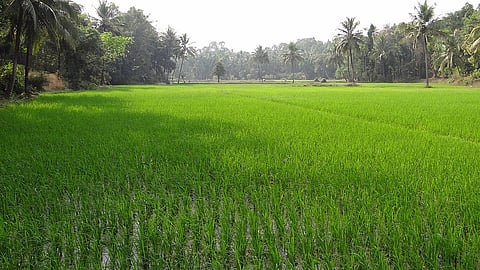
Assam’s economy is a primarily agrarian economy, and a steady increase in the conversion of agricultural land for non-agricultural purposes, as highlighted in Monday’s edition of this newspaper, is indicative of an agrarian crisis being the cause behind the alarming change in land use in those areas. The state continues to be deficient in the production of most essential agricultural items, such as pulses, vegetables, oil seeds, etc., which leads to huge money outflow in the procurement of these items to meet the shortfall. Persistent demand supply gap of these agricultural items will only increase if agricultural land gets converted into non-agricultural land, which does not bode well for long-term food security of the state. The central government’s persistent view on the issue is that both land and agriculture are state subjects, but the Right to Fair Compensation and Transparency in Land Acquisition, Rehabilitation & Resettlement (RFCTLARR) Act, 2013, restricts the acquisition of multi-crop irrigated land, unless in exceptional cases where no alternative land is available. The Act says that in exceptional cases, an equivalent area of culturable wasteland shall be developed for agricultural purposes, or an amount equivalent to the value of the land acquired shall be deposited with the government concerned for investment in agriculture for enhancing food security. Conversion of land for infrastructure and industrial development by the central and state governments cannot be equated with the transfer of agricultural land to private industrial units or real estate lobbies in a clandestine manner by luring gullible farmers gripped by agricultural distress. In case of government acquisition, the compensation and rehabilitation are integral to the land acquisition process, while development infrastructure and industries bring larger benefits to the public. However, in many areas of the state, agricultural land not just along the national or state highways but also in rural agriculture clusters and wetland fringe areas is getting converted for the establishment of industries and construction of multi-storey apartment complexes, which is a cause for concern. Opaqueness in the process of such conversion of land use points towards critical gaps in land administration. The Assam Agricultural Land (Regulation of Reclassification and Transfer for Non-agricultural Purpose) (Amendment) Act, 2024 stipulates that only such land which is recorded as agricultural land but has already become unfit for agricultural purposes or where there has been no agricultural activity for at least ten years preceding the date of application for permission for reclassification shall be reclassified or reclassified-cum-transferred to non-agricultural land. Placing all reclassification permission data in an easily accessible public domain can clear the air. Use of Geographical Information System to tag the reclassified land can be useful to ascertain if a particular plot of agricultural land has illegally been transferred without prior permission from the government. Placing a digital kiosk at the panchayat office with touchscreen display technology can be explored in the long term to prevent illegal conversion of agricultural land, as such technology can enable farmers affected by such transfers to bring them to the notice of the Revenue and Agriculture Departments. In some instances, the establishment of polluting industries and effluents released to adjacent agricultural land adversely affecting farm production often prompts owners of these plots to stop farming after finding agricultural activities non-rewarding or loss-making and shift to alternative livelihoods. After a couple of years, land market agents lure owners of the plots affected by pollution caused by industrial units set up by private owners to sell their agricultural land. It is essential that even when applying the clause of keeping an agricultural plot of land fallow for granting reclassification permission, the actual causes behind farmer-owners of those plots of land not undertaking agricultural activities are considered. The RFCTLARR Act, 2013, has special provision to safeguard the food security of the country which inter-alia provides to minimize the acquisition of multi-cropped irrigated land and to define the limits for acquisition of agricultural land in aggregate for all projects in a district or state. Identification of the cause of keeping agricultural land fallow for long periods is also essential for the government to examine if various support extended to farmers under various schemes and programmes had failed to reach those farmers who were compelled to sell their land for non-agricultural purposes. The Agriculture and Irrigation Departments have crucial roles to play in reaching out to those farmers and addressing their problems of access to agricultural credits, quality seeds, mechanised farming support, and irrigation support so that farming not only becomes remunerative but also transforms from subsistence to commercial scale. Multi-cropping, increase in productivity, expansion of area is pivotal to strengthening the agricultural economy of the state, and ensuring that quality agricultural produce is available to end consumers at affordable prices. Increasing agricultural production is also crucial to reduce the state’s vulnerability to price volatility at outside sources and, therefore, increase in rampant conversion of agricultural land calls for strict regulatory measures to check it.
