
- Home
- Live Blog
- Breaking News
- Top Headlines
- Cities
- NE News
- Sentinel Media
- Sports
- Education
- Jobs
Chandan Kumar Nath
chandankumarnath7236@gmail.com
As the global discourse on climate change intensifies, developing economies face the dual imperative of sustaining rapid economic growth while simultaneously curbing their carbon footprint. In this intricate balancing act, India has emerged as a vanguard of innovative policymaking, leveraging its vast agricultural base and rural demographics to architect a unique path toward decarbonisation. The recent approval of the Galvanizing Organic Bio-Agro Resources Dhan, widely known as the GOBARdhan scheme, represents a watershed moment in the nation's clean energy journey. With a monumental financial outlay of twenty-three thousand seven hundred thirty-one crore rupees, this unified national initiative seeks to fundamentally transform the country's compressed biogas sector. It is not merely an environmental policy; it is a comprehensive economic strategy designed to convert organic waste into a formidable driver of national energy security. By shifting toward a circular bioeconomy, the government is redefining waste as a vital domestic resource. This transition is poised to resolve the chronic challenges of waste management in both rural and urban landscapes while simultaneously shielding the economy from the volatile vagaries of the international fossil fuel market.
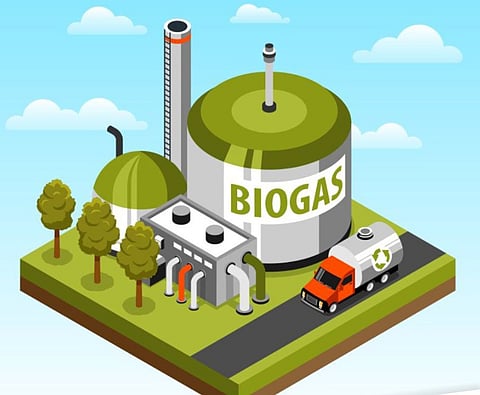
At the heart of this transformative scheme is the aggressive expansion of compressed biogas, or CBG, production. Compressed biogas is derived through the anaerobic digestion of various organic biomass sources, including agricultural residue, cattle dung, municipal solid waste, and industrial effluents such as press mud from sugar mills. Once purified and compressed, it mirrors the chemical properties and energy density of commercially available compressed natural gas, rendering it perfectly suitable for automotive transport and piped domestic usage. The newly energised GOBARdhan framework sets a spectacularly ambitious target of achieving a tenfold increase in the domestic output of compressed biogas over the coming years. Achieving this scaled production will yield staggering macroeconomic benefits, potentially saving the exchequer up to forty thousand crore rupees in fuel imports annually. For a nation that currently imports roughly half of its natural gas requirements, this level of import substitution is not just an economic victory but a strategic triumph. It insulates the exchequer from global shocks and redirects vast capital reserves back into the domestic economy, fortifying the vision of an Atmanirbhar Bharat.
The fundamental bottleneck that historically constrained the expansion of India's biogas sector was the lack of predictable demand and assured revenue streams for project developers. The GOBARdhan scheme ingeniously dismantles this barrier through the introduction of a mandatory Compressed Biogas Blending Obligation. Under this phased mandate, city gas distribution entities are legally obligated to blend a specific percentage of compressed biogas into their existing compressed natural gas and piped natural gas networks. Starting at a baseline of one per cent, the mandated blending requirement escalates to three per cent in the fiscal year two thousand twenty-six to twenty-seven, further rising to four per cent the following year, and firmly anchoring at five per cent from the fiscal year two thousand twenty-eight to twenty-nine onwards. This regulatory masterstroke transforms what was once a volatile, voluntary market into a guaranteed commercial ecosystem. It provides domestic and international investors with long-term revenue visibility, significantly improving the bankability of capital-intensive biogas projects. Consequently, private equity and institutional capital are flowing into the sector, galvanised by the assurance that green gas produced will find an immediate buyer in the national grid.
To catalyse this massive infrastructure rollout, the scheme offers unprecedented financial assistance designed to mitigate the upfront capital risks associated with greenfield project development. Eligible compressed biogas plants are entitled to robust capital subsidies of up to two crore rupees per tonne per day of installed capacity. Crucially, this financial umbrella extends beyond mere plant machinery to encompass the entire logistical supply chain, including biomass harvesting equipment and aggregation infrastructure. Furthermore, recognising that transporting the synthesised gas to consumption hubs is a persistent logistical hurdle, the scheme subsidises up to eighty per cent of the capital expenditure required to lay pipelines connecting biogas clusters to national trunk networks, alongside a fifty per cent subsidy for standalone plants integrating into local grids. This meticulous attention to middle-mile infrastructure ensures that production facilities are not marooned from the markets they are meant to serve.
To further democratise participation, a tiered credit guarantee mechanism has been established, absorbing up to eighty-five per cent of default risks for small and medium enterprises, with enhanced exposure caps specifically tailored to encourage women-led rural enterprises. Beyond the immediate metrics of energy production, the GOBARdhan initiative is fundamentally an agrarian intervention that promises to revitalise the rural economy. Every year, northern India grapples with the severe environmental fallout of agricultural stubble burning. By monetising this crop residue as a lucrative feedstock for biogas plants, the scheme provides farmers with a compelling financial alternative to incineration. Thus, the very waste that once choked the skies of the National Capital Region is now engineered to power its transportation fleets.
Alongside clean energy, the anaerobic digestion process generates vast quantities of Fermented Organic Manure. The scheme supports the production of two hundred fifty million tonnes of this organic fertiliser, which serves as a potent, carbon-rich alternative to synthetic chemical fertilisers. Augmented by market development assistance, the widespread application of fermented organic manure promises to restore degraded soil health, improve moisture retention, and boost long-term agricultural yields. This creates an additional, robust revenue stream for plant operators while substantially reducing the government's colossal chemical fertiliser subsidy burden, creating a perfectly symbiotic relationship between the energy and agricultural sectors.
As India marches toward its ambitious net-zero emissions target by the year two thousand seventy, the environmental dividends of this localised bioenergy revolution cannot be overstated. By displacing ten million tonnes of fossil fuels, the enhanced compressed biogas output is projected to reduce greenhouse gas emissions by more than forty million tonnes annually. However, the journey toward a nationally scaled clean energy industry is not devoid of practical hurdles. The primary challenge remains the efficient organisation of the biomass supply chain. Unlike fossil fuels, agricultural and municipal waste is highly dispersed, seasonal, and prone to rapid degradation. Establishing a robust, digitised aggregation network is critical to ensuring an uninterrupted feedstock supply for continuous plant operations. Recognising this, the scheme has wisely incorporated a dedicated ecosystem challenge fund to finance technological innovations in feedstock mapping and process optimisation.
In conclusion, the robust architecture of the GOBARdhan scheme represents a holistic triumph of inter-ministerial coordination and forward-thinking policy. By transforming organic refuse into clean energy, natural fertiliser, and rural wealth, India is not merely solving its waste management crisis; it is pioneering a sustainable, decentralised blueprint for the entire developing world.
