
- Home
- Live Blog
- Breaking News
- Top Headlines
- Cities
- NE News
- Sentinel Media
- Sports
- Education
- Jobs
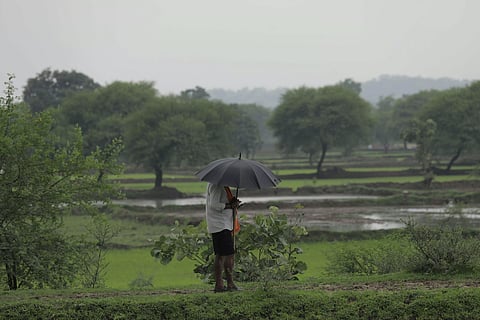
The Northeastern region, which has been known to be historically one of the wettest regions on Earth, has recorded its most severe June rainfall deficit in over a century. Official sources have said that the precipitation levels have plummeted roughly 40% below normal. The Met department has blamed the lack of cyclonic activity in the Bay of Bengal, a weak monsoon trough, and a strengthening El Niño for the exceptionally dry spell, which has raised alarm across all seven states of the region. Reports quoting the Met Department have said that Eastern and Northeastern India accumulated just 197.5 mm of rainfall during the month of June. This is said to be the lowest rainfall since 1901. Among the seven Northeastern states, Meghalaya and Manipur have been identified as the worst-hit. In Meghalaya, certain districts are facing up to a 75% rainfall deficit, while the rain deficit has ranged from 28% to 50% in states like Assam, Nagaland, and Arunachal Pradesh. Sikkim, incidentally, is the only northeastern state that has observed normal seasonal rainfall. Widespread deforestation across the region and rapid changes in land-use patterns increasingly link this crisis. It is important to note that this lack of rain represents a devastating paradox for the region. While several districts and local low-lying towns in Assam and Arunachal Pradesh are simultaneously battling flash floods, the wider geographical area is experiencing massive overall deficits. Meteorologists explain that the phenomenon is due to highly uneven, concentrated spells of heavy precipitation over small, isolated areas, leaving vast expanses bone dry. The prolonged dry spell has severely disrupted the agricultural sector. June is the primary period for paddy sowing, but due to parched or underutilized fields, the region’s farmers face major crop productivity threats. This shortfall has cascading impacts on groundwater recharge and river water levels, which in turn impact fishing and overall riverine ecosystems. Scientists have also noted that the removal of continuous forest canopies in the area has changed how heat and energy are distributed, resulting in higher surface temperatures and changes in local weather and rainfall patterns. The government, the community, and institutions must collaborate to halt and reverse this trend.
