
- Home
- Live Blog
- Breaking News
- Top Headlines
- Cities
- NE News
- Sentinel Media
- Sports
- Education
- Jobs
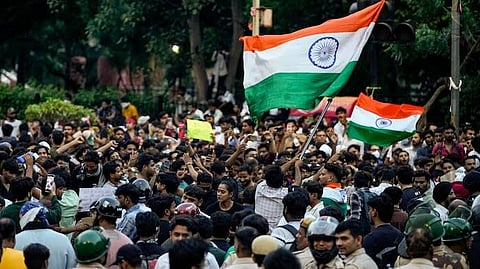
It is too early to say that the Cockroach Janata Party (CJP) is going to become a political party in the real sense of the term. However, its activities in the first five months have undeniably stirred significant interest; its activities in the first five months have created quite a flutter in India’s contemporary political landscape. It all began as an online caricature in reaction to an oral remark by the Supreme Court of India Chief Justice Surya Kant on May 15, 2026, comparing certain frustrated and unemployed youth/activists to “cockroaches” and “parasites.” Abhijeet Dipke launched the ‘political party’ CJP the very next day, and it has since risen to prominence. Dipke is a communication strategist who originally worked for Arvind Kejriwal’s Aam Admi Party. While the CJP organized a giant protest against the NEET medical entrance exam paper leak and compelled the government to review the entire NEET system, it now appears that the group has been trying to fill up the vacuum created by the established opposition parties like the Congress and the Left, which have become weaker every passing day. While the CJP movement seems to be gaining momentum, the Congress and Left parties are attempting to leverage the CJP wave to recover some of their lost support. When the CJP organized a protest rally in Delhi on Saturday with a focus on several issues, including the Special Intensive Revision (SIR) of electoral rolls, the government appeared to take it a bit too seriously. On one hand, the CJP tried to disrupt normal life and cause immense problems for the common people. The government too resorted to a massive security bandobast by turning Delhi into a security fortress and clamping down on CJP leaders and protestors. Political analysts have remained divided on the emergence of the CJP and its modus operandi. Some argue that though non-violent public agitation and street protests are legitimate tools of democratic contestation, they also consistently warn that crossing the line into systemic disorder, property destruction, or defying the legal structure erodes public trust and weakens democratic stability. The ruling BJP has said that Indian democracy thrives through Parliament rather than street-level disorder, emphasising that attempts to promote anarchy are defeated by constitutional order. Opposition parties like the Congress have frequently accused the government of undermining democratic institutions, leading to counter-accusations from the ruling coalition that the opposition fosters chaos or what they term “chronic anarchy.” Given the fact CJP has over 20 million followers on Instagram, some political pundits see this movement as the future of politics in India. But that may not turn out to be true. If it does, then the country must prepare now to handle disruption and chaos in the name of democratic protests. There are arguments that anarchy does not help democracy in India, as mainstream political consensus and constitutional frameworks view chaos, street disruptions, and lawlessness as direct threats to the rule of law and parliamentary governance.
