
- Home
- Live Blog
- Breaking News
- Top Headlines
- Cities
- NE News
- Sentinel Media
- Sports
- Education
- Jobs
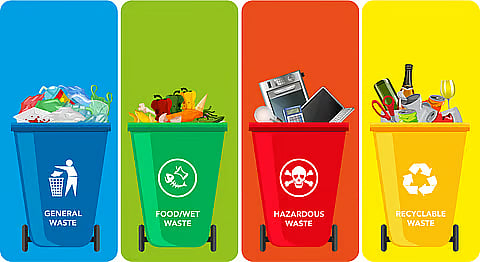
The appeal issued by the Assam Pollution Control Board to all citizens, institutions, businesses, local bodies and bulk waste generators to actively participate in implementing the Solid Waste Management Rules, 2026, highlights the crucial role which waste generators must play to achieve the objectives of the new set of rules. The new rules require every waste generator—whether a household, institution or establishment—to segregate and store waste in the four prescribed streams of dry, wet, sanitary and special care waste and hand it over to authorised collectors/waste pickers. Local bodies bridging the widening gap between waste generation and functional processing capacity are essential if they are to play their central role in enforcing these new rules. Local bodies must establish waste management infrastructure to channel four types of segregated waste to appropriate processing facilities. This infrastructure is essential for genuine compliance with SWM rules, beyond just procedural adherence, which fails to produce noticeable results. Local bodies must train a fully equipped workforce to maintain the segregation chain from waste generators to processing facilities and ensure proper collection and handover of four-stream segregated wastes. Ironically, in most municipal wards of Guwahati, tricycles or pull carts without segregated compartments continue to collect waste door-to-door, which culminates in mixed waste being transported to processing facilities. Source segregation improves the efficiency of Refuse Transfer Stations as auto tippers and tricycles unload collected garbage into a dumper and compactor facility. In the absence of the segregation, all streams of waste are mixed and transported to the composting plant at Belortol, reducing its efficiency, as informal manual sorting is required to segregate plastic and dry waste from organic waste. When plastic waste is mixed in, it lowers the quality of compost produced, and microplastics get accumulated on farmland where it is applied, contaminating the soil and reducing its fertility. A pragmatic solution to certain environmental hazards is to ensure the transfer of only organic wastes to the plant. Likewise, when non-recyclable plastic waste mixed with organic waste is transferred to a cement plant for use as fuel by burning at extremely high temperatures in cement kilns, it reduces the calorific value and adversely impacts the efficiency of the kiln. The source segregation will ensure availability of organic waste for composting plants and plastic waste for cement plants, provided GMC and other local bodies deploy efficient collection infrastructure for collecting and transferring segregated wastes. Once an efficient end-to-end waste segregation system is put into place, private players will be interested in setting up composting plants, and more cement companies will come forward to enter into agreements with GMC and other local bodies for utilising dry plastic waste as fuel for their kilns. The significant gap between waste generation and processing can only be reduced by establishing more processing plants that utilise segregated waste, thereby preventing the accumulation of garbage in cities, towns, and villages. Although the role and performance of urban local bodies and citizens’ behaviour dominate the public discourse on waste management, the waste management crisis is also brewing in rural Assam, with the modern market economy and practices pushing plastic and non-biodegradable items in large quantities into rural economies. This situation has led to a drastic change in how communities manage waste, replacing some of the traditional practice of digging pits and depositing biodegradable food and other organic wastes to make organic manure with dumping of food and other household wastes in plastic bags and dumping near water bodies or other open yards in farm fields. This has already created serious environmental hazards polluting rivers, ponds and other water bodies, apart from giving rise to a waste management crisis in many villages. This situation demands that the campaign for four-stream waste segregation at the source needs to be intensified across urban and rural Assam before the crisis worsens. The committees formed at various levels and the action plan drawn up to implement the new rules of waste management will yield results only when individual and bulk waste generators are made active stakeholders in the system. Waste segregation at source will gain momentum only when people realise that waste can be converted into wealth through proper handling and efficient processing to generate revenue to fund the waste infrastructure and the system. GMC and other local bodies can learn valuable lessons from the Indore Municipal Corporation, which has successfully monetised waste by implementing an efficient source segregation system and establishing adequate processing facilities, thereby ensuring an effective circular economy model that funds waste management expenditures and consistently earns the coveted rank of India’s cleanest city. Assam needs a decisive push for execution to sustain the momentum of its waste-segregation campaign.
