
- Home
- Live Blog
- Breaking News
- Top Headlines
- Cities
- NE News
- Sentinel Media
- Sports
- Education
- Jobs
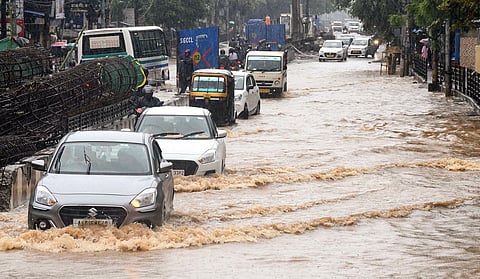
It is only mid-July now, and Assam is yet to pass through at least one more month of the extended monsoon. The first round of floods in 2026, along with landslides, has claimed at least two human lives. The first wave of floods has affected close to 46,000 people and caused damage to about 4,000 hectares of agricultural land and standing crop area in Dhemaji, Lakhimpur, Dibrugarh, Biswanath, and Chirang districts. Floods have also caused extensive damage to roads, bridges, government buildings and other infrastructure. That significant damage to infrastructure has been caused is evident from the collapse of a portion of a major railway bridge in the Dhemaji district recently, which was the result of sudden river-bank erosion triggered by heavy rainfall in catchment areas. Erratic rainfall in Assam has led to sudden heavy bursts alternating with prolonged dry spells. This shift—fuelled by climate change and weather patterns like El Niño—fuelled by climate change and weather patterns like El Niño – causes severe ecological, agricultural, and economic impacts across the Northeastern region. It is also important to note that despite localised floods, Assam recorded a 28 per cent rainfall deficit in June. Dry spells and hot temperatures have parched agricultural fields in some districts, prompting the state assembly to acknowledge an emerging drought crisis, especially in Upper Assam. The twin issue of floods and riverbank erosion has already figured prominently in the ongoing budget session of the Assam Legislative Assembly. Elected representatives, more than one-third of whom are first-timers, apart from expressing grave concern over floods, have been vocal in demanding stronger downstream safeguards. The state government, on its part, has assured better early warning systems as well as improved embankment structures. It is worth noting that the state government has acknowledged that over 60 per cent of the state’s 4,800-km river embankment network requires urgent repair or reconstruction. Meanwhile, a six-member inter-ministerial central team visited Assam to inspect flood damage and recommended using the State Disaster Mitigation Fund (SDMF) for long-term projects. While flood and erosion have remained one of the biggest problems of Assam since the devastating earthquake of 1950, it is surprising to note what the water resource department of the government of Assam has on its website. It reads, “No long-term measures have been implemented so far to mitigate the flood and erosion problems of the state. To date only immediate and short-term measures The state water resources department has only implemented immediate and short-term measures to date. by the state water resources department.”
