
- Home
- Live Blog
- Breaking News
- Top Headlines
- Cities
- NE News
- Sentinel Media
- Sports
- Education
- Jobs
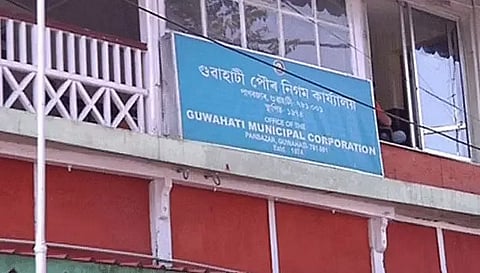
With the election to the Guwahati Municipal Corporation round the corner, it is time for the tax-paying citizens of the premier city of the North-eastern region to introspect and analyse their roles as voters. A civic body election is much different in comparison to the Assembly or Parliamentary election. In the Assembly and Parliamentary elections, the issues related to the state and country in general, with parties, despite making promises on local issues, largely present a broader perspective of governance. In contrast, a civic body election is entirely about local, micro-level issues. These generally cover drinking water, drainage, sanitation, roads, pavements, open spaces, market places, playgrounds, parking lots, green cover, air and water pollution, property and other related taxes, and so on. Unfortunately, citizens in Guwahati have hardly raised these issues during any of the Municipal Corporation elections beginning from the first GMC election of 1974 when Radha Govinda Barua was elected the first Mayor of this city. It is a big tragedy that there is a serious absence of civic or citizen activism in Guwahati. No individual or non-political organization or group is seriously talking about drinking water, drainage, sanitation, waste management, roads and pavements, not to speak of open spaces, playgrounds and other such issues. Political parties on the other hand have either failed to raise these issues or are more bent on diverting the people away from the basic problems. Drinking water, one of the biggest – if not the most important – problems of Guwahati, has remained a fiasco for more than six decades now. Even in 2022, as Guwahatians get ready to cast their valuable votes for the GMC, not even 20 per cent of the residents have been provided piped drinking water by the authorities. Thousands of households have been compelled to dig bore wells by spending lakhs of hard-earned rupees just because the authorities have miserably failed to keep their promise year after year. It was only on Friday that the government announced that all Guwahati citizens will get piped water. While it is always good to be optimistic, even an innocent child living in Guwahati will call this promise a joke, if not a pipe dream. If drainage is considered the second most important issue, then the authorities - and the elected representatives – have to be squarely blamed. In Guwahati, the issue of drainage is intertwined with the problems caused by thousands of encroachers – some of them indigenous, some illegal migrants and some doubtful people – who have occupied the beautiful hills, wetlands and natural drainage channels. About solid waste management, the less said the better. So is the case with air and water pollution. The majority of Guwahati citizens do not appear to have the commonsense that solid waste should not be thrown in drains and rivers, or plastic and polythene should not be burnt. And when such crimes take place, the authorities either fail to see them or look the other way. Guwahati is one city where the city administrators – be they elected representatives or government officers – have not considered it necessary that the citizens be provided open and green spaces in their respective localities. While politicians and political parties – including the elected representatives – have repeatedly failed to ensure that the tax-payer citizens get the basic civic amenities, the intellectuals, student organizations and public groups have all failed to exert or mount the required pressure on the authorities. Almost every locality in the city has public committees, most of them known as 'nagarik Samiti or 'unnayan Samiti.' These organizations too have largely failed in flagging the civic issues. What Guwahati probably needs during the run-up to the Municipal Corporation election is a small group of well-informed persons who can flag each of the civic issues daily till the day of the election. For this to happen, the city should also have a handful of persons who are selfless in the truest sense of the term, do not get carried away by political waves or are not scared of political pressure. The same is the case with the candidates aspiring to get elected to the GMC. The voter citizens should be able to examine the quality and credibility of each of the candidates before casting their votes.
