
- Home
- Live Blog
- Breaking News
- Top Headlines
- Cities
- NE News
- Sentinel Media
- Sports
- Education
- Jobs
Himangshu Ranjan Bhuyan
(himangshur1989@gmail.com)
Economic growth and environmental protection are often portrayed as competing priorities, yet the experience of countries across the world increasingly demonstrates that lasting prosperity cannot be achieved at the cost of ecological degradation. For a state like Assam, where agriculture, forests, rivers and biodiversity constitute the foundation of both livelihoods and economic activity, the idea of a green economy is not merely an environmental slogan but a practical pathway towards sustainable development. The state’s natural wealth has long sustained its people through farming, tea cultivation, fisheries, forest-based livelihoods and tourism. However, rapid urbanisation, unplanned extraction of natural resources, pollution and climate-related disasters have exposed the limitations of conventional models of development. The challenge before Assam is to create an economy that generates employment and income while preserving the ecological systems upon which future generations will depend. Sustainable development must therefore become the guiding principle of public policy, industrial planning and community participation. Every major infrastructure project should undergo rigorous environmental assessment so that economic gains do not create irreversible ecological losses. Development should enhance the productive capacity of nature rather than diminish it. Such an approach is essential not only for environmental security but also for long-term economic stability.
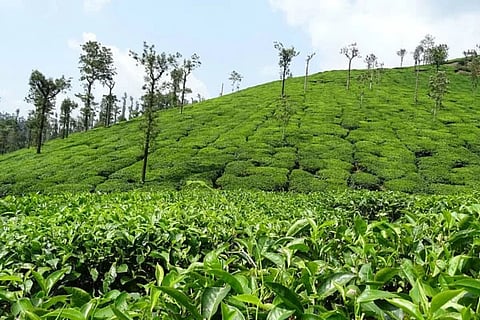
Agriculture remains the backbone of Assam’s economy, and the transition towards a green economy must begin in the agricultural sector. In recent decades, the increasing dependence on chemical fertilisers and pesticides has raised serious concerns regarding soil fertility, food safety and environmental health. Continuous application of synthetic chemicals has weakened the natural quality of agricultural land while contaminating water bodies and affecting biodiversity. Organic farming offers a viable alternative capable of restoring soil health, improving food quality and creating access to premium domestic and international markets. Assam possesses favourable climatic conditions for producing organic rice, vegetables, spices, fruits and medicinal plants. The state’s globally recognised tea industry can also derive significant economic benefits by expanding the production of certified organic tea, which commands considerably higher prices in export markets. Diversification of farming through integrated systems combining crop cultivation with fisheries, livestock, poultry and piggery can strengthen rural incomes while reducing production risks. Solar-powered irrigation, scientific composting, rainwater harvesting and village-level cold storage facilities can further improve agricultural productivity without increasing environmental pressure. Equally important is the creation of efficient marketing systems that connect farmers directly with consumers, reducing the influence of intermediaries and ensuring fair returns for producers.
The conservation and scientific utilisation of forests and natural resources must form another pillar of Assam’s green economy. The state possesses immense wealth in bamboo, cane, medicinal plants, muga silk and eri silk, all of which offer substantial opportunities for sustainable industrial development. Instead of encouraging industries that depend upon indiscriminate extraction of natural resources, policymakers should promote value-added processing of renewable forest products. Bamboo-based industries manufacturing furniture, handicrafts, engineered panels, construction materials and biodegradable consumer products have the potential to generate employment while reducing dependence on environmentally harmful plastics. Likewise, Assam’s traditional weaving, sericulture and handicraft sectors deserve greater technological support, better market access and stronger branding in national and international markets. Eco-tourism presents another promising avenue for green growth. Protected landscapes such as Kaziranga, Manas, Orang and Dibru-Saikhowa possess extraordinary ecological value and international recognition. Tourism associated with these landscapes must be carefully managed to minimise ecological disturbance while maximising economic benefits for neighbouring communities. Local residents should become active participants through homestays, traditional cuisine, cultural performances and nature-guiding services. When communities receive direct economic benefits from conservation, they naturally become partners in protecting forests and wildlife against illegal logging and poaching.
Water resources occupy a central place in Assam’s economy, yet they also represent one of its greatest developmental challenges. The Brahmaputra, the Barak and numerous tributaries sustain agriculture, fisheries, transport and biodiversity, but annual floods and riverbank erosion continue to inflict enormous economic losses. Green infrastructure provides more sustainable solutions than purely engineering-based interventions. Afforestation along vulnerable riverbanks, restoration of wetlands and conservation of floodplain ecosystems can significantly reduce erosion while improving ecological resilience. Neglected ponds, beels and wetlands should be scientifically revived to promote fish production, thereby reducing dependence on imports from other states. Hydropower development also requires careful consideration. While electricity generation is essential for economic growth, excessively large dam projects often produce significant ecological and social consequences. Small and carefully designed hydropower projects can meet local energy needs with comparatively lower environmental impacts. Rainwater harvesting, groundwater recharge and efficient irrigation systems should become integral components of rural development planning. At the same time, inland water transport deserves renewed investment as a cleaner, more economical alternative for freight movement. Strengthening river transport would reduce pressure on highways, lower fuel consumption and contribute to reduced greenhouse gas emissions. Strict regulation of illegal sand and stone mining from riverbeds is equally necessary to preserve river morphology and minimise erosion.
The transition towards clean energy will determine the long-term success of Assam’s green economy. Continued dependence on fossil fuels exposes the state to environmental degradation, volatile energy prices and increasing carbon emissions. Assam enjoys favourable conditions for expanding solar energy generation across both rural and urban areas. Rooftop solar installations on government buildings, schools, hospitals and commercial establishments can substantially reduce electricity costs while promoting energy independence. Rural households should receive affordable financial support to adopt solar technologies, while agricultural pumping systems can increasingly operate through renewable energy sources. Biomass generated from livestock waste and agricultural residues offers another important opportunity through biogas production, simultaneously addressing waste management and clean cooking energy requirements. Urban waste management also demands urgent reform. Proper segregation of biodegradable and non-biodegradable waste at the household level should become a standard civic practice. Organic waste can be converted into compost, while recyclable materials such as plastics, glass and metals should be channelled into organised recycling industries. Waste-to-energy technologies can contribute to urban electricity supply while reducing landfill burdens. Furthermore, the expansion of electric mobility supported by a widespread charging infrastructure can significantly reduce vehicular pollution and dependence on imported petroleum products. Promoting reusable bags made from jute and cotton will simultaneously support local industries and reduce plastic pollution.
The success of a green economy ultimately depends upon governance, public awareness and institutional commitment. Effective legislation must be accompanied by efficient implementation and widespread public participation. Environmental education should become an integral component of school curricula so that young citizens develop habits of conservation from an early age. Practical activities such as tree plantation, water conservation and responsible waste management can nurture environmental responsibility beyond classroom learning. Skill development programmes focusing on renewable energy technologies, organic farming, sustainable entrepreneurship and green manufacturing can equip young people with employment opportunities suited to emerging economic realities. Financial institutions should extend affordable credit to environmentally responsible enterprises, while industries adopting cleaner technologies deserve fiscal incentives. Conversely, strict penalties must be imposed on enterprises violating environmental regulations. Local governments, including Panchayats and urban local bodies, should prepare decentralised green development plans reflecting local ecological conditions and economic priorities. Most importantly, sustainable development must evolve into a collective social movement rather than remaining solely a governmental programme.
Individual actions such as conserving electricity, reducing water wastage, choosing public transport, cycling for short distances and minimising plastic consumption collectively produce substantial environmental benefits. Assam’s remarkable natural heritage is not only a source of economic prosperity but also a priceless legacy entrusted to the present generation. Building a green economy therefore represents both an economic necessity and a moral obligation. By harmonising development with environmental stewardship, Assam can create a resilient economy capable of generating inclusive growth, safeguarding biodiversity and ensuring lasting prosperity for generations to come.
