
- Home
- Live Blog
- Breaking News
- Top Headlines
- Cities
- NE News
- Sentinel Media
- Sports
- Education
- Jobs
Heramba Nath
(herambanath2222@gmail.com)
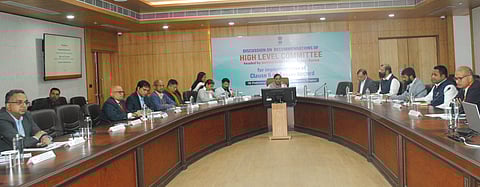
The recent meeting between the All Assam Students’ Union (AASU) and Assam Chief Minister Dr. Himanta Biswa Sarma marked a significant moment in the ongoing efforts to safeguard the rights of Assam’s indigenous communities. This high-level discussion focused on implementing the recommendations of the Justice (Retd) BK Sharma Committee, which was formed to address critical issues related to land rights, cultural preservation, language policies, employment, and education. The discussions culminated in several key decisions aimed at ensuring the socio-economic and cultural security of Assam’s indigenous people.
Assam’s history has been shaped by waves of migration, political struggles, and socio-cultural changes. The indigenous population, comprising various ethnic groups, has long fought for the protection of their rights against perceived threats of land alienation, demographic shifts, and cultural erosion. The Assam Movement (1979–1985) was a major socio-political movement led by AASU and the All Assam Gana Sangram Parishad (AAGSP), demanding the identification and deportation of illegal immigrants. This movement led to the signing of the Assam Accord in 1985, which promised various safeguards for the indigenous people. However, the implementation of several clauses of the accord, especially those related to cultural, linguistic, and land rights, remained incomplete for decades.
In response to these long-standing concerns, the Government of Assam established the Justice BK Sharma Committee to examine and recommend measures to protect indigenous rights. The recent AASU-CM meeting focused on executing these recommendations effectively. One of the most significant outcomes of the meeting was the decision to formulate a robust land policy to protect indigenous landowners. The government and AASU agreed that land transactions in tribal belts and blocks must be restricted to indigenous people to prevent the unchecked sale of land to outsiders. A new policy will be drafted to ensure that land can only be bought and sold between indigenous people within tribal belts and blocks. The government will conduct a state-wide survey to identify illegal settlements in forested and revenue areas. This initiative aims to reclaim encroached land and prevent further illegal occupation. Measures will be taken to regulate revenue centres in tribal areas to ensure that land transactions adhere strictly to indigenous ownership laws. The restriction on land sales will protect indigenous land from external acquisition, ensuring that ownership remains within the community. The survey on encroachments will help the government reclaim land illegally occupied over the years.
Another major development was the decision to differentiate between prime agricultural land and non-agricultural land to ensure that fertile lands are not misused for industrial or commercial purposes. Agricultural land will not be allowed to be converted for other purposes without government approval. Non-agricultural land will be separately classified to facilitate industrial growth without affecting farming communities. A dedicated tribunal will be set up to resolve land ownership disputes efficiently. These measures will help sustain Assam’s agrarian economy while ensuring that indigenous farmers do not lose their lands due to commercial expansion.
Employment generation for indigenous youth was a crucial topic of discussion. The government announced that 2,000 new posts will be created to handle land and administrative matters. The creation of these positions in various departments will streamline land-related administration. Preference will be given to indigenous applicants in recruitment drives. By creating these jobs, the government aims to empower indigenous youth and ensure better representation in administrative roles.
The AASU-CM meeting also focused on strengthening Assamese language education and promoting local history in school curricula. Assamese will be made a mandatory subject in all English-medium schools in the Brahmaputra Valley. The Bodo/Assamese subject will be compulsory in Bodoland Territorial Region (BTR) schools. The decision to introduce Assamese in Barak Valley and two hill districts will be taken later. Assam’s history will be introduced as a compulsory subject up to Class VIII from the academic year 2026-27. The government also announced that Assamese will be used as the official language in all communications, notifications, and documents from the first day of Bohag (Assamese New Year). The government will collaborate with Dibrugarh University or Gauhati University to develop an AI tool for translating documents into Assamese efficiently. These language policies aim to strengthen Assamese identity and ensure that the language remains an integral part of education and governance.
AASU and the government reached a significant decision regarding the protection of xatras, naamghars, and other indigenous religious sites. A commission will be formed within three months to develop and implement a protection policy for xatras and naamghars. Multi-purpose cultural complexes will be built across Assam to promote local traditions. The government has allocated Rs. 100 crore for the development of Srimanta Sankaradeva Kalakshetra. These measures will help preserve Assam’s religious heritage and provide institutional support for cultural development.
AASU urged the government to strengthen the Directorate of Assam Official Language Implementation. The directorate should be given more authority to ensure strict implementation of language policies. Non-compliance with Assamese language regulations should attract penalties. By empowering this directorate, the government aims to reinforce Assamese as the dominant language in administrative and public life.
AASU also demanded the establishment of research chairs in Assamese universities. A Lakshminath Bezbaroa Chair will be established at Assam University, Silchar, while a Padmanath Gohain Baruah Chair will be set up at Tezpur University. These research positions will encourage studies on Assamese literature, history, and culture.
The meeting also resulted in the decision to hold follow-up discussions to review the progress of implementation. A follow-up meeting is scheduled before March 10, with another in April to assess the execution of the policies. The state government has also initiated discussions with the central government for trilateral talks on recommendations that fall under the Centre’s jurisdiction.
The decisions made at the AASU-CM meeting represent a milestone in Assam’s indigenous rights movement. By focusing on land protection, employment, language preservation, and cultural development, the government has taken concrete steps to safeguard Assam’s heritage. While these measures address long-standing issues, their success will depend on effective implementation and continued collaboration between the government, AASU, and other stakeholders. If executed properly, these policies will ensure a secure and prosperous future for Assam’s indigenous communities.