
- Home
- Live Blog
- Breaking News
- Top Headlines
- Cities
- NE News
- Sentinel Media
- Sports
- Education
- Jobs
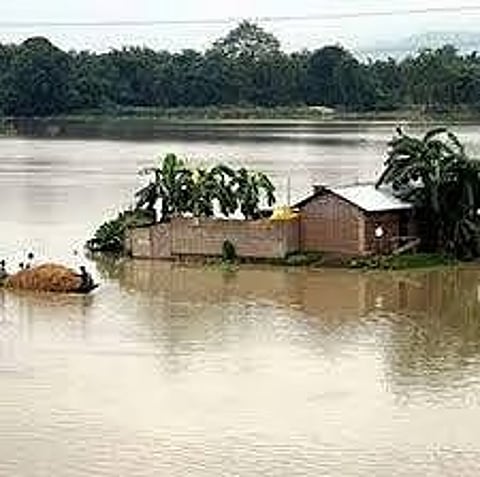
The Assam government looking for partners who can help quickly set up prefabricated houses that are suitable for the state's high-rainfall, high-humidity conditions is a well-considered move to facilitate the early return of flood-displaced people taking shelter in relief camps. Redesigning houses and public buildings in flood-prone areas can play a crucial role in increasing flood resilience. Chief Secretary Dr Ravi Kota, while making this appeal through a LinkedIn post, highlighted a critical challenge faced by the state government in rehabilitating the displaced people. He wrote that "still some flood-affected families in Assam are unable to return to their homes because of water stagnation. While the water is no longer very deep, their houses will remain uninhabitable for the next two to three months." The state government is seeking to start with a small pilot of a few houses, as stated by the Chief Secretary, to assess how well the prefabricated houses perform in these conditions before scaling further, which is a pragmatic reading of the situation. Drastic ecological changes and the deepening of natural disasters like floods and rises in extreme weather events due to climate change have rendered housing technologies in vulnerable flood-prone areas unsustainable in the event of an outbreak of disasters. As educational institutions and public buildings in the state are used as relief camps to provide shelter to displaced people, prolonged stays of the inmates will severely affect the academic calendar and routine administrative functions. Besides, prolonged stays affected people in the relief camps or make-shift roadside shelters under tarpaulin sheets are undesirable, as they can give rise to health risk, safety risk of women and children and deepening physical and mental stress. Lessons must be learnt from the unprecedented crisis triggered by the deposition of silt in and around dwelling houses, which not only damaged household properties and personal vehicles but also made clearing the silt a monumental challenge for the affected people. Good Samaritans have extended helping hands to remove silt deposited inside many houses in flood-hit areas, but for many households, making the house livable again appears to be an acute logistical challenge. A prefabricated house, mooted by the state government, can be an ideal option but will require sound engineering and design adaptation to suit the local and community requirement. A generic solution may turn out to be burdensome if prefabricated houses fail to meet some basic housing needs and provide sturdy shelter to withstand adverse weather conditions. This situation calls for roping in domain experts to reflect on the pros and cons of different prototypes of such solutions so that necessary changes in design and construction can be incorporated. This process, however, should not be a complex operational challenge as local disaster management plans contain enormous data on rainfall patterns, inundation threats, status of flood embankments, historical data of high flood levels, highest rainfall data, etc., which can be utilised to arrive at area-specific model designs for prefabricated houses. Such housing solutions prioritising toilets and safe drinking water connections will be essential to ensure that rehabilitation challenges do not erode the significant gains made in the Swachh Bharat Mission (SBM) through the provision of toilets and piped water connections. Flood-hit areas can also test the effectiveness of the innovative floating toilets designed under SBM (Grameen) Assam to assess their suitability for scaling up in all flood-prone and flood-affected areas. Floodwaters submerging household toilets and pits and contaminating fresh water sources are a major challenge and demand a sustainable solution. This problem also emphasises the necessity for flagship schemes to be adequately flexible to allow required implementation changes depending on local requirements and the fragility of socio-economic conditions or ecosystems in each district. Communities in flood- and other disaster-prone areas need to rethink housing designs to reduce property damage during severe flood situations, not only by using prefabricated houses for flood rehabilitation but also by addressing drastic changes in rainfall patterns and ecological stress caused by both natural and man-made factors. Construction of houses on raised plinths supported by strong concrete pillars, modelled on traditional Mising houses built on bamboo stilts, as a sustainable solution to increase flood resilience can be explored. The traditional Mising houses represent a time-tested architectural innovation in community housing designed for flood resilience. As floodwaters remain under the stilts, the household properties remain protected, and people can quickly resume routine activities once the water level reduces. Retrofitting this solution to concrete houses built on low-height plinths, particularly in areas that have not experienced unprecedented floods like those in the upper Assam districts, is challenging due to the high costs involved. Nevertheless, communities may consider exploring this practice and supporting it with flexible housing loan schemes to prevent damage from recurring. Safe-housing is the cornerstone of any sustainable disaster resilience, and prioritising safe housing in flood-prone areas is essential for achieving sustainable disaster resilience.
