
- Home
- Live Blog
- Breaking News
- Top Headlines
- Cities
- NE News
- Sentinel Media
- Sports
- Education
- Jobs
Over the past 150 years, the Indian census has played a significant role in shaping our understanding of Indian society and its people. Introduced during the colonial era, the census not only collected data but also wielded considerable power and legitimacy. It created categories, such as religion and caste, that have endured and influenced India’s social fabric even in the post-independence era. In this article, we explore how the census generated new knowledge about India, the implications it had on religion and caste, and its enduring impact on communal consciousness.
The concept of a census as a systematic project to collect information about the population emerged during the modern era. Pre-modern states lacked the resources and inclination to gather detailed socio-demographic data. The British, who initiated the formal census in the early 19th century, were primarily driven by concerns about poverty and population decline. Surprisingly, religion was not a focal point of their census operations in Britain.
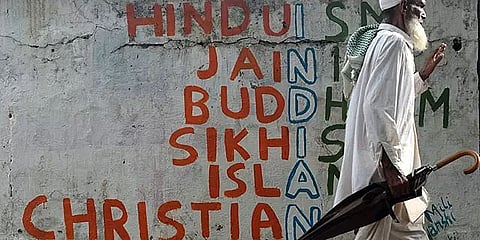
However, when the British began conducting censuses in India during the second half of the 19th century, religion and caste became central aspects of data collection. The census officials exhibited a strong obsession with understanding the social profiles of Indian communities based on religion and caste. Religion, in particular, became the fundamental organizing principle through which people were categorized and analysed. The census generated numerical data on Hindu and Muslim communities, their relative proportions, changes over time, and regional concentrations. This classification system introduced terms like majority and minority into the political discourse, which later fueled communal tensions in both British and independent India.
The census encountered several challenges when it attempted to identify religious communities accurately. One particularly contentious question was defining who could be considered a Hindu. The inclusion of “untouchables” within Hinduism posed a dilemma since the traditional varna-based criterion excluded them. Additionally, tribal communities with practices resembling Hinduism but not falling under its doctrinal umbrella further complicated the issue. Another complexity arose when non-Hindus practised occupations associated with specific castes. For instance, enumerating a Muslim cobbler raised questions about whether he should be classified based on his religious faith or his occupation-related caste identity.
The resolutions to these dilemmas had a profound impact on the boundaries and definition of Hinduism itself. Many of these boundaries were created during the census operations. For example, the Census of 1891 recognized a community in Bombay called Kabirpanthis, whose religious practices did not align with either Hinduism or Islam. However, in the subsequent census of 1901, the community was categorized either as Hindus or Muslims, erasing the Kabirpanthi identity. These categorizations not only affected the census data but also influenced the socio-religious lives of the people.
The census transformed religion from a matter of faith and rituals into a defined community. Religion became a quantifiable entity that could be mapped, counted, and positioned in relation to other religious communities. This shift from faith to community had far-reaching implications. It bred fears and anxieties among different religious communities, leading to the emergence of a sharp religious consciousness and its eventual entry into modern politics.
The formation of the All India Muslim League in 1906, backed by the British, was a response to the apprehensions expressed by the Muslim elite. They sought to safeguard their political importance despite being a numerical minority. Similarly, Hindus voiced concerns about their declining numbers, perceived concessions to Muslims, and the Congress party’s alleged indifference towards their interests. These concerns formed the basis for communal narratives in Indian politics during the 20th century.
While religion played a significant role, the impact of the census on caste was even more profound. The census not only cultivated caste consciousness but also introduced an entirely new social category: caste itself. The British officials faced a challenge when trying to classify Indian society based on varna (the four-fold social division) and jati (local and diverse social stratification). These categories were either too textual or too localized to be suitable for census enumeration.
To overcome this challenge, the officials ingeniously combined elements from varna, jati, and the European concept of race to create the category of caste. Caste was presented as a pan-Indian, grounded, fixed, exclusive, and immutable social category. However, its application in the census was often loose and imprecise. The 1901 Census in Bengal, for instance, listed not only regional castes but also categories like “Madrasis,” Marwaris, Chinese, and Japanese.
Although British officials recognised the challenges of using caste as a classificatory principle, they hesitated to remove it entirely due to its sociopolitical significance. The colonial category of caste persisted, becoming deeply entrenched in Indian society and politics. Independent India continued to grapple with caste-related issues, and caste-based mobilization, demands, and representation became integral to its political landscape.
The Indian census, conceived during the colonial era, has left an indelible mark on Indian society. It generated new knowledge about India by emphasizing religion and caste as crucial factors in understanding the population. By transforming religion into a quantifiable community and creating the category of caste, the census shaped communal consciousness and fueled political narratives. The impact of these categorizations and their implications continue to resonate in modern-day India, underscoring the enduring influence of colonial-era census operations on India’s socio-cultural fabric.