
- Home
- Live Blog
- Breaking News
- Top Headlines
- Cities
- NE News
- Sentinel Media
- Sports
- Education
- Jobs
Dr. Mukul Chandra Bora
(Director, DUIET, Dibrugarh University, Assam, drmukulcbora@gmail.com)
Human beings gather knowledge primarily for two purposes, i.e., survival and development in the level of livelihood and they try to understand and come to grips with the environment in order to survive that go beyond the intuitive reaction to physical threats. In short, the basis for all kinds of activities which aim at building up the knowledge systems that were there much before the development of modern science which is is quite new whereas the indigenous knowledge -- together with its meanings, purposes and values -- developed much before. With the wisdom of indigenous knowledge, human beings have taken care of all the natural topography for years on end. If we lose their wisdom, we lose the land as well. As long as the native peoples are not heard, the non-native audiences will continue to deal in caricatures. It has become customary to refer to this kind of heritage as 'Indigenous knowledge', 'Traditional Knowledge', 'Local Knowledge', 'Traditional ecological knowledge', 'Ethno-ecology" among many other terminologies. And, it is often seen as a contrast to, or at least as very different from the western ways of generating, recording and transmitting knowledges. Learning from the indigenous knowledge, by investigating what the local communities know and have, we can definitely understand agriculture, healthcare, food security, education and also issues related to natural-resource management.
Indigenous knowledge may be defined as the understanding of the skills and philosophies which has been acquired by the population with long histories of interaction with Mother Nature and their surroundings. For the rural and indigenous peoples, local knowledge involves the vital process of decision-making about the fundamental aspects of the day-to-day life.This knowledge is integral to a cultural complex that also encompasses languages, systems of classification, resource-use practices, social interactions, rituals and spirituality.This is a unique way of knowing the important facets of the world's cultural diversity, and provide a foundation for the locally-appropriate sustainable development process.
The importances of the indigenous population in their fight against deforestation, land degradation and climate changes were overlooked and even denied by most of the global community. But the rising advocacy of the indigenous peoples and their organizations, is starting to changing in a slow pace. Around 370 million of people across the globe has identified themselves as members of the indigenous cultures and knowledge. Although the indigenous peoples comprise less than 5% of the world's population; yet they exerted enormous influence over the efficient management of the natural resources -- on which we all depend. These indigenous population manage about 28% of the world's land surface and may be considered as the guardians of 80% of global biodiversity which includes most of the plant and animal species on 'Mother Earth'.
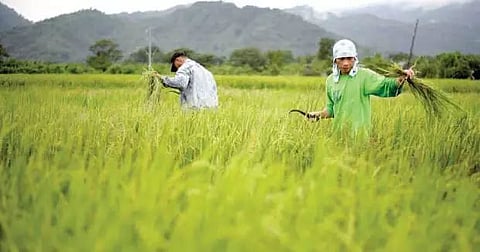
The indigenous farmers, fishers, pastoralists and forest-dwellers apply only the traditional methods of land management and food production. They have evolved over centuries and have proven to be sustainable and resilience towards the environmental degradation. The indigenous knowledge systems and languages contribute directly to the biological and cultural diversity, poverty eradication, conflict resolution, food security and ecosystem health; and serve as the foundation of the resilience of indigenous communities to the impact of climate change. Their awareness of traditional food sources and the fundamental connection between food systems and healthy landscapes can help to promote diets that are diverse and sustainable.
The vital role of indigenous peoples was recognized in the 2007 UN Declaration on the Rights of Indigenous Peoples (UNDRIP). And yet, the indigenous peoples continue to suffer disproportionately high levels of land insecurity, social dislocation and violence while defending their traditional lands. They also make up 15% of the world's poorest people.
These and other factors, including youth migration, are causing traditional knowledge and indigenous food systems to disappear at an alarming rate. They are also contributing to the rapid loss of indigenous languages. In fact, this year's observance of the International Day of the World's Indigenous Peoples (August 9) focuses on the world's 7,000 indigenous languages, in keeping with the year-long observance of the 'International Year of Indigenous Languages'.
When, in 2015, the international community agreed on 17 Sustainable Development Goals (SDGs), a set of targets for improving lives while protecting natural resources by the year 2030. The SDGs include specific mention of indigenous peoples, and acknowledged that there can be no truly sustainable development without protecting the traditional knowledge and territories of indigenous peoples.We can look to the world's forests for an example of why this is so. Forests continue to be critical for the food security, livelihoods, culture and spiritual identity of indigenous peoples. Their resources include nutritious foods and medicines, household materials and the income gained from selling forest products.
Indigenous knowledge can be combined with new information and innovation in agriculture and land management to protect biodiversity and foster integrated sustainable management of diverse food systems and conservation of traditional medicines. But this approach requires urgent, consistent action.In countries like Indonesia and Peru, governments and organizations of indigenous peoples are working to develop appropriate forestry policies that take into consideration the land, resource rights and views of indigenous peoples, providing communities with land tenure options and offering farmers, fishers and forest-dwellers training in updated techniques to address climate change and forest management.
In Côte d'Ivoire, Panama and elsewhere, new technologies, such as drone-supported mapping of forest cover and territories, are being used to support sustainable land management (SLM) practices and recognition of traditional land ownership rights.Other initiatives to support indigenous peoples include finding new markets for traditional products, developing forest and land management plans that are climate-resistant, promoting protection of indigenous intellectual property and cultural identities and developing systems for indigenous peoples to negotiate and resolve potential conflicts with the holders of private forest concessions.
In the recent months, the (FAO) Food & Agriculture Organization of the UN hosted the first-ever high-level expert meeting on indigenous food systems. In the near future, a forthcoming FAO report based on two years of research is expected to shed further light on the experiences of indigenous peoples, their needs and their potential to help achieve a sustainable, hunger-free world.While these are encouraging signs of commitment, it will take urgent, broader policy changes and community-based action, particularly around the recognition of land rights, to bring about significant, lasting improvements in the lives of indigenous peoples and the natural resources which are vital to us all.Fortunately, the next generation of indigenous peoples, the youth, are showing signs of mobilizing to keep up the momentum. It is our collective responsibility to support them and, ultimately, the well-being of our planet.
Why is IK (Indigenous Knowledge) Important: There are two basic reasons why indigenous knowledge is important, first and foremost, the contribution of indigenous knowledge to local empowerment and development, increase the self-sufficiency and strength self-determination (Ulluwishewa 1993). Utilizing IK in research and management plans gives it legitimacy and credibility in the eyes of both local people and outside scientists, increasing cultural pride and thus motivation to solve local problems with local ingenuity and resources. Second, indigenous people can provide valuable input about the local environment and how to effectively manage its natural resources. Outside interest in indigenous knowledge systems has been fueled by the recent worldwide ecological crisis and the realization that its causes lie partly in the overexploitation of natural resources based on inappropriate attitudes and technologies. Scientists now recognize that indigenous people have managed the environments in which they have lived for generations, often without significantly damaging local ecologies (Matowanyika 1994). Many feel that indigenous knowledge can thus provide a powerful basis from which alternative ways of managing resources can be developed. Indigenous knowledge systems and technologies are found to be socially desirable, economically affordable, and sustainable and involve minimum risk to rural farmers and producers, and above all, they are widely believed to conserve resources. There are situations in which modern science is not appropriate, and use of simpler technologies and procedures are required. So learning from indigenous knowledge can improve understanding of local conditions and provide a productive context for activities designed to help the communities. In addition, the use of indigenous knowledge 'assures that the end user of specific agricultural development projects are involved in developing technologies appropriate to their needs' (Warren 1993).The application of indigenous knowledge in the following areas will lead to a Sustainable World and is of urgent need to adopt this knowledge in our day to day life together with modern science and technology. Few examples of areas where indigenous knowledge may lead to sustainability are:
IK for Environmental Protection:The United Nations Environment Programme held in the month of August 2021 on the occasion of International Day of the World's Indigenous Peoples, the experts agreed that the governments must use the knowledge of indigenous people to save the planet from and must learn to live in harmony with nature as those people had lived for thousands of years in those environment. If we do not promote and propagate the indigenous knowledge, then there will be the highest risk accelerating the triple planetary crisis i.e., climate, nature, and pollution as well as loss of biodiversity. The loss of biodiversity and climate change together with the unsustainable management of natural resources will lead to an unsustainable world. The Biodiversity and Land Management Programme of the United Nations Environment Programme (UNEP) concludes that "We absolutely need to protect, preserve and promote the traditional knowledge, customary sustainable use and expertise of indigenous communities if we want to halt the damage we're doing and ultimately save ourselves."
IK for Sustainable Healthcare: As far as role of Indigenous knowledge in Healthcare is concerned, it was reported by different International Organisations like UN and other Universities that indigenous knowledge can provide better healthcare if it is integrated with the modern medical science. As per research articles of Queens University, Canada in the year 2021, it was reported that "One important path forward is to listen and learn from Indigenous knowledge, in order to transform the healthcare system for all patients who we serve. There is another report on 'The Protection of Indigenous Knowledge for Peoples Health' of the 'Rose Khatri Liverpool John Moores University' concludes:
"Clearly indigenous knowledge, values and belief systems are important and surprisingly robust considering the history of western domination and exclusion. There is no point in romanticising indigenous knowledge (IK) as something, which will fundamentally bring about global health for all, for either the third world or the west. IK will have specific uses just like biomedicine, neither can be truly universal nor without problems".So by going through lot of research report starting from Rio conference (1993) to this recent times it may be useful to use the Indigenous Knowledge system in our Health care systems so that it will make us more healthy and wealthy in terms of knowledge preservation, employment generation as well as recognition of our ancestors wisdom to live in harmony with nature.
IK for Sustainable Agriculture: Many scientists and others across the world are in the opinion that, the current agricultural and food farming and harvesting techniques needs an entire overhaul as it does not seems to be revolutionary these days. It is observed that, after decades of technological advances focused on grain production and the development of synthetic inputs, there is finally recognition that the benefits higher crop yields and increased food supply also come with side effects. These include widespread soil and water contamination, human displacement from the expansion of large-scale monoculture farm operations, health impacts including diabetes, and heavy reliance on fossil fuels, among others. The solution to these problems, as suggested by the United Nations' Food and Agriculture Organization, is to transition to sustainable agriculture. Yet it wasn't until the early 20th century, at the advent of industrialized agriculture, that visionaries such as Eve Balfour and Lord Northbourne began to popularize the term through their work confirming the importance of diversity, ecological knowledge and a strong human/nature connection, as well as the value of small-scale family farming, which, despite the popular misconception that industrial systems are necessary to feed growing populations, continues to produce most of our food with fewer resources and less harmful impacts than the industrial model. It is seems that the agriculture that has been done with Indigenous Knowledge can meet the demands of enough food grain production without any side effects to the human population.
The IK is the body of knowledge or natural history built up by a group of people through generations of living in close contact with nature and were developed through trial and error method of understanding. With the rapid environmental, social, economic and political changes occurring in many areas inhabited by indigenous people the threat for indigenous knowledge they possess will be overwhelmed and lost. The judicial us e of local knowledge and global science is necessary towards conservation and protection of the environment. The cooperation between local people and modern scientists in solving the environmental and biological crises in the world is not impossible because common sense offers a venue of understanding between the simple and complex thinking of humanity.
