
- Home
- Live Blog
- Breaking News
- Top Headlines
- Cities
- NE News
- Sentinel Media
- Sports
- Education
- Jobs
Shantanu Thakur
(thakur.santanu@gmail.com)
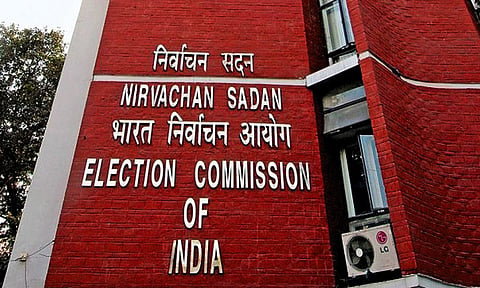
Even if one attempts to disregard the developments in other countries (which is risky, as everything is interconnected and no country exists in isolation), the current situation in India is undoubtedly a source of anxiety and concern. There is clear evidence that tensions are rising gradually. The issue regarding the CEC and the ECI is akin to a hold-all bag containing various items that contradict each other. Moreover, that particular issue doesn’t have an easy solution available at hand. Both the camps must be aware of that. And that is where the agenda lies hidden in plain sight. The idea is not to find a solution but to keep the pot boiling, at least until the UP elections, and, if possible, beyond.
The matter of irregularities in the working of the ECI, discrepancies in the SIR exercise, allegations of lack of unanimity in taking vital decisions, dissent (if any) amongst the Election Commissioners, and arbitrary changes in the software handling voters’ inclusion or deletion – all these are issues now with the Supreme Court of India. We lack inside information or hard evidence, except for the Indian Express’s investigative report. But the Supreme Court of India can call for each and every record from the ECI to examine and let the country know through a judgement what it thinks about the veracity, or credibility, of the allegations. Putting political pressure on the Government of the day, or the CEC, to resign is one thing which may be understandable to a certain extent, but to build pressure on the Supreme Court itself while the case is still on is like an unfair media trial – an act neither is acceptable nor appreciable. But the game-plan is certainly understandable. For a beleaguered, frustrated opposition, the situation provides a desperate opportunity to exploit and keep going till the next elections and to try to gain some mileage if they can. Public memory may be proverbially short, but nevertheless, memories of the dark chapters of how the Congress Party and the UPA had handled the ECI during their tenures in the past continue to live on in several quarters. Some even compare it to the pot calling the kettle back. The Naveen Chawla episode will not wash off easily.
How is the drama then going to unfold in the immediate and the not-so-distant future? One can visualise a few speculative scenarios:
1. In this particular issue of the neutrality, sanctity and transparency of the ECI, only the Supreme Court’s judgement can be expected to be gracefully acceptable to all. Suppose the Supreme Court of India holds the ECI responsible for the alleged irregularities and comes out with a clear judgement. If this happens, the uproar for the resignation or dismissal of the CEC will soar. Incidentally, the Supreme Court cannot remove the CEC. A procedure for removing the CEC is established, and it must begin in Parliament. The government in power is least likely to concede to this, and street protests cannot either achieve this. But the clamour for his ouster will grow, followed by demands for the resignation of the government. In the protest at the Ramlila Grounds, the LOP has already made his position clear in high decibels.
2. The second scenario could be that if the Supreme Court finds the CEC’s actions untenable in law, the CEC may take a call of conscience and resign. This also will not satisfy the Opposition. This will spur them on to raise the battle cry with more force for the resignation of the Modi Government, dissolution of Parliament and the demand for fresh General Elections. The stalemate will continue with both sides hardening their stances. The country is likely to be in for prolonged uncertainty and chaos.
3. What could be the next probable scenario? A confrontational face-off will precipitate. With a no-holds-barred culture of political discourse, both sides will rake up old skeletons from the cupboards and try to discredit each other. Protests will increase all over. The crackdown will also be in equal reciprocal heat. Both sides have enough of hardliners in their camps and an overdose of vitriol.
An uncanny resemblance to the climate of the pre-emergency days is hovering round the corner. If the situation continues to deteriorate uncontrollably, it could lead to a critical decision regarding the perceived necessity of declaring another emergency in the country, which is, after all, a constitutional provision. Admittedly, times have changed, and a repeat of the emergency could create many more problems than those faced during its previous incarnation. The earlier avatar at least concluded with the calling of fresh elections. Whether things will conclude similarly in the next probable repeat round is absolutely uncertain. Power centres today are exposed to totalitarian models of governance that pass off as “elected autocracies”. The known big powers of the world are already displaying a visible weakness for their own governance. In this age of digital and AI technology, events get shared globally on mobile handheld devices instantly. Visuals of disturbances elsewhere travel at AI speed. What is even more concerning is that motivated and conspiratorial distortions can spread their harmful effects without any obstacles. By the time intervention can be made, the damage has already been done.
The situation that is alarmingly developing in our country has all the signs of leading to a Carch-22 imbroglio. The ruling dispensation needs to seriously consider the grey areas in the country’s governance in order to remove the irritants. The country has made significant progress in various areas. Some otherwise avoidable factors that have raised unrest amongst sections of the populace need to be identified and weeded out of the governance pattern. Timely introspection and course correction are requisites for a healthy and wise ruling dispensation. To those of us who have gridded through different decades, an uneasy question crops up with discomfort: Are we in for a repeat cycle of history? If the nation, along with its new generation, is taken down the dark alleys of an unfortunate chapter (better buried forever) of our past history, it will only mean that the political parties in the country have failed to learn any lessons from history.
