
- Home
- Live Blog
- Breaking News
- Top Headlines
- Cities
- NE News
- Sentinel Media
- Sports
- Education
- Jobs
Prof. Rajendra Prasad Das
Vice Chancellor (vc@kkhsou.in)
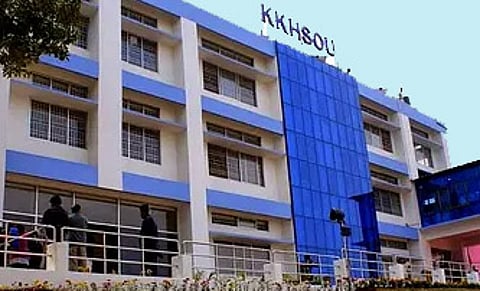
Krishna Kanta Handiqui State Open University (KKHSOU) celebrates its 20th Foundation Day on 11 December 2025. Established under the KKHSOU Act, 2005, by the Government of Assam, the University represents the institutional consolidation of a progressive educational movement dedicated to democratising learning. Over the past two decades, KKHSOU has remained firmly committed to expanding accessible, affordable, and inclusive higher education across diverse socio-economic, geographic, and demographic contexts in the state.
This 20-year milestone emerges at a moment of significant transformation in the Indian higher education landscape. The recent CII–Grant Thornton Bharat Report (November 2025) highlights the enormity of India’s challenge: to achieve the NEP 2020 goal of a 50% Gross Enrolment Ratio (GER) by 2035, the national higher education system must accommodate 86.11 million learners — a staggering 85% expansion within a decade. Such growth far surpasses the capacity of conventional brick-and-mortar institutions. In this context, Open and Distance Learning (ODL) stands out not merely as an alternative but as a strategic national necessity. Its inherent strengths — flexibility, scalability, affordability, and equity — make ODL a critical pathway for advancing India’s educational agenda. Indeed, the fundamental pillars of NEP 2020—multi-disciplinarity, lifelong learning, technology-enabled education, multiple entry–exit options, and competency-based frameworks—find their most comprehensive and operational expression in the Open University system.
In Assam, where GER remains at a modest 18%, the need for flexible and inclusive educational systems is particularly urgent. Over the past three years, KKHSOU has undertaken an intensive mobilisation strategy—comprising digital outreach, targeted social media engagement, and over 100 field-level visits across the state—which has resulted in the enrolment of 1.29 lakh new learners across more than 50 academic programmes. The learner profile underlines the university’s deepening social reach: over 50% are women; more than 80% are from rural areas; 20% are in-service learners; 15% belong to below-poverty-line families; 3% are from economically weaker sections; 16% belong to SC/ST communities; 46 are jail inmates; and 1,287 are persons with disabilities. Today, with 195,000 active learners, KKHSOU stands among the fastest-growing state open universities in India.
The university’s learner support architecture is anchored by 338 study centres—including 30 inside district jails—and four regional centres located in Jorhat, Silchar, North Lakhimpur, and Bongaigaon. The Government of Assam has recently allotted 1.5 acres of land for establishing a permanent regional centre in Silchar. Through this extensive network, the university ensures last-mile educational connectivity, reaching learners in even the most remote and underserved communities of the state.
KKHSOU’s mission extends beyond the formal boundaries of academic instruction. The university views education as a catalyst for social transformation. Free education is provided to jail inmates as part of a broader rehabilitation and reintegration initiative. Persons with disabilities and transgender learners receive free admission, specialised academic counselling, and accessible learning resources, including Braille, audio content, and assistive materials. Jnan Taranga, the university’s community radio station, continues to disseminate academic content, counselling, and community awareness programmes to diverse audiences. Through the Mother Teresa Social Welfare Mission, the university has expanded community outreach to 11 adopted villages, providing free education, livelihood training, and social development initiatives. These activities reinforce the university’s identity as a socially responsive institution committed to empowering communities at the grassroots.
Academically, KKHSOU has significantly broadened its programme portfolio. The new programmes introduced in July 2025—postgraduate degrees in Bengali, Sanskrit, and Yoga, and an undergraduate programme in Library and Information Science—address both regional priorities and emerging disciplinary trends. From the next academic session, most postgraduate programmes will also be offered in Assamese, thereby advancing linguistic inclusivity. In alignment with global developments in digital learning, the university is preparing to launch at least five fully online programmes. The university has further strengthened its national visibility by becoming the leading MOOC-producing university in the Northeast, with 29 courses hosted on the SWAYAM platform. A major institutional milestone is the university’s impending recognition as both an awarding body and an assessment body by the National Council for Vocational Education and Training (NCVET). This recognition will substantially enhance the university’s mandate in skill development and vocational education.
In parallel, the university is strengthening its physical and digital infrastructure to support its expanding academic scope. The Rani Campus of the University is undergoing major revitalisation and is envisaged to become a Centre for Vocational Education, with science and skill-based programmes proposed from 2026. A state-of-the-art Online Examination Centre with a capacity for 150 candidates has been completed and has already attracted the attention of national agencies for examination collaboration. The Educational Multimedia Production Centre (EMPC), equipped with advanced digital and audio-visual technologies, is now operational and will significantly enhance e-content production capabilities. With 91,539 successful registrations on the Academic Bank of Credits (ABC), the university is nearing full real-time credit integration in accordance with NEP 2020. The adoption of multiple e-Samarth modules is further improving governance efficiency, transparency, and workflow integration across the university.
Promoting employability continues to be a core institutional priority. Through collaborations with the Commonwealth Educational Media Centre for Asia (CEMCA) and Learnet Skills Limited, the university is embedding employability skills and market-responsive competencies into the academic ecosystem. The appointment of an agricultural expert of international standing as Professor of Practice has further opened avenues for experiential learning and sectoral innovation.
An equally encouraging achievement is the performance of KKHSOU learners in national examinations. A total of 52 learners have qualified for the UGC-NET examination, including one who secured the Junior Research Fellowship—an indicator of the strengthening academic culture and aspirations within the University.
As the university enters its third decade, it stands at the threshold of unprecedented opportunities. The progress of the past twenty years reflects the collective dedication of its leadership and faculty, the resilience and diligence of its staff, the trust and enthusiasm of its learners, the support of its study centres, and the unstinting cooperation of the Government of Assam. With a strong institutional foundation, an expanding academic horizon, and a forward-looking digital strategy, the university is poised to evolve into one of India’s most inclusive, dynamic, and academically vibrant state open universities.
