
- Home
- Live Blog
- Breaking News
- Top Headlines
- Cities
- NE News
- Sentinel Media
- Sports
- Education
- Jobs
Himangshu Ranjan Bhuyan
(himangshur1989@gmail.com)
Languages are far more than tools of communication. They are repositories of collective memory, cultural identity, historical continuity, and intellectual achievement. Across the world, growing numbers of travelers are no longer satisfied with merely visiting scenic landscapes or photographing monuments. They seek deeper engagement with the societies they visit, hoping to understand the stories, traditions, and knowledge systems that have shaped particular communities over centuries. This shift has given rise to a relatively new concept in the global tourism industry-language tourism. Under this model, language itself becomes an attraction, drawing visitors who are interested in history, literature, linguistics, folklore, and cultural traditions. Assam stands uniquely positioned to benefit from this emerging trend. Blessed with extraordinary linguistic diversity and enriched by a literary heritage that stretches back many centuries, the state possesses resources that few regions can claim. The recent recognition of Assamese as a Classical Language by the Government of India has further strengthened this position, opening a new avenue through which Assam can project itself onto the global cultural map. Such recognition is not merely symbolic. It affirms the antiquity, originality, and literary richness of the Assamese language and creates opportunities for expanded research, preservation, and international engagement. At a time when many regions are searching for innovative and sustainable tourism models, Assam has before it an opportunity to develop a form of tourism rooted not in artificial attractions but in its own civilizational inheritance. Language tourism can help transform Assam from being viewed solely as a destination of natural beauty into a centre of intellectual and cultural exploration. It offers a framework through which the state can showcase its manuscripts, literary traditions, oral histories, folk culture, and linguistic diversity to visitors from across India and around the world. More importantly, it allows Assam to convert cultural capital into economic opportunity while simultaneously strengthening public appreciation for its linguistic heritage. Such a model can generate employment, encourage research, support local communities, and foster a renewed sense of pride among younger generations who often remain unaware of the remarkable depth and significance of their own linguistic traditions.
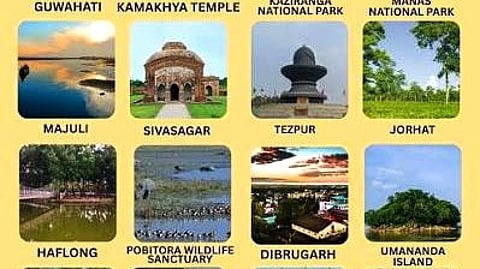
One of the greatest strengths of Assam's language tourism potential lies in the remarkable richness of its historical and literary resources. The Assamese language possesses a long and distinguished literary tradition, stretching from the early linguistic traces associated with the Charyapada to the flourishing prose and poetic works of the medieval period and the dynamic literary movements of modern times. The recognition of Assamese as a Classical Language has drawn renewed attention to this heritage and has provided an opportunity to present it before a wider audience. Ancient manuscripts preserved in xatras, libraries, archives, and private collections constitute some of the most valuable assets in this regard. Written on sanchi bark and other traditional materials, these manuscripts offer visitors a tangible connection to centuries of intellectual activity. They reveal not only literary excellence but also the artistic skills, scientific understanding, and philosophical outlook of earlier generations. Properly preserved and presented, such collections can become major attractions for scholars, students, and culturally curious travelers. Beyond manuscripts, Assam's oral traditions provide another rich dimension to language tourism. Folk songs, Bihu music, Ainam, Biyanam, Zikir-Jari, folktales, legends, and the diverse linguistic traditions of numerous indigenous communities together create an immense cultural landscape waiting to be explored. Language tourism provides an opportunity to interpret these traditions for visitors, helping them understand not only the words but also the social realities, historical experiences, and cultural values embedded within them. Literary landmarks associated with figures such as Srimanta Sankardeva, Madhavdeva, Lakshminath Bezbaroa, Jyotiprasad Agarwala, and Bishnu Prasad Rabha can also be integrated into thematic tourism circuits that connect language, literature, history, and place. Such initiatives have proven successful in many parts of the world, where literary tourism has become an important segment of the cultural economy. Assam possesses all the necessary ingredients to create similar experiences. A visitor exploring Majuli, Sivasagar, Tezpur, Barpeta, or Nagaon should be able to encounter not only physical locations but also the stories, texts, and linguistic traditions that have shaped those places. Through thoughtful planning and interpretation, these sites can become living classrooms where visitors engage directly with the intellectual history of Assam.
Realizing this vision, however, requires a comprehensive and forward-looking strategy that combines preservation, education, technology, and community participation. Modern travelers increasingly rely on digital platforms to discover destinations and plan journeys. Therefore, Assam must invest in creating high-quality digital archives, multilingual websites, virtual exhibitions, and interactive applications that introduce global audiences to the history and significance of the Assamese language. Digitization of manuscripts, online access to literary resources, virtual tours of heritage institutions, and innovative storytelling tools can greatly enhance international visibility. At the same time, physical infrastructure must be strengthened. Museums, archives, research centres, and cultural institutions should be redesigned to provide engaging visitor experiences rather than functioning solely as repositories of information. Equally important is the development of skilled human resources. Assam needs trained cultural interpreters and language guides who can explain the historical evolution of the language, the significance of manuscripts, the richness of folk traditions, and the importance of Classical Language status in ways that are accessible and engaging for diverse audiences. Universities and educational institutions can play a vital role by introducing specialized programmes related to language tourism, heritage interpretation, manuscript studies, and cultural management. Such initiatives would create employment opportunities while ensuring the availability of qualified professionals. The benefits of language tourism extend well beyond economics. When visitors travel to Assam specifically to understand its language and cultural heritage, local communities gain a renewed appreciation for their own traditions. Young people begin to recognize that their mother tongue is not merely a medium of daily communication but a globally significant cultural resource. This awareness can encourage greater efforts toward preservation, documentation, and creative engagement. Language tourism thus becomes a tool for cultural revitalization as much as economic development. Assam today stands at a significant moment in its history. The recognition of Assamese as a Classical Language has provided both validation and opportunity. Whether that opportunity is fully realized depends upon the collective efforts of policymakers, scholars, tourism professionals, educational institutions, and ordinary citizens. If approached with vision and commitment, language tourism can emerge as one of the most promising sectors of Assam's future, creating a bridge between heritage and development, between scholarship and enterprise, and between the cultural achievements of the past and the aspirations of the generations yet to come.
