
- Home
- Live Blog
- Breaking News
- Top Headlines
- Cities
- NE News
- Sentinel Media
- Sports
- Education
- Jobs
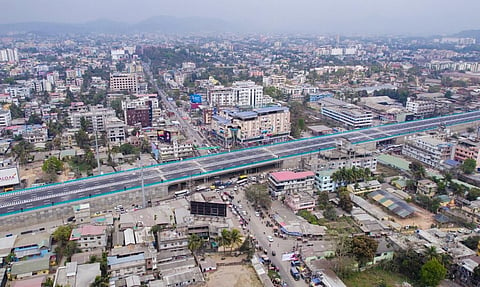
The NITI Aayog’s projection that urbanisation will be at the centre of realising India’s goal of Viksit Bharat by 2047 calls for a review of the functioning of Urban Local Bodies (ULBs) in states to find out whether these local governments are equipped to meet the challenges of rapid urban growth. A report of the Comptroller and Auditor General (CAG) lays bare a critical gap in urban planning and management in Assam. The state’s ULBs remaining ill-prepared to meet the challenges of rapid urbanisation is a wake-up call to push time-bound administrative, structural and legal reforms to ensure efficient urban governance. The CAG report highlights that out of 21 ULBs audited during 2023-24, 12 ULBs failed to maintain basic records such as Cash Book, Service Book, Demand Register, Measurement Book, Receipt Book, Collection Register, Asset Register and Stock Register, hindering their ability to monitor actual receipts and utilisation of materials. The CAG authorities expressed genuine apprehension that the persistence of such gaps could lead to an increased possibility of the misutilisation of materials intended for the implementation of the schemes. As ULBs are governed by elected bodies, the responsibility for ensuring accountability and transparency of every rupee received and spent not only rests with government officials but also on elected members. The principal sources of revenue for ULBs, as highlighted in the report, include the collection of taxes such as property tax, advertisement tax, and taxes on markets and trade licences, as well as non-tax revenue like water supply charges, solid waste collection user charges, and building permits; resource transfers from the state in the form of devolution of shared taxes and duties; grants-in-aid from the state government; and grants-in-aid from the central government under various Centrally Sponsored Schemes (CSS) and finance commission awards to ULBs. When fund flows to ULBs from different government sources, they cannot be allowed to function in an ad hoc manner without financial discipline and accountability. The audit found that ULBs’ own revenue accounts for 17% of total resources; these local bodies are heavily dependent on Central Finance Commission grants (35%) and the central government’s grants. This situation exposes the vulnerability in financial planning and service delivery of ULBs, as they may struggle if they rely too much on central and state grants, which could be suddenly reduced due to changing priorities in state and central budgets during specific financial years. The CAG’s findings on poor financial management and weak internal controls in ULBs highlight their unpreparedness to take on greater responsibilities and execute ambitious mega-infrastructure projects necessary for sustaining aspirational growth and addressing the population pressure resulting from rural-urban migration. When planning and governance remain weak in urban areas, such persistent deficiencies also drag down the state’s development indices and adversely affect initiatives and measures for inclusive growth. As the rural population migrates to cities and towns in search of a better life, deficiencies in urban governance, service delivery, infrastructure, and connectivity, along with transportation bottlenecks, turn their aspirations into disappointment. If urbanisation is to fuel the engine of Viksit Bharat, as expected by the NITI Aayog, cities and towns must not remain trapped in persistent problems such as a lack of affordable housing, recurrent waterlogging, inadequate waste management, choking traffic congestion, and rising pollution levels. The ideal approach is to promote best practices of performing ULBs as benchmarks of urban planning and governance. Incentivising the best performing ULBs with higher grants and important infrastructure projects can foster healthy competition motivating them to improve governance, service delivery, increasing revenue collection and the effective implementation of future-ready Master Plans. These ULBs can no longer afford unplanned project execution or allow projects to suffer from chronic delays in meeting target milestones. Proper land use and zoning regulations included in master plans of ULBs play a crucial role in curbing unplanned growth, but poor enforcement has led to widespread violation and alarming deviation, exacerbating the crisis of unsustainable urban expansion. Creating space for the active participation of residents of towns and cities is pivotal to strengthening the democratic functioning of ULBs and holding the elected bodies accountable. They cannot remain passive recipients of services delivered by ULBs but must act as vigilant watchdogs to bring to the notice of the local body about violation of land use regulations, unauthorised constructions, improper waste disposal and other breaches of solid and liquid waste management. The CAG report raises serious concerns about the condition of ULBs in the state, calling for immediate action from both the government and citizens. Every ULB should be empowered to enhance financial control and service delivery while also updating master plans to align development priorities with demographic and economic realities. We should encourage the application of digital technology and artificial intelligence to address grievances in real time and facilitate data-driven urban planning and decision-making.
