
- Home
- Live Blog
- Breaking News
- Top Headlines
- Cities
- NE News
- Sentinel Media
- Sports
- Education
- Jobs
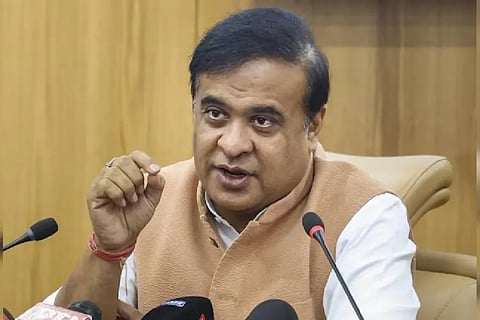
Soon after Assam Chief Minister Dr Himanta Biswa Sarma expanded his cabinet by appointing 12 more ministers last Friday, he also named them as guardian ministers for different districts. It is fascinating to note that this announcement has come at a time when the people have been eagerly waiting to know the portfolios of the newly appointed ministers. Understanding the public pulse, the chief minister has disclosed that the delay in portfolio distribution is intentional, because he wants to thoroughly assess the individual strengths and past performance of the ministers before allotting the portfolios. This is indeed a clever strategy that the chief minister is employing to achieve multiple objectives simultaneously. First and foremost, the Chief Minister must assess the expectations of the public; in this age of social media, common people can easily express their views about which minister they prefer for which department. Number two: the ministers will also try to lobby and campaign for getting their departments of choice through various methods. Third, the ministers must visit their assigned districts and prove their worth by interacting with the public and officers there, giving the chief minister a chance to assess portfolio distribution. Reports indicate that the concept of a guardian minister first originated in Maharashtra, India, in 2004 during the Congress-NCP coalition’s tenure. Since then several state governments have adopted this concept with minor changes here and there. A guardian minister is tasked with overseeing the district’s overall development, coordinating with local authorities, monitoring the implementation of government schemes and infrastructure projects, and addressing administrative challenges. Guardian ministers are also required to play a key role in supervising the allocation and utilisation of government funds to ensure the timely execution of development initiatives. The guardian minister concept primarily aims to connect state-level policymaking with grassroots implementation, ensuring the efficient and transparent execution of local governance, infrastructure projects, and welfare programmes, as they are technically the administrative custodians of their respective districts. Moreover, guardian ministers are also expected to conduct an assessment of the disaster preparedness of various government agencies in the respective allotted districts. They can also collaborate with the District Commissioner and local administrative bodies to draft long-term development and “vision” documents for the respective districts. An effective guardian minister can also contribute in a significant manner to identifying local resource availability and drafting plans for infrastructure development, waste management, and regional job creation. Additionally, they can also identify obstacles in grassroots policy implementation and recommend policy modifications or specific budget allocations to the chief minister. Guardian ministers can also prepare and submit periodic reports directly to the state’s chief minister detailing district progress and recommending state awards for administrative best practices. And, as far as the citizens are concerned, they can have better access to the government without taking the trouble of going to Dispur to air their grievances. For that, of course, the guardian ministers must keep aside a couple of hours during their district visits exclusively for the common people.
