
- Home
- Live Blog
- Breaking News
- Top Headlines
- Cities
- NE News
- Sentinel Media
- Sports
- Education
- Jobs
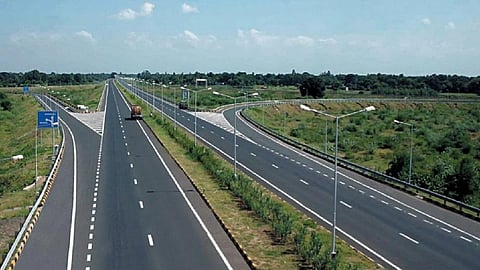
Highways accelerate development by making it easier to connect, but they also break up wildlife habitats. For a development-deficit region like the Northeast, the construction of highways is an urgent necessity; yet, balancing highway construction with forest and wildlife conservation in this ecologically fragile region remains a critical challenge. Pushing highway projects for faster delivery without adhering to the adoption of mitigation measures and environmental safeguards, which leads to rampant cutting of hill slopes and an escalating incidence of landslides along highways in the region, is a cause for grave concern. While Union Minister for Road Transport and Highways Nitin Gadkari’s stress on the need for environment-friendly construction practices in highway construction is relevant to the region, the rise in landslides along highways indicates a gap in both the quality and implementation of mitigation measures during highway construction. The Union Minister’s call at the two-day “Chintan Shivir 2026 – A National Conclave on Highway Infrastructure” for coordinated efforts by the Central government, States and implementing agencies to ensure timely delivery of infrastructure in line with the country’s growing development and mobility requirements reflects the central government’s push for expediting highway construction and expansion for providing seamless connectivity between cities, towns, ports, markets and industrial centres. His emphasis on highway development remaining focused on quality, safety, speed and world-class standards is crucial for India to upgrade its road network to cater to future needs of passenger mobility and transportation of goods not just within the country but also to meet the growing needs of seamless mobility of people and goods across borders in the interconnected economy of Southeast Asia and the Southeast Asian region. The release of a document titled “Wildlife Mitigation Measures &,” published by the National Highways Authority of India and presented by Mr Gadkari at the Chintan Shivir, is a timely initiative that reminds all stakeholders in highway construction to prioritise wildlife considerations not only during the Detailed Project Report preparation stage but throughout the entire project period, especially in the ecologically fragile Northeast. The report highlights NHAI’s initiatives towards integrating wildlife conservation into highway planning, design and implementation and focuses on addressing challenges of habitat fragmentation, barrier effects and wildlife collisions through mitigation measures. The rising incidence of human-wildlife conflict in the fragmented wildlife habitats of the region calls for a review of the mitigation measures to find out if there are shortcomings in planning and design or gaps in on-ground implementation by contractors due to non-adherence to environmental norms. The report outlines a framework for wildlife mitigation planning and adoption of structural measures such as underpasses, overpasses, culverts, canopy crossings and non-structural measures such as signage, fencing and speed regulation. The proposed elevated corridor through Kaziranga has been pushed as a structural measure aimed at ensuring barrier-free movement of park animals, which is now not possible due to the fragmentation of the habitat by the National Highway passing through the Kaziranga-Karbi Anglong landscape. The construction of the elevated corridor is also intended to allow for the seamless movement of vehicles through the park, which is currently hindered by speed restrictions that have been imposed to ensure safe wildlife crossings through the nine animal corridors. A mitigation measure and engineering intervention of this scale cannot afford any planning or implementation gap, as the proposed project is not a pilot project to experiment with its effectiveness but a permanent intervention. Such a project demands precision in design, execution and maintenance from day one, meeting gold-standard disaster-mitigation benchmarks, particularly ensuring safeguards against seismic vulnerability, which is very high in the entire region. Mitigation measures for highway construction must extend beyond tree planting to offset ecological damage from tree removal. Hill cutting exacerbates wildlife habitat fragmentation in hilly areas, destabilising slopes and increasing vulnerability in already landslide-prone zones. The alignment of highways in the region, therefore, plays the crucial role in minimising ecological disruption, reducing slope instability and avoiding creation of new landslide-prone stretches. Frequent traffic disruption along several national highways in the region during the rainy season due to the recurrence of heavy landslides in new stretches is a grim reminder to highway developing agencies to ensure that mitigation measures as recommended in the final approved DPR are strictly adhered to during the execution of the projects. Strengthening monitoring and inspection during construction phases is essential to ensure that there is no deviation from the approved design and construction norms. Construction of highways that remain highly vulnerable to frequent traffic disruption due to landslides will only create new roadblocks to the region’s connectivity goals. Frequent and recurring traffic shutdowns along the highways also deter potential investors, as they remain wary of transportation bottlenecks between factory gates and identified markets the highways are meant to connect. A stronger ecological focus can enhance the resilience of highways and boost investors’ confidence. To mitigate environmental risks, we must vet the push for faster delivery of highway construction and projects in the region.
