
- Home
- Live Blog
- Breaking News
- Top Headlines
- Cities
- NE News
- Sentinel Media
- Sports
- Education
- Jobs
Shashanka Das
(shashankadasnov1@gmail.com)
Rising substance abuse among adolescents and young adults threatens educational attainment, workforce participation, family stability and public health. Drug dependence diminishes not only individual potential but also national productivity. Consequently, the campaign’s central proposition – that a developed India requires a drug-free youth – is strategically well-founded.
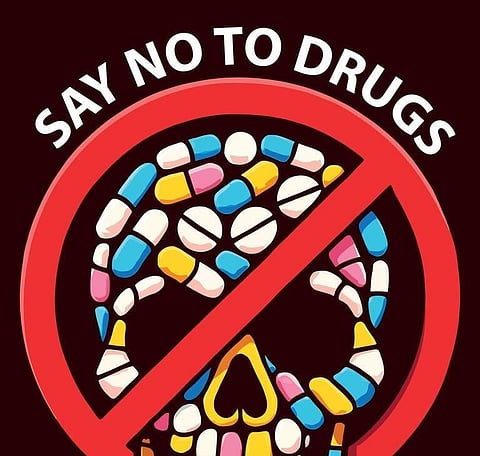
The launch of the ‘Nasha Mukt Yuva for Viksit Bharat Sankalp Abhiyan’, a 100-week nationwide anti-drug campaign, marks a significant evolution in India’s approach to combating substance abuse. By linking a drug-free youth population with the national objective of Viksit Bharat 2047, the initiative elevates the issue beyond public health or law enforcement to the realm of nation-building. The campaign reflects an important policy shift: drug addiction is no longer viewed merely as a criminal justice concern but as a developmental challenge capable of undermining India’s demographic dividend.
India’s economic ambitions are inseparable from the productivity of its young population. With nearly two-thirds of Indians below the age of 35, the country possesses one of the world’s largest reservoirs of human capital. However, this demographic advantage is conditional. Rising substance abuse among adolescents and young adults threatens educational attainment, workforce participation, family stability and public health. Drug dependence diminishes not only individual potential but also national productivity. Consequently, the campaign’s central proposition—that a developed India requires a drug-free youth—is strategically well-founded.
A defining feature of the initiative is its attempt to transform anti-drug efforts into a Jan Andolan rather than just another government programme. This distinction is significant. International experience demonstrates that addiction cannot be eliminated through policing alone. While enforcement may disrupt supply chains, it rarely reduces demand unless accompanied by behavioural change, social support and rehabilitation. The campaign acknowledges this reality by encouraging participation from parents, teachers, educational institutions, youth organisations, civil society and community leaders. Such a whole-of-society approach reflects a more mature understanding of the multidimensional nature of addiction.
The decision to design the programme as a 100-week campaign also deserves attention. Public awareness initiatives in India often lose momentum after ceremonial launches or annual observances. Sustaining activities over nearly two years indicates an attempt to institutionalise awareness rather than create temporary visibility. If implemented consistently, prolonged engagement may influence social attitudes, reduce stigma surrounding addiction and reinforce preventive messaging among adolescents. However, continuity alone will not guarantee effectiveness unless accompanied by measurable outcomes and periodic evaluation.
The campaign further builds upon the existing Nasha Mukt Bharat Abhiyaan, thereby avoiding policy fragmentation. Instead of creating an entirely new institutional framework, the government has chosen to strengthen ongoing initiatives through greater youth mobilisation under MY Bharat. This integration has administrative advantages because awareness networks, educational institutions and district-level implementation mechanisms already exist. The challenge, however, lies in converting administrative reach into behavioural change. Participation figures and awareness events, while politically visible, do not necessarily indicate reductions in addiction rates.
An important strength of the campaign is its recognition that prevention must begin before addiction develops. Schools, colleges and universities are expected to become centres of awareness through debates, cultural programmes, sports, street theatre, music, digital campaigns and peer engagement. This strategy aligns with behavioural research showing that preventive education delivered by peers and community influencers often produces a greater impact than conventional lectures. By employing creative communication rather than fear-based messaging, the campaign seeks to engage young people in ways that resonate with contemporary social realities.
Nevertheless, awareness alone cannot address the structural drivers of substance abuse. Drug addiction often reflects deeper socioeconomic and psychological vulnerabilities, including unemployment, academic pressure, family conflict, loneliness, trauma and untreated mental illness. Unless these underlying determinants receive equal policy attention, awareness campaigns risk treating symptoms rather than causes. In this context, the government’s emphasis on counselling, rehabilitation and family support represents a positive departure from approaches that rely predominantly on punitive measures.
The Prime Minister’s appeal to parents not to conceal addiction because of social stigma is particularly significant. Across many Indian communities, fear of social judgement discourages families from seeking professional help until addiction reaches an advanced stage. By framing addiction as a health challenge requiring timely intervention, the campaign may gradually reduce stigma and encourage early treatment. This shift is essential because recovery outcomes improve substantially when intervention occurs before dependency becomes severe.
Another analytical dimension of the campaign relates to national security. India’s geographical location between major narcotics-producing regions has increased its vulnerability to transnational trafficking networks. Synthetic drugs, darknet transactions and organised criminal syndicates have further complicated enforcement. The government’s argument that narcotics are also exploited to weaken societies introduces a strategic perspective linking drug control with internal security. While this concern is legitimate, excessive securitisation should not overshadow the equally important public health dimension of addiction. Sustainable success requires balancing enforcement with prevention and rehabilitation.
International experience offers valuable lessons. Countries that relied exclusively on punitive crackdowns frequently witnessed prison overcrowding without significant reductions in addiction. Conversely, nations that integrated prevention, treatment, community participation and targeted law enforcement achieved more sustainable outcomes. India’s campaign appears closer to this integrated model. Its emphasis on awareness, rehabilitation and youth engagement suggests recognition that addiction is a chronic social challenge requiring coordinated interventions rather than isolated police action.
Despite its promising framework, the campaign faces several implementation challenges. First, India’s de-addiction infrastructure remains uneven, particularly in rural and remote regions where treatment facilities and trained counsellors are limited. Second, educational institutions require adequately trained teachers who are capable of identifying behavioural warning signs and providing appropriate referrals. Third, rehabilitation must extend beyond detoxification to include vocational training, psychological support and social reintegration, thereby reducing the likelihood of relapse. Finally, transparent monitoring mechanisms are essential. Success should be assessed through indicators such as reductions in substance abuse prevalence, increased treatment access, improved recovery rates and strengthened community participation rather than merely the number of awareness events organised.
The role of technology also deserves greater emphasis. Young people increasingly consume information through digital platforms where misinformation, peer influence and illicit drug promotion can spread rapidly. At the same time, these platforms offer opportunities for targeted awareness campaigns, confidential counselling, AI-assisted risk assessment and digital peer-support communities. Harnessing these tools could significantly enhance the campaign’s reach and effectiveness.
Ultimately, ‘Nasha Mukt Yuva for Viksit Bharat Sankalp Abhiyan’ represents an ambitious attempt to reposition drug control within India’s larger developmental vision. Its greatest strength lies in recognising that addiction is simultaneously a public health issue, a social challenge, an economic concern and a national responsibility. Whether this initiative succeeds will depend less on symbolic pledges and more on sustained institutional coordination, accessible treatment services, evidence-based interventions and active community ownership.
If these elements converge, the campaign could become more than an awareness programme; it could establish a preventive social model that safeguards India’s demographic dividend. If implementation remains event-centric without measurable behavioural outcomes, however, the initiative risks becoming another well-intentioned campaign with limited long-term impact. The real test, therefore, is not the scale of mobilisation but the durability of the transformation it achieves in the lives of India’s youth.
