
- Home
- Live Blog
- Breaking News
- Top Headlines
- Cities
- NE News
- Sentinel Media
- Sports
- Education
- Jobs
The problem is not a lack of education but a lack of employable skills. Increasingly, employers are prioritising competence over credentials. ‘Communication skills, English proficiency, digital literacy,
AI awareness, critical thinking, teamwork, leadership, problem-solving ability and entrepreneurial mindset have become some of the
most valuable assets in today’s job market. – Harsha Mohan Sarma
‘The future belongs to those who learn more skills and combine them in creative ways’ — Robert Greene
The driving force of the twenty-first-century economy is no longer merely education but the combination of knowledge, technology and skills. Academic degrees and certificates alone can no longer guarantee employment in today’s highly competitive world. Employers are increasingly searching for individuals who can solve problems, adapt to changing circumstances, use modern technology effectively, think creatively and work collaboratively. In other words, being educated is no longer enough; one must also be skilled. The question, “Is employment possible without skills?” has become increasingly relevant, and the answer is becoming clearer with each passing day: no.
The Fourth Industrial Revolution has fundamentally transformed the global employment landscape. Emerging technologies such as artificial intelligence (AI), robotics, automation, the Internet of Things (IoT), cloud computing, cybersecurity, data analytics, green energy and semiconductor technology are rapidly reshaping industries across the world. While many traditional occupations are disappearing, thousands of new career opportunities are being created. However, these opportunities demand modern skills rather than academic qualifications alone. As a result, many countries today face a paradox: a shortage of skilled professionals exists alongside a growing population of educated unemployed youth.
India reflects the same reality. Every year, millions of young graduates leave universities with bachelor’s and master’s degrees, yet many struggle to secure meaningful employment. The problem is not a lack of education but a lack of employable skills. Increasingly, employers are prioritising competence over credentials. Communication skills, English proficiency, digital literacy, AI awareness, critical thinking, teamwork, leadership, problem-solving ability and entrepreneurial mindset have become some of the most valuable assets in today’s job market.
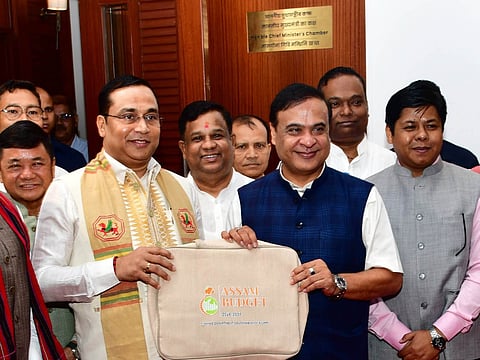
Assam is no exception. For decades, the state’s educated youth have relied heavily on government jobs as the primary avenue for employment. However, the number of government vacancies remains limited, while the number of graduates entering the labour market continues to grow each year. This widening gap has intensified the unemployment challenge. The urgent requirement is to develop skilled human resources for various sectors, including agriculture-based industries, tourism, information technology, food processing, healthcare, electronics, service industries, small enterprises, and start-ups. Recognising this reality, the Government of Assam has placed significant emphasis on skill development in the State Budget for 2026–27. The budget aims to make young people more employable and entrepreneurial by strengthening technical education, promoting skill development, encouraging entrepreneurship, nurturing the start-up ecosystem and expanding technology-orientated training programmes.
Greater emphasis has also been placed on strengthening Industrial Training Institutes (ITIs), polytechnic institutions, skill development centres and other technical education institutions while establishing stronger partnerships between educational institutions and industry. This vision clearly reflects the government’s recognition that skilled human capital will be the cornerstone of Assam’s future economic growth.
The Assam Budget for 2026–27 places skill development and employment generation among its highest priorities. The key initiatives include the following:
First, the government has set a target of creating 200,000 new employment opportunities across government departments, universities, medical colleges and other public institutions. To facilitate this ambitious objective, a high-level task force under the leadership of the chief secretary has been constituted to oversee implementation and monitor progress.
Second, under the “Ashtadash Mukutar Unnoyoni Mala” initiative, special emphasis has been placed on equipping young people with industry-orientated skills, promoting entrepreneurship and enhancing employability through structured training programmes.
Third, the budget seeks to encourage local entrepreneurship, self-reliance and the growth of micro- and small enterprises by providing skill training, institutional support and capacity-building initiatives.
Fourth, the government has proposed the establishment of two modern integrated academic complexes under the Public–Private Partnership (PPP) model. These institutions aim to enhance industry-linked and skill-based education by fostering close collaboration between academia and the private sector.
Fifth, in line with the National Education Policy (NEP), the government has emphasised competency-based education, shifting the focus from examination-centred learning to the acquisition of practical knowledge and real-world competencies. Teachers are being provided with specialised training to implement competency-based teaching and assessment effectively.
Taken together, these initiatives convey a clear message: the future lies not merely in earning academic degrees but in developing practical skills, entrepreneurial capabilities and employability that can prepare young people for a rapidly evolving labour market.
At the global level, the semiconductor industry is expanding at an unprecedented pace. India has also embarked on an ambitious mission to emerge as a major global hub for semiconductor manufacturing by attracting large-scale investments in this strategic sector. If the youth of Assam are trained in fields such as semiconductor technology, electronics manufacturing, artificial intelligence, drone technology, renewable energy, cybersecurity, healthcare technology, logistics and digital services, they will find employment opportunities not only within Assam or India but also across international markets. However, budget announcements alone cannot guarantee success. Their effectiveness depends entirely on timely and efficient implementation. Skill development centres must be equipped with qualified instructors, modern infrastructure, advanced laboratories and industry-standard equipment. Strong partnerships with industries, robust apprenticeship programmes and direct linkages between training institutions and employers are equally essential. Without these, skill development initiatives risk remaining confined to policy documents rather than producing tangible outcomes.
At the same time, India’s education system requires fundamental reform. Schools and colleges must move beyond an examination-orientated approach and embrace education that prepares students for life and work. Subjects such as coding, artificial intelligence, financial literacy, digital skills, entrepreneurship, design thinking, problem-solving, communication skills, internships and vocational education should be integrated more effectively into the curriculum. Every student should graduate with at least one practical or professional skill that enhances employability and self-reliance. Only then can education truly become relevant to the demands of the twenty-first century.
Equally important is a change in the mindset of parents and society. Even today, many families continue to regard government employment as the only measure of success. However, the modern global economy presents a very different reality. A skilled electrician, plumber, mechatronics technician, AI operator, graphic designer, drone pilot, food technologist or entrepreneur can build a highly respectable and financially rewarding career. Parents should therefore encourage their children’s interests, talents and abilities instead of forcing them to pursue conventional career paths. Technical expertise alone, however, is not enough. Soft skills are equally indispensable. Integrity, punctuality, dedication, leadership, creativity, teamwork, a positive attitude and social responsibility are qualities that make an individual genuinely employable. Many of the world’s leading organisations now value these attributes as highly as, and sometimes even more than, academic qualifications.
The future belongs to lifelong learners. Skill development is not a one-time exercise but a continuous journey of learning, adaptation and self-improvement. As technology evolves, new skills must be acquired to remain relevant. Those who continue to learn will continue to grow; those who stop learning risk being left behind.
It’s time to turn skill development into a widespread social movement in Assam. The government, educational institutions, industries, parents and civil society must work together to create a vibrant ecosystem that nurtures talent and innovation. Young people: Empowering young people to seek employment and become creators of jobs through entrepreneurship and innovation is essential. They should be empowered not only to seek employment but also to create only to seek employment but also to become creators of jobs through entrepreneurship and innovation.
The reality is unmistakable: in today’s world, sustainable employment without relevant skills is becoming increasingly difficult. While a university degree may provide access to opportunities, it is the possession of skills that truly empowers an individual to enter, succeed, and advance in their chosen field.
The future of Assam depends on the harmonious integration of education and skills. Rather than asking only, “Are there enough jobs?”, the younger generation must also ask, “Are we equipped with the skills those jobs demand?” Finding the answer to that question—and acting upon it—will be the first decisive step towards building a prosperous, self-reliant and globally competitive Assam.
(The writer can be reached at harshasarma183@gmail.com)
