
- Home
- Live Blog
- Breaking News
- Top Headlines
- Cities
- NE News
- Sentinel Media
- Sports
- Education
- Jobs
The Standard
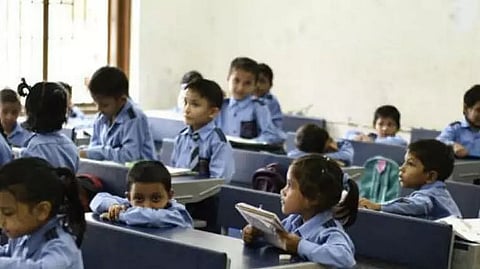
Operating Procedure (SOP) for reopening of elementary schools in Assam from the
New Year's Day has ensured that all students would not come to school at the
same time but in batches an on different days. Classes from I to V will be held
on alternate days; and the students will have to come to schools with
permission from parents. The staggered timetable is a relief for the parents
from the worry of overcrowding of the school premises with parents and all
minor children. The SOP allows serving of midday meal to the students and the
school authorities should give top priority to maintenance of COVID-19
protocols in preparation and serving of the cooked food. Apart from improving
nutritional levels of students enrolled in Class I to VIII, the midday meals
served in schools also helped enhancing enrolment, retention, and regular
attendance. It is reassuring to know that COVID-19 vaccines will work against
new variants of the virus reported from the United Kingdom or South Africa.
Decline in new cases, active cases, and deaths in the State as well as in the
country is good news. Principal Scientific Advisor to Government of India K.
Vijay Raghavan has asserted that so far it has not been found that the new
variant increases the severity of the disease. However, there is no room for
any complacency and the guard against COVID-19 infections during school
attendance must not be lowered at any cost to ensure that schools remain safe
to instil confidence among parents in offline classes.
The fact that the State still has more than 3,000 active cases is a good enough reason to keep wearing the face masks and maintain the physical distance in public places to sustain the consistent decline in new cases. Unfortunately, the political rallies organised by the political parties that led to gathering of large crowd of participants without facemasks have encouraged most people in the State to abandon the COVID-safety norms. The battle against COVID-19 will be won only then when the chain is completely broken and there is no active case. The National Health Service of UK warned that the hospitals were being overwhelmed by a surge in cases of the new variant of COVID-19. The NHS has described the new variant to be "highly transmissible". This should sound the alarm bell in every State in India to stay prepared. Experiences during the pandemic have taught lessons that while pressing the panic button does not help improving the situation, the alertness and the awareness against the spread of COVID-19 infection did serve the purpose. Successful conclusion of the dry run of COVID-19 vaccines in Assam, Gujarat, Andhra Pradesh, and Punjab is good news about the state of preparedness for mass vaccination when the vaccines arrive. However, mass vaccination is going to be huge logistic challenge in Assam as the State is going to the Assembly polls in April-May 2021, if vaccination is to start before the elections. The Ministry of Health has revealed that 63% of total cases in the country were reported in males and 37% cases in females. Age-wise, 8% cases reported below age of 17 years, 13% in 18-25 years age group, 39% in 26-44 years group, 26% in 45-60 years group and 14% above 60 years. The mortality analysis show that males accounted for 70 per cent while females accounted for 30 per cent. Age-wise, individuals of 60 years and above accounted for 55 per cent of the total 1,48,153 deaths in the country. This figure speaks volume about the vulnerability of the individuals of 60 years and above; and it should alert everyone in the society to pay special attention on protecting the family members belonging to this age group from the infection.
Reopening of the elementary classes should not create the falsehood of normalcy returning to the State. It should rather remind everyone in the State about the new normal of mandatory wearing of facemask, handwashing, using hand sanitisers and maintaining the physical distance. The classrooms and school premises are ideal places for building awareness among the children and prepare them to deal with the pandemic situation in a much better way than now. The pandemic situation has also brought the opportunity to inculcate the scientific temperament among the students in the classrooms and explain to them about the COVID-19 virus and the mindboggling world of scientific facts about the environment and how loss of natural environment gives rise to predatorial viruses that again threaten biodiversity. Apart from the regular textbook learnings, the classrooms reopened during the pandemic also bring the opportunity to ignite the young minds in Assam as to why it is important for mankind to protect the rainforests like Dehing Patkai to prevent the outbreak of such a pandemic situation in the future. Innovative ideas of teachings will turn the gloomy classrooms into vibrant learning arena for the children.
