
- Home
- Live Blog
- Breaking News
- Top Headlines
- Cities
- NE News
- Sentinel Media
- Sports
- Education
- Jobs
Gautam Sarmah
(gautamsarmah8@gmail.com)
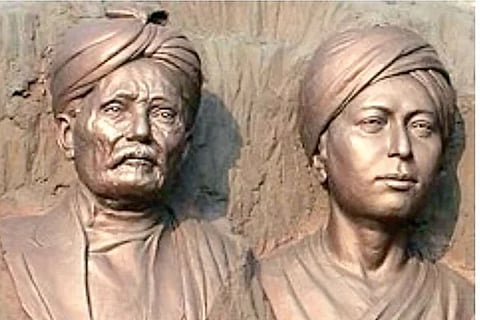
In the view of modern historians of Assam, Maniram Dewan was a popular and influential free- dom fighter who opposed British rule. For the crime of bringing the spirit of the 1857 Sepoy Mutiny, which had spread widely across India, into Assam, the British colonial government arrested and executed him. His sacrifice and courage remain a source of pride for the people of Assam even today. Piyali Barua, another brave patriot who was hanged on the same gallows, was also involved in the same movement. On 26 February 1858, these two fearless freedom fighters were publicly executed. While history has widely praised and remembered Maniram, Piyali Barua has not received the same recognition. Beyond his name, reliable and detailed information about him is difficult to find.
In our view, all those who have sacrificed for the nation deserve equal respect. The history of a nation does not belong to a single individual; it is the collective story of many sacrifices, acts of courage, and selfless contributions. Those who have been overlooked in historical narratives also deserve proper acknowledgement. It is the responsibility of historians to inform the younger generation about all significant historical figures. India’s freedom struggle was not achieved through the efforts of one person alone; it was the result of coordinated and collective struggles. In remembering Piyali Barua and recognizing his patriotism and sacrifice, we appear to have failed. The main purpose of this article is to bring him out of neglect and place him in his rightful position in history.
At the outset, it is important to clarify a common historical confusion. Many people mistakenly identify Piyali Barua, the anti-British leader of 1857, with Piyoli Phukan. Though their surnames differ, their names are often confused. These two individuals belonged to different periods and circumstances. Piyoli Phukan was an Ahom nobleman who was involved in anti-British conspiracies in 1830 and was sentenced to death. In contrast, Piyali Barua was a close associate of Maniram Dewan and a key participant in the uprising of 1857 in Assam. Avoiding the confusion between these two figures can lead to historical misunderstandings.
There is a serious lack of documented information about Piyali Barua’s personal life, family background, and lineage. According to various sources and information provided by Debasish Bezbaruah of Jorhat, a senior journalist from a leading Assamese daily newspaper and a member of his family, Piyali Barua’s real name was Mahesh Chandra Sharma Gabhurumela Barua. Though he was popularly known as Piyali Barua, he belonged to the respected Bezbaruah lineage of Assam. His father, Ram Sharma Gabhurumela Barua, was a close friend of Maniram Dewan. During the Ahom period, the title “Gabhurumela Barua” was associated with royal administrative responsibilities, particularly the management of royal property and accounts. His grandfather, Jurai Gabhurumela Barua, migrated from Sivasagar to Jorhat during the reign of Ahom king Gaurinath Singha and was granted several bighas of land by the royal household. Had Kandarpeswar Singha restored the Ahom kingdom, Piyali could have assumed a similar royal office to his father’s.
The Bezbaruah lineage traces its origin to a person named Kalibar, who came to Assam in the seventeenth century. In 1648, Ahom King Jayadhwaj Singha appointed him a royal physician, or “Bej.” The surname “Bezbaruah” later developed from this title. Kalibar had three grandsons: Anupam, Jayhari, and Purushottam. Piyali Barua was a direct descendant of Anupam, while the renowned Assamese literary figure Lakshminath Bezbaruah was a descendant of Purushottam. This indication shows that Piyali Barua belonged to a respected and educated family. He was a courageous young man from Jorhat who travelled across Upper Assam to unite people of different communities against British rule. Despite belonging to an influential family, he dedicated his life to the freedom and dignity of Assam.
Piyali Barua occupies an important yet often neglected place in the early history of resistance against British rule in Assam. He stood beside Maniram Dewan in organizing anti colonial resistance. After the Treaty of Yandabo was signed on 24 February 1826, the British East India Company gradually took control of Assam. Initially, many Assamese people welcomed British rule, hoping for stability after the devastation caused by Burmese invasions. However, this hope soon faded. The colonial administration dismantled traditional political systems, imposed new taxes, encouraged opium consumption, and exploited the region’s resources. The rights of indigenous elites were reduced, and common people suffered economic and social decline. Growing dissatisfaction laid the foundation for early anti-British movements in Assam.
During this period, Maniram Dewan emerged as a prominent critic of colonial rule. He petitioned British officials demanding justice and the restoration of indigenous governance. When his appeals were ignored, he began organizing resistance. Piyali Barua was one of his closest associates in this effort. Along with several other leaders, they planned secretly to challenge British authority in Assam. When the Sepoy Mutiny of 1857 spread across northern India, they sought to use it as an opportunity to overthrow British rule in Assam and restore Ahom sovereignty. Piyali played an active role in these preparations. Secret meetings were held, messages were exchanged, and attempts were made to mobilize local leaders and sepoys. The movement involved people from different communities, including hill groups and women such as Phul Kumari. This fact indicates that the uprising in Assam had broader social support and was not limited to a small elite group.
The British authorities became alarmed by the growing unrest. Officers took strict measures to suppress the conspiracy. Unfortunately, due to betrayal and internal conflicts, the secret plans were exposed. Key centers were seized, and letters were intercepted. Maniram Dewan and Piyali Barua were arrested and charged with treason and conspiracy against the colonial government. Their trial was conducted under colonial law, leaving little opportunity for proper defence. Both were sentenced to death and publicly hanged at Jorhat on 26 February 1858. The execution was intended as a warning against future rebellion, but it created deep sorrow and anger among the people. Many tea garden workers and local residents mourned their deaths, reflecting the respect they commanded.
Maniram Dewan has been widely recognized as a pioneer of Assam’s tea industry, an entrepreneur, and an early nationalist thinker. Historians observe that political and economic factors, in addition to patriotism, motivated his movement. He had earlier served under the British and later became a tea planter. His resentment grew when the British confiscated his estates and harmed his business interests. He also hoped to restore the Ahom monarchy. Thus, his movement reflected both patriotic ideals and the political realities of the time. In contrast, Piyali Barua does not appear to have been driven by personal economic loss or ambition. He held no high position under the British and had no major business interests at stake. His involvement in the movement was based primarily on principle, patriotism, and a sense of national dignity. He travelled widely to unite people, inspired soldiers, and helped arrange arms, all at considerable personal risk. Though he could have lived a comfortable life, he chose instead the path of struggle.
Despite his sacrifice, Piyali Barua has received little recognition in modern historical narratives. He is often mentioned only as an associate of Maniram Dewan. This reflects a broader issue in historical writing, where some figures become celebrated while others remain overlooked. Piyali Barua was not merely a follower; he was an organizer, a committed patriot, and a key participant in one of Assam’s earliest organized political resistances. There is a pressing need for further research on Piyali Barua. Historians should examine colonial records, local archives, and oral traditions to reconstruct his life and contributions more fully. Educational institutions and the government should also take steps to honour him appropriately. Memorials, scholarships, and the inclusion of his life in academic curricula would help preserve his legacy. Public observance of his death anniversary would increase awareness of his sacrifice.
Piyali Barua belonged to a generation that resisted colonial domination long before organized national movements took shape. He understood the political and economic consequences of foreign rule and was prepared to sacrifice everything for freedom and dignity. Correcting the historical neglect of his contribution is both a matter of justice and a tribute to a forgotten hero who helped lay the early foundations of India’s long struggle for independence.
(Faculty Member, Department of History, Rabindranath Tagore University, Hojai.)
