
- Home
- Live Blog
- Breaking News
- Top Headlines
- Cities
- NE News
- Sentinel Media
- Sports
- Education
- Jobs
Sabir Nishat
(sabirnishat554@gmail.com.)
Domestic air travel witnessed an extraordinary surge in fares on Friday, with ticket prices on several major routes touching levels never before seen in the Indian aviation market. On high-demand sectors such as Kolkata-Mumbai and Mumbai-Bhubaneswar, one-way economy-class fares rose to nearly Rs 90,000 and Rs 84,000, respectively, according to airline booking platforms. Similar spikes appeared across several other busy sectors, indicating a systemic escalation rather than isolated irregularities.
A sudden capacity shock
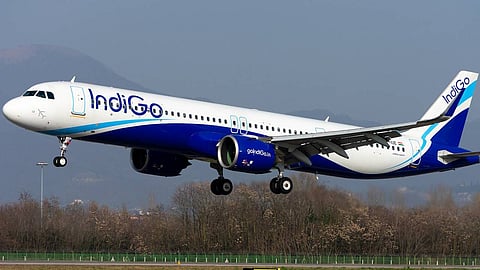
At the centre of the disruption was the cancellation of more than 1,000 IndiGo flights in a single day. As the country’s largest airline with well over half of the domestic market share, IndiGo’s sudden withdrawal of capacity had an immediate and widespread impact. The cancellations resulted from a pronounced crew shortage that coincided with the implementation of the second phase of revised flight duty and rest norms for pilots. The shift significantly tightened roster availability, triggering a collapse in capacity that the market was unable to absorb smoothly.
The abrupt reduction in available seats placed intense pressure on remaining inventory, and automated dynamic pricing systems responded by driving fares sharply upward across all airlines, regardless of whether they were directly affected by the operational constraints. The interconnected nature of the aviation network meant that reduced supply in one carrier quickly spilt into price escalation across the board.
Government action
and accountability
Following the harrowing time faced by passengers at airports across the country in the wake of the massive IndiGo disruption, the Union Government has taken the right step by instituting a high-level inquiry. The probe aims to understand what went wrong within the airline’s operations, determine accountability wherever required for appropriate actions, and recommend measures to prevent similar disruptions in the future. This is intended to ensure that passengers do not face such hardships again and that systemic vulnerabilities are addressed with urgency.
Concentration risks
in the Indian market
The episode offered a stark reminder of the fragility inherent in India’s concentrated aviation landscape. The dominance of a single carrier amplifies the consequences of any operational difficulty it encounters. When IndiGo experiences disruptions — whether related to manpower, regulatory changes, or internal scheduling — the entire ecosystem feels the effects almost instantly. A more evenly distributed market might have been able to absorb a portion of the shock, but India’s current structure leaves little buffer against sudden fluctuations.
This concentration risk is not new, but the severity of the fare surges exposed how quickly the system can become imbalanced. The dominance of one player means that the overall health of the aviation sector is closely tied to the operational stability of a single airline, making disruptions more impactful than they would be in a more diversified environment.
Dynamic pricing and
its limitations
A key factor in the dramatic price increases was the widespread reliance on algorithm-driven dynamic pricing. These systems are programmed to raise fares gradually as seat availability diminishes, under the assumption that tight capacity is a result of rising demand. However, they are not built to differentiate between normal and abnormal market conditions.
When the capacity shortage occurred due to mass cancellations rather than increased passenger demand, the algorithms nonetheless pushed fares into extremely high brackets. The result was tickets priced three to six times above their typical levels, creating a situation where domestic routes cost as much as, or more than, some international journeys.
The incident has reignited debates about whether pricing algorithms need moderation during periods of acute disruption. Without safeguards, automated systems risk producing outcomes that are detached from market reality and potentially detrimental to consumer interests.
Growing concerns over
passenger welfare
Air travel has evolved into a vital mode of transportation in India, supporting not only business mobility but also medical travel, labour movement, and urgent family-related journeys. Extreme fare volatility affects passengers who have limited flexibility in their travel plans, exposing them to disproportionately high financial burdens during emergencies or unavoidable trips.
The extraordinary fare levels seen on Friday raised questions about whether current pricing practices adequately protect consumer interests. Many passengers were effectively priced out of travel, and the episode added to concerns that affordability — one of the pillars of India’s aviation expansion — may be compromised during periods of operational strain.
Debate over government
intervention
The sudden surge in fares has revived the debate on whether the Ministry of Civil Aviation should consider temporary price caps during extraordinary circumstances. India has previously implemented such measures; during the post-pandemic reopening, fare bands were introduced to ensure stability and prevent sudden price spikes. While these bands were eventually withdrawn to allow the market to function freely, the present situation has renewed calls for calibrated intervention.
Emergency fare ceilings activated only during acute disruptions are being discussed as a potential mechanism. Under such a framework, price caps would not interfere with regular market dynamics but would be triggered automatically during periods of severe capacity reduction. Such an approach could balance the interests of passengers and airlines, preserving both affordability and operational viability.
Operational preparedness
and regulatory alignment
The disruption also highlighted gaps in the aviation sector’s operational preparedness. The revised flight duty time limitations were introduced to enhance pilot welfare and improve flight safety — both essential objectives. However, the transition appears to have outpaced industry readiness. Pilot shortages, already a well-known concern, were exacerbated by the tighter duty norms, and the absence of adequate transitional planning led to the widespread cancellations.
The situation points to the need for better coordination between airlines and regulators. When regulatory changes with operational implications are introduced, the sector requires ample adjustment time, clear transition paths, and robust contingency plans to prevent large-scale disruptions. Without such planning, even beneficial reforms can unintentionally destabilise the system.
A setback for accessibility
and growth ambitions
The fare surge comes at a time when India is seeking to expand regional connectivity, increase accessibility, and strengthen its position as one of the fastest-growing aviation markets in the world. However, episodes such as Friday’s demonstrate how price unpredictability and capacity constraints can undermine these goals.
When domestic air travel becomes prohibitively expensive during periods of operational strain, it erodes public trust and can discourage regular passengers from relying on aviation for essential journeys. If such volatility recurs, it may also affect long-term travel patterns, industry reputation, and policy direction.
Path ahead for a more stable aviation ecosystem
The events of Friday serve as a reminder that the aviation sector’s health depends not only on fleet expansion and traffic growth but also on structural resilience, workforce stability, regulatory foresight, and pricing transparency. The fare spike exposed weaknesses that go beyond a single day’s disruption, pointing instead to systemic vulnerabilities that require sustained attention.
Ensuring a more stable and predictable aviation environment will likely require a combination of regulatory coordination, improved workforce planning, stronger operational buffers, and clearer oversight of pricing behaviour during sudden disruptions. While the market-driven model has driven growth and competition, the recent events indicate the need for mechanisms that prevent extreme deviations from normal pricing and capacity conditions.
Conclusion
The extraordinary fare levels observed following the mass cancellations provide a clear indication of the aviation system’s sensitivity to shocks. They underline the need for stronger structural safeguards, better preparedness, and coordinated responses to operational challenges. With the government now initiating a high-level inquiry into the IndiGo disruptions, there is an opportunity for meaningful reforms that strengthen passenger protection, improve operational resilience, and ensure that India’s aviation sector remains robust, reliable, and fair — even during sudden and unexpected disruptions.
