
- Home
- Live Blog
- Breaking News
- Top Headlines
- Cities
- NE News
- Sentinel Media
- Sports
- Education
- Jobs
"As long as ISI influence, radical networks, financial pipelines and cross-border sanctuaries persist, the security situation in India's eastern and northeastern regions will remain deeply vulnerable" –– Madhurjya Saikia
Before becoming an independent country, Bangladesh was an important geographical and cultural part of India, and both nations have remained closely connected through language, culture, and many other shared features for a very long time. The strong relationship between the two countries shows a broad partnership that goes far beyond just a strategic alliance. It is based on equality, respect for sovereignty, trust, and mutual understanding. Different agencies from both countries work together to fight problems such as drug smuggling, fake currency, human trafficking, and other security threats. The 4,096-kilometre-long international border has been managed in a peaceful and effective way through many systems, including joint border marking, border fencing, and regular checking of boundary pillars, including those in river areas.
Despite ongoing cooperation between India and Bangladesh, several serious internal security problems in Bangladesh continue to affect India directly. Over the past decade, Bangladesh has seen a major rise in religious radicalisation, which has created long-term risks for Indian national security. Although India played a key role in Bangladesh's independence, many extremist groups operating there now consider it their duty to destabilise India. With support from Pakistan's Inter-Services Intelligence (ISI), several organisations, such as Jamaat-e-Islami, Harkat-ul-Jihad-al-Islami Bangladesh (HUJI-B), Jamaat-ul-Mujahideen Bangladesh (JMB), Hizb-ut-Tahrir and Al-Qaeda in the Indian Subcontinent (AQIS), have expanded their activities. Since 2020, AQIS has intensified online propaganda to influence young people, encouraging lone-wolf attacks and the introduction of strict Sharia law. The 2016 Holey Artisan Bakery attack in Dhaka marked a turning point, drawing even educated and wealthy youth into extremist networks. These groups use madrasas, universities, charities, and social organisations to spread ideology and recruit members. Jamaat-e-Islami, one of the most organised political-religious groups, gained power after 1979 and used political connections-especially with the Bangladesh Nationalist Party (BNP)-to influence administration and security institutions. HUJI-B, founded by Afghan war veterans with early funding from Al-Qaeda, expanded its network across Bangladesh, India and Nepal and maintained close ties with groups like Lashkar-e-Taiba and Jaish-e-Mohammed. JMB developed massive underground support, carrying out coordinated blasts in 2005 across 63 districts and maintaining thousands of full-time operatives. Hizb-ut-Tahrir built influence among university students and even inside Bangladesh's military and border forces. Together, these organisations created a powerful extremist ecosystem that spills across borders, leading to recruitment, training, arms smuggling and terror activity in Indian states such as Assam and West Bengal. Though the Bangladesh government has acted against militant leadership, its efforts focus mainly on urban areas, allowing northern hill regions and coastal zones to remain active bases for cross-border extremist operations.
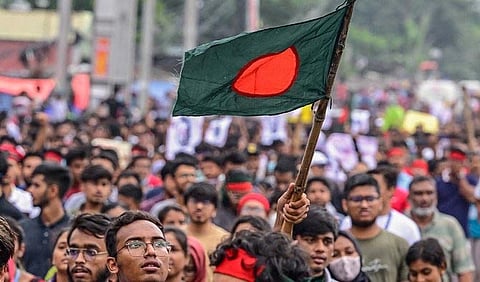
The impact of this environment on India's national security has been severe. ISI, with the help of elements within Bangladeshi intelligence and military institutions, has turned Bangladesh-especially Cox's Bazar-into a regional hub for terror coordination, weapons trafficking, fake currency circulation and drug smuggling. The purpose is to weaken India economically, inflame communal tensions, and keep the northeast unstable so that Indian military resources remain diverted away from Kashmir. New militant groups such as the Islamic Liberation Army of Assam, MULFA and MULTA emerged during the mid-1990s and built strong networks in Barpeta, Nalbari, Dhubri and Goalpara districts. Terrorists linked with HUJI-B, Harkat-ul-Mujahideen and ISI agents have repeatedly been arrested in Guwahati and surrounding areas. These groups operate an extensive financial network using NGOs, madrasas and religious donations, often functioning as hawala channels for international terror funding. This underground system remains difficult to dismantle because authorities focus mainly on visible leadership structures rather than hidden financial and logistical networks. Recent revelations of cooperation between ideologically different militant groups-such as the Christian Kuki-Chin National Front and the Muslim Jama'atul Ansar Fil Hindal Sharqiya-show that profit and survival override ideology, making the threat more unpredictable. Such fragile alliances often result in violent clashes and turf wars, increasing instability in the region. While former Prime Minister Sheikh Hasina's government had taken strong steps against militants, the continued presence of these networks in remote regions ensures that Bangladesh remains a major strategic challenge for Indian security. As long as ISI influence, radical networks, financial pipelines and cross-border sanctuaries persist, the security situation in India's eastern and northeastern regions will remain deeply vulnerable. In 2024-2025, Bangladesh went through a major crisis and political change. In July 2024, large student-led protests forced Prime Minister Sheikh Hasina to step down, and an interim government led by Nobel Prize winner Muhammad Yunus took over. In late 2025, unrest has flared again after youth leader Sharif Osman Hadi died, which sparked attacks on media outlets and cultural centres. Because of rising security threats to diplomatic missions, India stopped issuing visas in Chittagong in December 2025, leading to a diplomatic standoff.
The present situation in Bangladesh needs to be handled with firm control, and strong security policies must be implemented to maintain regional stability. The country has become a centre of activity for vested interests and foreign intelligence agencies, which has led to the destabilisation of Bangladesh and the radicalisation of its youth. While methods such as plausible deniability and the "unknown gunman" approach may produce short-term results, for long-term regional stability India's role must be more strategic. India should work towards geographically isolating Bangladesh by applying financial pressure and restricting its export access. Illegal cross-border migration from Bangladesh must be stopped, and India's Border Security Force, along with intelligence agencies, should closely monitor activities along the international boundary. India should also strengthen its military presence in the Siliguri Corridor, and its navy and air force must project India's dominant strategic posture. Protecting India's national interest and security has become critical, making it necessary for the government to identify and eliminate agents and non-state actors working against the Indian state. At the same time, reducing the influence of Pakistan's ISI in Bangladesh is essential, as it plays a key role in supporting hostile groups. India therefore needs a balanced strategy that combines soft power and hard power to dismantle terrorist networks and secure its northeastern region. (The writer can be reached at madhurjyau15@gmail.com)
