
- Home
- Live Blog
- Breaking News
- Top Headlines
- Cities
- NE News
- Sentinel Media
- Sports
- Education
- Jobs
Bishakha Bhardwaj
(The writer can be reached at bhardwajbishakha6@gmail.com)
A teacher affects eternity:
He can never tell where his
influence stops – Henry Adams
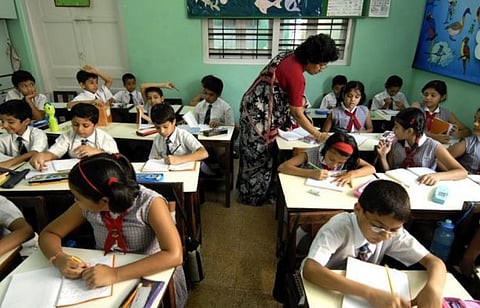
Teaching-learning has always been a subject of introspection and research. The education system has to be very flexible in order to serve the purpose of the changing society and the world. Expectations are high regarding teachers who are believed to be the one taking out the best in a student. The classroom has become inclusive and measures are taken to make education effective and affordable by the government. The modern approach of learning which is student centered is gaining heights and resulting in many positive results too. With due course of time education and educators both have had a seemingly changed role in shaping the young minds.Education is a lifelong process which of course does not end till death. Given the fact that here we sketch the role of a teacher in imparting quality education to a child at the elementary level, the formal education is being particularly taken into account.
We should pay a notice to what we expect our teachers to be like when we send our children to school. Are we getting the best out of what we deserve for our young minds who would be the future of the nation? Have we ever questioned the policies of the government, the schemes and the kind of education that is being imparted in the classrooms? In a nutshell, how much informed are we as parents, teachers, guardians and most importantly as a citizen about our foundational base of a futuristic society? A brief idea of our educational arenas is necessary to keep ourselves acquainted with the system.
Universalization of elementary education has been one of the most important goals of educational development in India since Independence. The parliament had passed the Constitution’s 86th Amendment Act 2002 to make elementary education a Fundamental right for children in the age group of 6-14 years. Another development is the Supreme Court judgment which declares basic education a fundamental right of every citizen requiring the state to make necessary provisions as a basic obligation. It was followed by the partnership between the Centre and state to initiate a number of centrally-sponsored schemes such as District Primary Education Programme, Lok Jumbish Project, Mid Day Meal Scheme, Sarva Shiksha Abhiyan,Shiksha Karmi project, Janshala Programme, Alternative and Innovative Education, Education Guarantee Scheme etc. All of these schemes taken up by the govermentis to provide a quality education to the students keeping in mind the importance of elementary education in the country and also the structure of education.
The teachers too are also trained for the purpose of teaching through programmes such as D.l.Ed, BEd,B.Eld.DIET etc, where the teaching methodologies and classroom management is taught in order to be an effective educator. One should acquire the required degree needed to be a teacher in different levels of education. Teachers support students to acquire appropriate skills, be it social or educational, which help students throughout their education. In fact, school is a mini-society constituting of children from different backgrounds; making the children practise their individualistic approach towards each other. Therefore, the role of a teacher is crucial at this stage of development. A teacher should act more like a facilitator and counsellor. The focus of education imparting should be on conceptualization and free understanding rather than confined and parrot learning. The fact that the knowledge is more important than the mark sheet should be made clear to the students early at this stage through different teaching-learning activities. A teacher should always welcome interrogations and he/she should be able to establish his/her point logically and convincingly if the students have misunderstood any subject matter. This will not only help the teacher to be precise but there will be a pure understanding of concrete basics by the children.
There are individual differences amongst the children of a classroom, a teacher should respect their differences in every aspect because every child is unique.The teachers are the middleman between parents and children, if not they should start being one. A great deal of student’s life is depended on teachers. They must keep families in a loop as much as possible. Teaching unlike the earlier system has become responsive. Gone are the days when there used to be a curriculum materials with a clear set of instructions detailing exactly how to teach students. Teaching has evolved as a subject which should be able to fit the changing dynamics of a society. A teacher should always be aware, ethical, equitable and engaged. A responsible teacher counsels his/her students to use the knowledge students learn in school to become valuable members of society. In addition, to this a concerned teacher always tries, amend the flaws and problems that are faced during the teaching-learning process and addresses the issues and challenges that occur during the teaching process and overcome them with quite a positive approach. As a concerned citizen it is also our duty to play our part and be the active spectators with a strong hold, remain useful and positive towards making things better for the nation and the future generations by understanding the need of the hour.
