
- Home
- Live Blog
- Breaking News
- Top Headlines
- Cities
- NE News
- Sentinel Media
- Sports
- Education
- Jobs
Heramba Nath
(herambanath2222@gmail.com)
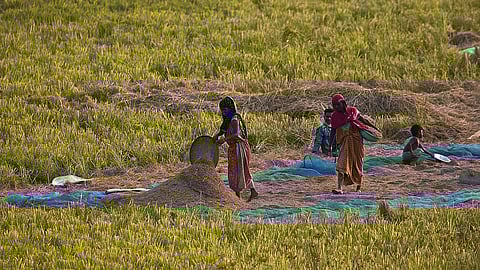
Across the vast stretches of India's countryside, where fields once symbolized abundance and resilience, a quieter and more troubling narrative has been unfolding. Rural India, which has long been the backbone of the nation's economy and cultural identity, today finds itself grappling with layers of distress that are both structural and immediate. Beneath the surface of policy announcements and statistical optimism lies a lived reality marked by uncertainty, indebtedness, migration, and a persistent struggle for dignity. In this evolving landscape, welfare policies-once conceived as instruments of support and empowerment-are themselves undergoing transformation, raising profound questions about their effectiveness, intent, and future direction.
Rural distress in India is neither a sudden phenomenon nor a singular issue. It is a complex interplay of economic vulnerabilities, environmental challenges, institutional gaps, and social inequalities. Agriculture, the primary livelihood for a majority of rural households, has become increasingly precarious. Rising input costs, unpredictable weather patterns, fragmented landholdings, and volatile market prices have eroded the economic viability of farming. For many farmers, the act of cultivation has shifted from being a source of stability to a gamble fraught with risk.
The unpredictability of the monsoon, once the lifeline of Indian agriculture, has become a symbol of climate uncertainty. Erratic rainfall, prolonged droughts, and sudden floods have disrupted cropping cycles, leading to crop failures and income losses. Climate change has not only intensified these patterns but has also introduced new challenges, such as shifting pest dynamics and declining soil fertility. For small and marginal farmers, who constitute the majority, these disruptions can be devastating, pushing them deeper into cycles of debt and vulnerability.
Indebtness is one of the most visible manifestations of rural distress. Farmers often rely on credit to finance their agricultural activities, but when crops fail or prices fall, repayment becomes a burden. While institutional credit has expanded over the years, a significant portion of rural borrowing still takes place through informal channels, often at exorbitant interest rates. The resulting debt traps have, in extreme cases, led to tragic outcomes, including farmer suicides, which remain a stark reminder of the human cost of agrarian distress.
Beyond agriculture, the rural economy is marked by limited diversification. Non-farm employment opportunities, while growing, remain insufficient to absorb the surplus labour. Seasonal migration has become a coping mechanism for many rural households, with individuals moving to urban areas in search of work. While this migration provides temporary relief, it often comes at the cost of social dislocation, precarious living conditions, and exploitation in informal labour markets.
It is within this context that welfare policies assume critical importance. Over the decades, the Indian state has introduced a range of programmes aimed at alleviating rural distress, enhancing livelihoods, and promoting inclusive development. These include employment guarantee schemes, food security initiatives, direct benefit transfers, and various forms of subsidies. At their core, these policies reflect a commitment to social justice and the recognition that market forces alone cannot address the vulnerabilities of rural populations.
One of the most significant welfare interventions in rural India has been the employment guarantee programme, which seeks to provide a safety net by ensuring a minimum number of days of wage employment. This initiative has played a crucial role in stabilising incomes, reducing distress migration, and empowering rural workers, particularly women. By linking wages to public works, it has also contributed to the creation of rural infrastructure, such as roads, water conservation structures, and irrigation facilities.
However, the implementation of such programmes has not been without challenges. Issues such as delayed wage payments, inadequate funding, and bureaucratic inefficiencies have often undermined their effectiveness. In some cases, the focus on targets and numbers has overshadowed the need for quality and sustainability. The gap between policy intent and ground reality remains a persistent concern, highlighting the need for stronger accountability mechanisms and community participation.
Food security has been another cornerstone of welfare policy in rural India. The public distribution system, along with initiatives aimed at nutritional support, has sought to ensure that basic food needs are met. While these programmes have had a positive impact in reducing hunger and malnutrition, they too face challenges related to leakages, targeting errors, and logistical constraints. The transition towards digitisation and direct benefit transfers has been considered as a way to address some of these issues, but it also raises questions about access and inclusion, particularly for those with limited digital literacy.
The evolution of welfare policies in recent years reflects a broader shift in approach. There is a growing emphasis on efficiency, targeting, and fiscal sustainability. Direct benefit transfers, for instance, aim to reduce intermediaries and ensure that benefits reach the intended recipients. While this approach has its advantages, it also changes the nature of the state's engagement with citizens. The move from universal or broad-based schemes to more targeted interventions can lead to exclusion errors, where vulnerable individuals are left out due to identification challenges or administrative barriers.
Another notable trend is the increasing role of technology in welfare delivery. Digital platforms, biometric identification, and data analytics are being used to streamline processes, monitor implementation, and enhance transparency. These innovations have the potential to improve efficiency and reduce corruption. However, they also introduce new challenges, such as data privacy concerns, technological glitches, and the risk of marginalizing those who are unable to navigate digital systems.
The changing face of welfare policies also reflects broader economic and ideological shifts. There is a growing focus on market-led growth, private sector participation, and the reduction of fiscal burdens. In this context, welfare is often seen not just as a means of providing support but as a tool for enabling individuals to participate more effectively in the economy. This shift raises important questions about the balance between rights-based approaches and market-oriented frameworks.
For rural India, the implications of these changes are profound. On one hand, there is the promise of more efficient and targeted interventions. On the other, there is the risk that the most vulnerable may be left behind in the pursuit of efficiency. The challenge lies in designing policies that are both effective and inclusive, recognize the diversity of rural realities and address the specific needs of different communities.
The role of local governance institutions, particularly Panchayati Raj Institutions, is crucial in this context. These bodies serve as the interface between the state and rural communities, playing a key role in the implementation of welfare programmes. Strengthening their capacity, ensuring transparency, and promoting participatory decision-making can enhance the effectiveness of welfare policies and ensure that they are responsive to local needs.
Gender is another critical dimension of rural distress and welfare policy. Women in rural areas often bear the brunt of economic and social vulnerabilities, yet they also play a central role in sustaining households and communities. Welfare programmes that recognise and support women's contributions can have far-reaching impacts, not only in terms of economic empowerment but also in improving health, education, and overall well-being.
The intersection of rural distress with issues such as health, education, and social protection further underscores the need for an integrated approach. Access to quality healthcare, for instance, remains a significant challenge in many rural areas. Similarly, educational opportunities, particularly at higher levels, are often limited. Addressing these gaps requires coordinated efforts across sectors, as well as sustained investment in infrastructure and human resources.
Environmental sustainability is increasingly becoming a central concern in the discourse on rural development. The degradation of natural resources, including soil, water, and forests, has direct implications for rural livelihoods. Welfare policies that incorporate environmental considerations, such as support for sustainable agriculture, water conservation, and renewable energy, can help address both immediate and long-term challenges.
The COVID-19 pandemic served as a stark reminder of the vulnerabilities inherent in rural and informal economies. The sudden disruption of livelihoods, reverse migration from urban areas, and increased pressure on rural resources highlighted the importance of robust welfare systems. At the same time, the pandemic also demonstrated the resilience of rural communities and the critical role of welfare programmes in providing a safety net during crises.
Looking ahead, the future of welfare policies in rural India will be shaped by a range of factors, including economic trends, technological advancements, and political priorities. There is a need for continuous evaluation and adaptation, ensuring that policies remain relevant and effective in a changing context. This requires not only data and analysis but also a deep engagement with the lived experiences of rural communities.
The discourse on rural distress often focuses on deficits-of income, infrastructure, and opportunity. While these challenges are real and pressing, it is also important to recognize the strengths and potential of rural India. Community networks, traditional knowledge systems, and a deep connection to the land are valuable assets that can be harnessed in the process of development. Welfare policies that build on these strengths, rather than imposing top-down solutions, are more likely to succeed.
At its core, the issue of rural distress is a question of justice and equity. It is about ensuring that those who contribute to the nation's food security and cultural heritage are not left behind in the march of progress. Welfare policies are a reflection of this commitment, but they must evolve in ways that remain true to their underlying purpose.
The changing face of welfare policies presents both opportunities and challenges. It offers the possibility of more efficient and responsive systems, but it also demands vigilance to ensure that inclusivity is not compromised. For India, the path forward lies in striking a balance between innovation and empathy, between efficiency and equity, and between growth and sustainability.
As the nation stands at this crossroads, the voices from its villages must be heard not as distant echoes, but as central to the narrative of development. Rural distress is not merely a policy issue; it is a human story, one that calls for compassion, understanding, and decisive action. The transformation of welfare policies must, therefore, be guided not only by economic considerations but also by a commitment to dignity, fairness, and the shared future of a nation that draws its strength from its rural roots.
