
- Home
- Live Blog
- Breaking News
- Top Headlines
- Cities
- NE News
- Sentinel Media
- Sports
- Education
- Jobs
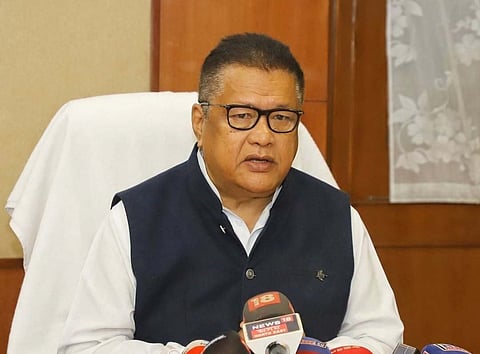
Over 60,000 posts of teachers have been lying vacant in government schools across Assam. This serious information has come from none other than Dr Ranoj Pegu, Education Minister, who, however, has said that the government will carry out recruitments in a phased manner in the following years to fill these vacancies. But the current situation is such that the entire education system of the state is facing a massive staffing crisis. Nearly 8,000 schools lack the proper pupil-teacher ratio. Thousands operate with just a single teacher for all grades, creating severe learning hurdles for local students. When one teacher manages an entire school, teaching becomes difficult. Students of different ages sit in the same room. The teacher must split their time. This means less actual learning happens. Children miss out on individual help. Schools cannot offer a full set of subjects without enough teachers. A school might have a math teacher but miss a science expert. Students fall behind in core topics. This limits their future career paths. It makes passing board exams much harder. A shortage of teachers means a serious violation of a child’s fundamental right to education. Laws require a safe, quality learning environment with enough staff. When teachers are missing, children lose out on vital learning and personal growth. India is a signatory to the UN Child Rights Convention of 1989, according to which every child has the right to a free, quality education, and it is the duty and responsibility of every government to ensure this. Based on the UN Child Rights Convention, the government of India has over the years brought in several laws, the most important of which is the Right to Education (RTE) Act of 2009. This Act makes education a legally protected right. The RTE Act, among other things, mandates a specific teacher-to-student ratio (like 1:30) to ensure students get enough attention. Moreover, under Article 21A of the Indian Constitution, every child aged 6 to 14 has a fundamental right to free and compulsory education. A shortage of teachers is a direct violation of child rights in India. This is because it compromises the fundamental right to quality education guaranteed under the Constitution. Various high courts and the Supreme Court of India have consistently ruled that a lack of teachers or chronic teacher absenteeism frustrates the object of the RTE Act and violates children’s rights. It is also for society to wake up to this reality and exert pressure on the government to fill up the vacancies as quickly as possible. No child should suffer, especially when it comes to primary and secondary education.
