
- Home
- Live Blog
- Breaking News
- Top Headlines
- Cities
- NE News
- Sentinel Media
- Sports
- Education
- Jobs
Mukesh Agrawal
(Retired IPS. He can be reached at amukeships@gmail.com)
Social transformation refers to deep, systemic and long-term changes in the structures, institutions, values and norms that shape a society. It marks a shift from traditional hierarchies to a more modern and inclusive order. Such transformation encompasses technological, socio-economic, demographic, political and cultural shifts, reshaping power relations, access to opportunity and collective behaviour. Its manifestations are visible in democratic deepening, social justice movements, economic restructuring, educational expansion, gender empowerment, urbanisation, digitisation, cultural pluralism and changing family structures.
Alongside these broader changes, individuals also experience shifts in social status. Sociologists distinguish between ascribed status, determined by birth, and achieved status, earned through education, skill and effort. As societies modernise, achieved status increasingly becomes the pathway to mobility. Personal growth, professional identity and associational choices reflect this transition. Thus, social transformation operates both at the macro level of institutions and at the micro level of individual lives.
Technology has been one of the most powerful drivers of this change. There was a time when information flowed primarily through newspapers, magazines and radio. The arrival of television in India in the 1980s marked a turning point. Then followed the internet, social media, streaming platforms, and the Internet of Things. Today, artificial intelligence dominates public discourse and commercial space. AI tools are aggressively marketed all over, including during the live telecast of the ICC Men’s T20 World Cup 2026, and rapidly adopted, signalling how deeply technology now influences everyday decisions, careers and relationships.
For those who grew up in the 1970s or 1980s, it was difficult to imagine that handheld devices would one day contain the world’s knowledge and shape human interactions so profoundly. Our society has steadily moved in that direction. Alongside technological progress, attitudes and aspirations have also changed. Generational differences often reflect contrasting views on risk-taking, career choices and life priorities.
In his influential book The World Is Flat, Thomas L. Friedman argued that globalisation and digital technology have “flattened” the world by creating a more level playing field for individuals, companies and nations. Advances in communication and logistics allow work to be distributed globally. Competition is now constant and borderless. To remain relevant, individuals must continually upgrade skills and adapt to change. Education, innovation and flexibility are essential in this interconnected world.
Corporate history offers cautionary lessons. BlackBerry was once a global status symbol, especially among professionals. However, its failure to adapt to the touchscreen revolution, weak app ecosystem, outdated operating system, slow innovation and intense competition led to its decline. Its global market share fell from 20 per cent in 2009 to less than 1 per cent in 2016, and it eventually stopped designing its own smartphones.
Similarly, the decline of Eastman Kodak Company remains one of the most cited examples of business failure in the face of technological disruption. Ironically, Kodak invented the first digital camera in 1975. Yet its reluctance to move away from film, slow strategic shifts and financial mismanagement proved costly. In 2012, Kodak filed for Chapter 11 bankruptcy protection in the United States. The company did not lack innovation; it lacked timely adaptation.
Even long-established technology firms face volatility. On 23 February 2026, International Business Machines Corp. (IBM) experienced its worst stock market day in more than 25 years amid concerns that new AI tools could challenge its dominance in corporate IT services. The message is clear: transformation spares no institution. Resistance to change can be more damaging than change itself.
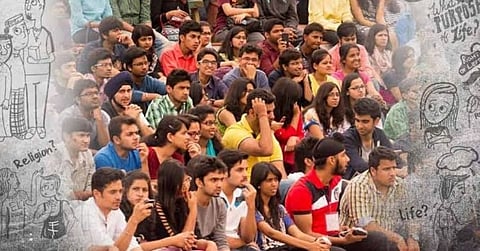
As institutions evolve, so do youth aspirations. Youth aspirations encompass the goals, values and expectations young people hold for their future and for society. These aspirations are shaped by economic conditions, political climate, technological access and cultural influences. Since Independence, India has undergone multiple phases of transformation, each reshaping the ambitions of its young population.
The trajectory of youth aspirations in India reflects a remarkable generational evolution. From the dreams of independence and nation-building to the pursuit of secure livelihoods, from global corporate ambitions to digital entrepreneurship, young Indians have continuously redefined success. While there has been a shift from collective ideals to individual empowerment, the desire to contribute to society remains strong.
Up to the 1960s, youth aspirations were largely centred on nation-building. Serving the country, entering public services, acquiring education and fostering social harmony were dominant ideals. Collective responsibility defined ambition. From the 1960s to the 1980s, under a state-led development model, job security and stable livelihoods became paramount. Government employment was widely regarded as the ideal career path. Competitive examinations for civil services, engineering, medicine, law and banking symbolised success. Private sector employment existed but was not broadly aspirational.
Economic liberalisation in 1991 marked a decisive shift. Market reforms, reduced industrial controls and openness to foreign investment expanded opportunities. During the 1990s and 2000s, youth aspirations changed dramatically. Global exposure, the IT boom and expanding consumer choices redefined success. Education abroad gained appeal. High-paying careers in information technology, finance and media became desirable. Aspirations shifted from security-orientated thinking to growth, mobility and personal achievement.
The digital revolution of the 2000s and 2010s further transformed ambition. Widespread internet access and smartphones created a digitally integrated society. Young Indians began aspiring to become startup founders, app developers, digital creators and entrepreneurs. Online education, freelancing and global networking fostered a sense of global citizenship. Skills, certifications and innovation began to rival traditional degrees. Creativity and self-expression gained prominence in shaping professional identity.
Social values evolved alongside professional goals. Earlier emphasis on fixed roles and collective stability gradually gave way to demands for inclusivity and equality. Contemporary youth increasingly advocate gender justice, caste reform, LGBTQ+ acceptance and environmental responsibility. Young citizens seek not only personal advancement but also systemic reform. Work patterns have also changed. Career paths are no longer linear or confined to one profession for life. The gig economy, entrepreneurial ventures and portfolio careers reflect opportunity-driven thinking. Adaptability and innovation are often valued as much as formal credentials.
Family and relationship norms have experienced transformation as well. Traditional emphasis on early marriage, joint families and rigid hierarchies has gradually shifted. Nuclear families, delayed marriage, smaller family size and global mobility are increasingly common. Parent-child relationships are often more conversational than hierarchical. Today’s youth blend Indian cultural roots with global influences, seeking meaningful work, ethical living and social responsibility.
Yet rising aspirations are accompanied by complex challenges. Questions remain about whether sufficient quality jobs exist for a large and skilled population. Mismatches between educational outcomes and industry needs persist. Intense competition and performance pressures have contributed to mental health concerns. Regional, gender and socio-economic disparities continue to limit equal access to opportunity. In this environment, resilience and flexibility are critical virtues.
Meeting the aspirations of youth requires coordinated action. India possesses one of the world’s largest youth populations, offering a significant demographic advantage. To harness this potential, a multi-dimensional approach is essential.
First, education must move beyond rote learning towards skill-based and innovation-driven models. Effective implementation of the National Education Policy 2020 can promote critical thinking, digital literacy and interdisciplinary learning. Stronger collaboration between academia and industry and expansion of vocational training can bridge skill gaps in emerging sectors such as artificial intelligence, green energy and the digital economy.
Second, employment generation must be prioritised through support for startups, mentorship networks, micro- and small enterprises and rural entrepreneurship. Initiatives such as Skill India and Startup India should be strengthened to encourage innovation and self-reliance.
Third, sustainable development must be integrated into economic planning. Renewable energy, green jobs and environmentally responsible urban planning can create employment while protecting ecological balance. Fourth, governance reforms should enhance transparency and encourage youth participation in policymaking. Digital platforms can facilitate civic engagement and accountability.
Fifth, inclusive growth remains vital. Addressing gender inequality, regional disparities and social exclusion will ensure equitable access to opportunity. Youth participation in democratic processes and community leadership should be encouraged.
Finally, mental health support, ethical education and civic responsibility must be incorporated into development strategies.
Social transformation is continuous and inevitable. In an era defined by technological disruption and global interdependence, adaptability is the key to relevance. The story of India’s youth is one of ambition, reinvention and resilience. Guided wisely, their evolving aspirations can drive not only personal success but also national progress in an interconnected world.
