
- Home
- Live Blog
- Breaking News
- Top Headlines
- Cities
- NE News
- Sentinel Media
- Sports
- Education
- Jobs
WITH EYES WIDE OPEN
D. N. Bezboruah
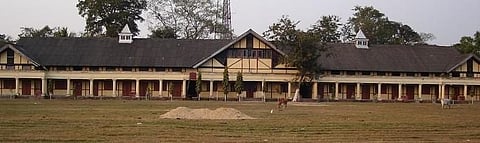
Ever since I can remember, the activity of learning new things has been a source of great delight for me. This could well appear to be a somewhat pretentious statement, and I too am often surprised at the pleasure and even thrill that I derive from learning something new. Perhaps one reason for this is that my schooling was quite a bit delayed, and I was envious of boys of my age who were going to school and learning things that I wasn’t. For reasons that I cannot fathom (except the one of having lost my father at the age of five) I never attended the lower levels of primary school. I was admitted to Class III of the Jorhat Government High School (that was the name in those days) when I was about eight years old. I knew nothing about what I was expected to do as a schoolboy, whereas almost everyone else in class seemed much more experienced about the business of attending school and learning. So every new day spent in school was a day of new experiences and of learning new things. Perhaps the only part of the learning business that I was very familiar with was writing the letters of the English and Assamese alphabets—something that my grandfather had made me do at home until he was satisfied with what I was able to produce. Satisfying Grandfather with any kind of writing was not an easy task, considering that he had the most beautiful handwriting that I have ever seen anywhere.
In later years, the entire business of education and pedagogy remained somewhat skewed for me. Granted that education has generally been regarded as a teaching-learning activity, I have always felt that the learner has a greater responsibility in respect of this process than the teacher. This is certainly not to suggest that the teacher should ever hope to get off lightly by thrusting a greater share of the responsibility on the learner. But I am saddened to find that this is precisely what is happening today. We can talk about this trend a little later. But there are several good things happening today that we did not have in our time. What we did have in our time was a wonderful team of good teachers who were generally very learned and gifted in the art of teaching. This is not to claim that we did not have teachers who caned us. There were a few who did use the cane, and I recall that they were teachers whose teaching was not outstanding.
Now that I have formally ceased to be a student (in the sense that I am no longer studying in any institution), I have begun to make comparisons between the styles of teaching prevalent in good schools today and the style of teaching that was prevalent in our days. When people talk about good schools today, they generally refer to the expensive private schools. There is practically no question of any government school qualifying as a good school in the imagination of a lot of people today. When I was a schoolboy, there were hardly any private schools. The good schools in those days were the government schools of some of the leading towns of Assam. Those were the schools that attracted the most reputed teachers and students who won ranks later on in colleges and universities. In government schools with excellent teachers the school fees was something like Rs 4 in classes IX and X! There are several good things that have started happening in most of the private schools of today that are related to the structuring of the teaching-learning process. In our days, we had very little of anything that could even remotely be deemed to constitute structuring of the teaching-learning process. One is the introduction of the semester principle in almost all schools. This makes for much better utilization of the time available to teachers and students to handle the syllabus. But this is only one of the benefits of the semester system. Both teachers and students are more conscious of the imperative of having to organize the time available to them in a much better way even while making room for associated learning experiences planned in advance that place outside the classroom. And once we move out of the school level and move on to the college and university levels, the minor changes and innovations that are noticeable in the realm of higher education are significant and praiseworthy. Apart from the adoption of the semester system, there are innovative introductions of teaching strategies that have a lot to do with simplifying the learning process. The kind of teaching aids that are being used today were either unknown when I was in college or untried despite being available due to the general apathy towards all teaching aids that college and university teachers appear to have. It has struck me as rather odd that school teachers should have no hang-ups about using teaching aids whereas college teachers are generally so averse to using teaching aids of any kind.
What is most interesting about the teaching-learning situation in India is that while the teaching strategies for professional courses like Medicine, Engineering and Architecture are fairly well-defined, there is hardly any well-established teaching strategy for courses that go by the name of ‘liberal’ arts courses where students opt for subjects like Political Science, Sociology and some language. In fact, one cannot help wondering about the utility of subjects like Political Science, considering that graduates with such subjects are not in a position to put their learning of political science to good use. One can envisage any number of politicians who have studied Political Science at college without being able to put their knowledge of the subject to any worthwhile use in their day-to-day activities. And this happens to be the most outstanding tragedy of higher education in India—the kind of waste that we have to endure because some of the subjects that we studied at college are of no earthly use in our lives or chosen professions. This is what seems to have turned the very pursuit of our college courses into rituals rather than a useful pursuit of academic activity that should contribute to enriching our lives. It is this degeneration of our academic pursuits into meaningless rituals that we in India need to worry about and to eliminate. There are not many instances of waste that are as poignant or as devastating as the kind of waste that takes place in the realm of higher education in India. The sad part of it all is that no one is in the least concerned about what is happening to so-called higher education in India.