
- Home
- Live Blog
- Breaking News
- Top Headlines
- Cities
- NE News
- Sentinel Media
- Sports
- Education
- Jobs
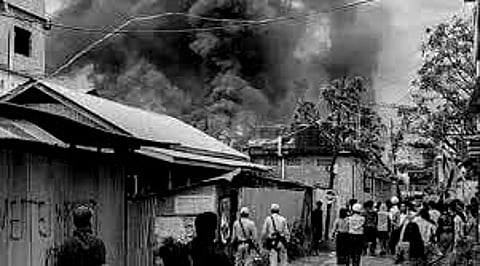
Women and children become the worst victims in any ethnic violence, with the displacement of affected families from their homes to makeshift relief camps seriously affecting their nutrition support and educational and psychological well-being. Even when thousands of displaced people in Manipur are still languishing in relief camps and are unable to return to their homes for more than three years, an immediate end to ethnic violence in the state appears to be remote. Persistent attacks by armed groups on innocent civilians, despite best efforts by the state government, state police and central security forces to restore peace, speak volumes about the grim reality of the state grappling with an atmosphere of mistrust and hate among communities involved in violent clashes. Peace initiatives have failed to make a breakthrough, but security forces achieving success in seizing illegal arms and ammunition marks a glimmer of hope. Taking special care of the displaced, especially of women and children taking shelter in relief camps, is an urgent necessity, but the routine social support and assistance provided under various schemes and projects funded by the central and state governments are far too meagre to match the magnitude of the humanitarian crisis triggered by the displacement and prolonged stay in makeshift relief camps, leading to deprivation from basic necessities for health, education and livelihood. The recommendation by the Parliamentary Standing Committee on Education, Women, Children, Youth and Sports for a focused assessment of the conditions in relief camps in Manipur and consideration of earmarking additional funds or flexibilities under existing schemes to meet emergent needs is both a timely and necessary intervention and warrants a swift and positive response from the central government. The parliamentary panel rightly observed that reliance solely on existing schemes such as Mission Vatsalya, Mission Shakti and Mission Poshan 2.0 may not be adequate to address the immediate and specific needs, particularly with regard to the provision of nutritious food, breakfast, safe accommodation, healthcare and psycho-social support for a large number of displaced women and children taking shelter in relief camps. The committee's observation that while the framework of schemes and institutional arrangements are already in place, the situation in Manipur is of an extraordinary and humanitarian nature involving large numbers of internally displaced women and children residing in relief camps for an extended period justifies its recommendation for flexibilities under existing schemes and provision of additional funds to meet their requirements. The committee recommended that additional steps should be taken for the provision of nutritious food, breakfast, and adequate accommodation facilities to women and children in relief camps and allocation of additional funds for ensuring these for women and children staying in relief camps in Manipur till the situation becomes normal. The committee insisted that the issue of additional fund allocation to relief camps has to be taken care of and reiterated that temporary and targeted financial support, even within the ambit of existing schemes, is essential to ensure that women and children in relief camps are not deprived of the basic facilities. The reply furnished by the Ministry of Women and Child Development in response to recommendations made by the parliamentary panel highlighted the institutional and non-institutional care mechanisms for the affected women and children under the Centrally Sponsored Scheme - 'Mission Vatsalya'. The report highlights that the Child Care Institutions (CCIs) established under the Mission Vatsalya scheme provide various forms of support, including age-appropriate education, access to vocational training, recreation, health care, and counselling. Support under non-institutional care is provided by way of sponsorship, foster care and aftercare to children in need of care and protection, and under it, Rs. 4,000 per child is provided. The ministry implementing the committee's recommendation for close monitoring of service delivery on the ground so that women and children continue to receive adequate nutrition, shelter and care not just in the relief camps but in all 78 numbers of CCIs approved for the state is essential for taking sustained care of women and children in the entire state. As ethnic violence, incidents of armed attacks, blockade and counter-blockades have deepened the humanitarian crisis for people across communities in the entire state, the central government augmenting financial support under various schemes and projects to the state will be crucial for restoring confidence among people in the peace initiatives of the government. The committee's other recommendation is that the Ministry of Women and Child Development coordinate with other ministries to evaluate what measures they have undertaken to reduce the suffering of women and children in the state and reinforce a core governance lesson - only a whole-of-government response can meaningfully address a humanitarian emergency like the one witnessed in Manipur. The interventions recommended by the committee are critical to preventing the prevailing humanitarian crisis from deepening, but the restoration of lasting peace in Manipur requires the complete de-arming of the armed groups and genuine consensus-building on contentious and unresolved issues.
